


How Margaret Hamilton’s Software Helped Save the Apollo 11 Moon Landing
Margaret Hamilton, the computer scientist who led software development for NASA’s Apollo missions, understood that onboard computers needed safeguards for unexpected problems. That insight helped ensure the Apollo 11 lunar module could continue its descent even when the guidance computer became overloaded.
“Lauren’s bug” inspired a NASA software safeguard
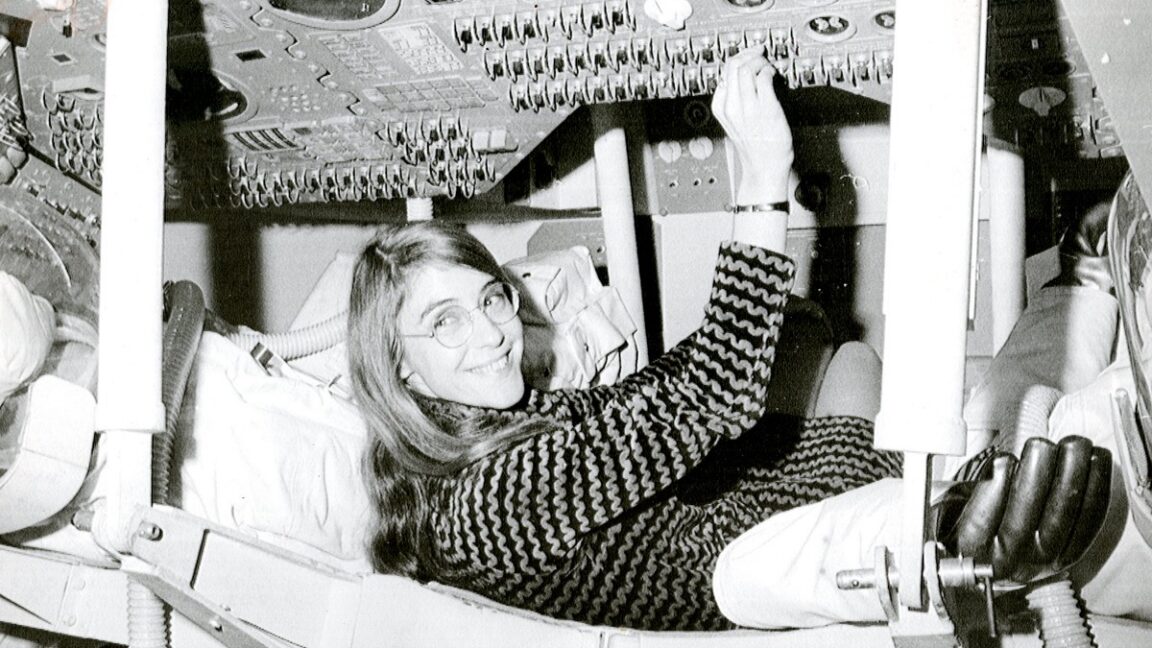
Hamilton often brought her 4-year-old daughter, Lauren, to the lab on evenings and weekends. Lauren loved pretending to be an astronaut in the simulator, but one day the system mysteriously crashed after she pressed a random button. She had entered “P01,” the pre-launch sequence, during the simulated mission.
Hamilton asked NASA to add safeguards that would prevent a similar mistake during a real mission, but her concerns were not taken seriously by higher-ups. Later, astronaut Jim Lovell made the same mistake during the crewed Apollo 8 mission around the Moon, causing the loss of navigational data. Hamilton was called in to help retrieve the data, which Lovell jokingly referred to as “Lauren’s bug.”
By 1968, Hamilton had become assistant director in charge of the command and service module teams. She developed the idea of building a failsafe into the Apollo software’s “priority display” interface routine. The system was designed to respond if the onboard guidance computer received more tasks than it could process in real time.
credit:
public domain
How Apollo 11’s computer handled the overload
Hamilton’s software safeguard was put to the test during the historic Apollo 11 mission in 1969. As the Eagle lunar module approached the Moon, Buzz Aldrin entered a code that displayed altitude and other essential data on the screen. The onboard computer then began flashing alarms, forcing Mission Control to consider whether the landing should be aborted.
The failsafe allowed the computer to prioritize critical tasks and cancel unnecessary ones. The alarms alerted the astronauts that the system was doing so. Thanks to this design, the Eagle continued its descent and landed safely in the Sea of Tranquility.
As Hamilton later recalled in a 1971 letter:
Computers (or rather, the software within them) were smart enough to realize that they were being asked to perform more tasks than they were supposed to do. Then I sent an alarm. This meant to the astronauts, “I have way too many tasks on my plate at the moment, so I’m going to leave you with the more important tasks.” So what you need to land… Actually, the computer was programmed to do more than recognize error conditions. A complete set of recovery programs is built into the software. In this case, the software’s action was to remove the lower priority tasks and reestablish the more important tasks… Had the computer not recognized this problem and taken recovery measures, it is doubtful whether Apollo 11 would have succeeded in landing on the Moon.
Margaret Hamilton’s Apollo software legacy
The Apollo software Hamilton helped develop was added to GitHub in 2015. In 2019, to mark the 50th anniversary of the Moon landing and commemorate Hamilton’s contributions, Google trained more than 100,000 mirrors at a solar farm in California’s Mojave Desert to create a giant portrait of her in reflected moonlight.
Hamilton’s work demonstrated how thoughtful software design and priority-based error recovery could protect astronauts when a computer faced more demands than it could handle.
Source: arstechnica.com