


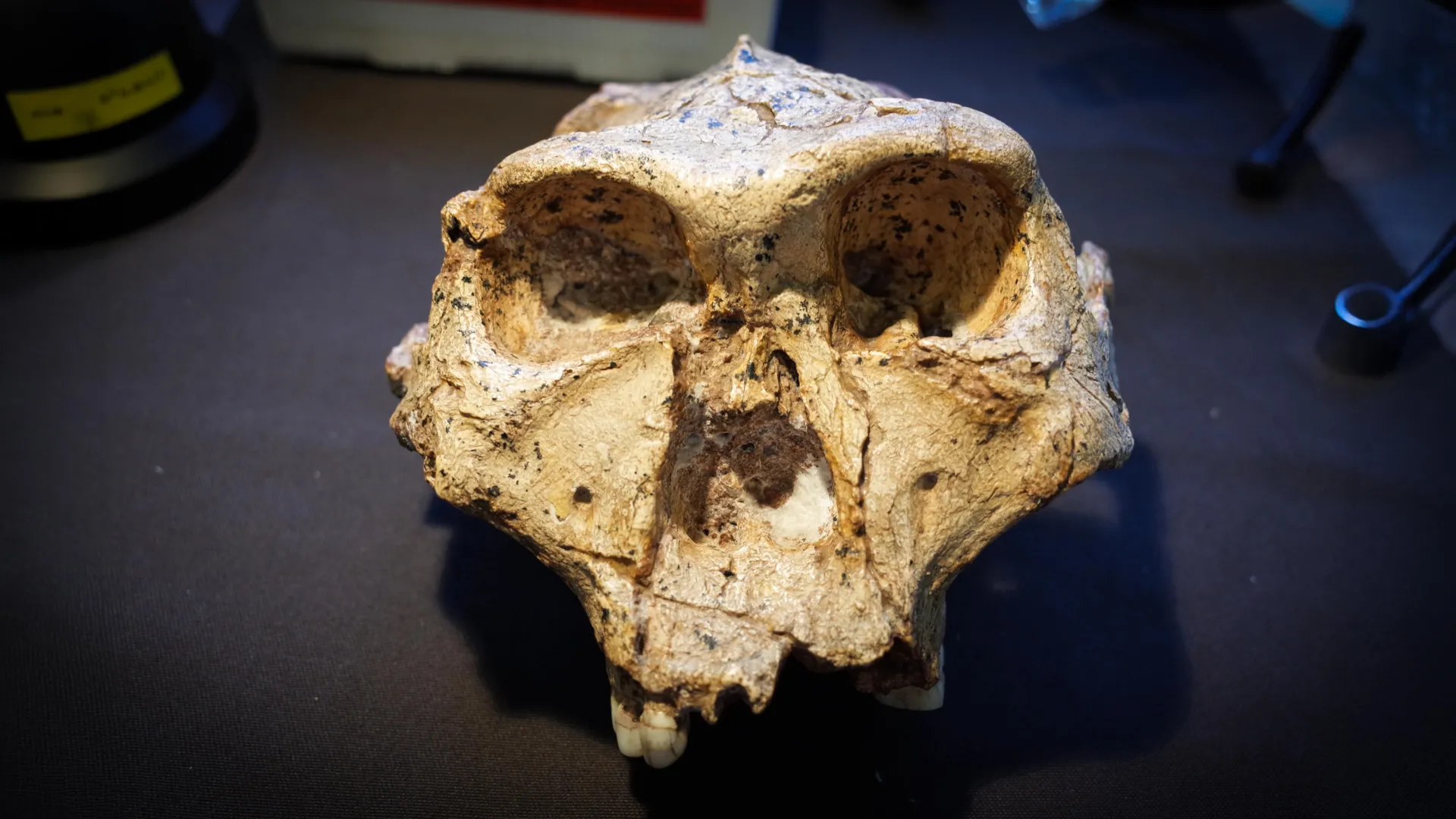
New research from Monash University suggests that recent discoveries about human evolution are challenging the traditional systems scientists use to name and classify our ancient ancestors.
Published in the American Journal of Biological Anthropology, the research calls for a major rethinking of human taxonomy. Researchers propose expanding the genus Homo to include all human species and their close fossil relatives from the past 4 to 5 million years.
Human evolution began with ape-like ancestors, including species classified within Australopithecus. These early hominins were followed by members of the genus Homo, eventually leading to Homo sapiens, the only human species living today.
However, the fossil record reveals a far more complex evolutionary history. As scientists discover new fossils, many characteristics once used to clearly distinguish humans from their relatives have become increasingly difficult to define.
New fossil discoveries blur the boundaries of human evolution
Lead researcher Dr Ian Towle, a research fellow at the Monash Institute for Biomedical Discovery, said recent fossil discoveries and advances in evolutionary science were reducing the usefulness and accuracy of existing classification systems. This includes the way scientists distinguish between the genera Homo, Australopithecus and Paranthropus, which all lived within the past 5 million years.
“Recent fossil discoveries and advances in evolutionary and genetic analysis make now an ideal time to reconsider whether traditional taxonomy still accurately reflects human evolution,” Dr Towle said.
“These groups do not necessarily represent distinct evolutionary branches, or ‘clades’. In addition, the behavioral and ecological differences once used to separate them are becoming increasingly difficult to maintain.”
“We propose expanding Homo to include these other groups, providing a more accurate and stable way to represent the complex evolutionary relationships revealed by the growing fossil record.”
How scientists classify evolutionary relationships
Over the past 50 years, advances in evolutionary science have transformed the way researchers organize and classify life.
Modern taxonomy—the science of naming and classifying living things—increasingly aims to reflect genuine evolutionary relationships by grouping species according to their common ancestry.
However, the classification of human evolution has been slower to adopt this approach.
In recent decades, scientists have increasingly sought to classify organisms according to true evolutionary groups, or clades, which include a common ancestor and all of its descendants.
Traditionally, members of the genus Homo have been distinguished by characteristics such as larger brains, advanced tool use, and specific anatomical and behavioral traits.
Those distinctions have become less clear over time. Scientists now know that some early members of Homo had relatively small brains, while evidence suggests that species classified as Australopithecus and Paranthropus were also capable of complex behaviors.
Proposal to expand the genus Homo
Dr Towle argues that placing Australopithecus and Paranthropus within Homo could create a more coherent picture of human evolutionary history. It may also reduce the need to repeatedly redefine groups as new fossils are discovered and researchers learn more about our ancestors.
“The more we learn about our ancestors and our fossil relatives, the more we realize how complex and non-linear our family tree is,” Towle said.
“By expanding the genus Homo to include species currently classified as Australopithecus and Paranthropus, we can account for their differences without having to constantly reclassify particular groups.”
Source: www.sciencedaily.com