


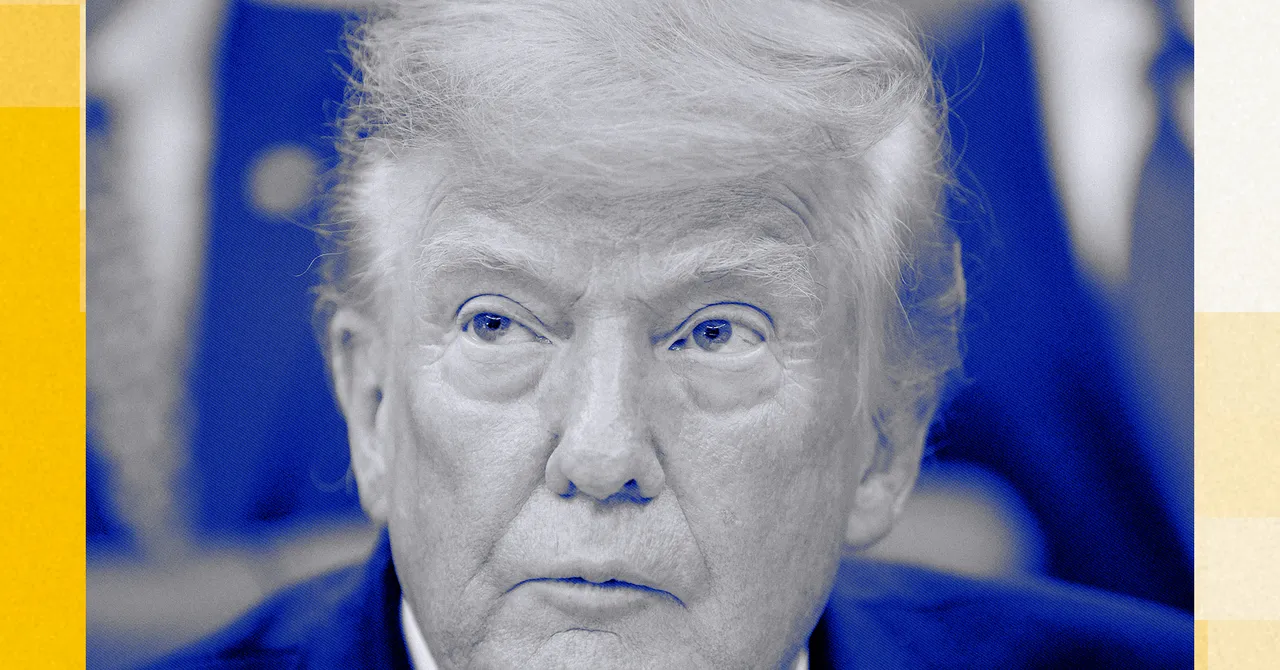
Trump Declares “Artificial Intelligence” Banned and Rebrands It as “Superintelligence”
70 years ago, a group of scientists gathered at Dartmouth College to discuss the far-fetched idea that machines might one day engage in human-like thought processes. One of those scientists, John McCarthy, proposed the name of the new field: artificial intelligence.
I froze. A search for “artificial intelligence” on Google Scholar yields approximately 7,420,000 results. The term is completely ubiquitous. Everyone understands it. Even for those who despise AI, there seems to be little to worry about when it comes to what we call the technology.
Well, not everyone. For some reason, President Donald J. Trump has developed an aversion to the term. Whenever he sees something he dislikes, he does not hesitate to issue proclamations against it.
Trump Wants to Rename Artificial Intelligence
In a speech at the United Nations on September 23, Trump hinted that he might want to abolish the term “artificial intelligence.” His rant seemed like a rant, even to someone who likes renaming bays, lakes, and arts centers.
Will we change the name of an entire field of study and America’s most important industry?
This week, at a White House lunch with top AI leaders, he actually pulled the trigger. In a presidential order, he declared that “artificial intelligence” is now a banned word. Instead, the government will call it “superintelligence.” The president clearly expects the private sector to follow suit.
Embarrassingly, the AI overlords meekly acquiesced. From this point on, they would likely be known as “Lords.” S.I.
Why the AI Industry Accepted the Name Change
I cannot help but see this as the ultimate presidential move. Even considering the trillions of dollars and actual intelligence represented by all the executives in the room, the Alpha was an orange-skinned guy.
Changing the name may seem trivial compared with the enormous task of constraining a technology with potentially devastating effects. But for this crowd, artificial intelligence is more than just letters strung together. It is their foundation. Their identity.
When they were children reading science-fiction books behind their parents’ backs, the term ignited their imaginations. They leveraged AI to build or transform their companies. And it is all they have been talking about for the past four years.
Trump’s AI Renaming Plan as a Loyalty Test
Yet when the president used the luncheon to seek approval for his bizarre idea to undo 70 years of history, apparently no one in the room raised any objections. Not Jeff Bezos, Jensen Huang, Dario Amodei, Mark Zuckerberg, Sundar Pichai, Greg Brockman, Alex Karp, or Elon Musk.
Jacob Weisberg, author of the recent book Profile of a Coward: A Study of Cooperation in the Age of Trump, sees the episode as a classic Trump loyalty test.
The test, Weisberg argues, was intended to determine whether otherwise powerful men would debase themselves to curry the president’s favor and avoid his wrath. If you pass the loyalty test, you fail the backbone test.
“The only way to resist this kind of thing is to act collectively,” Weisberg said. “If those guys had said, ‘I agree with the terms of self-regulation, but I don’t accept the name change,’ what would he have done?”
Source: www.wired.com