


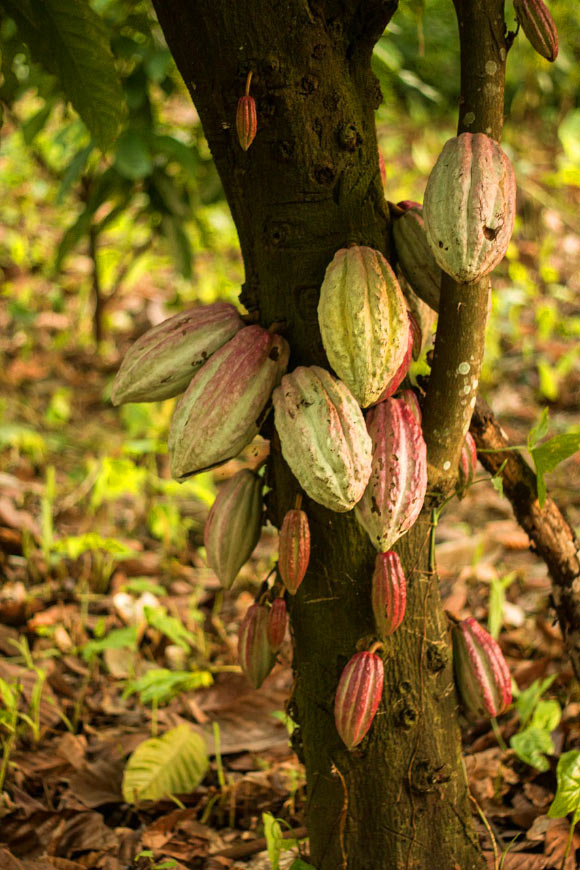
Researchers conducted an extensive analysis of 390 traditionally grown cacao trees, representing authentic Amazonian varieties, uncovering four previously unknown genetic lineages. Two of these lineages indicate remarkable flavor potential, opening new avenues for cacao growers and chocolate artisans.
Motilal and colleagues collected cacao samples from eight regions in Peru. Image credit: Fernando Granier.
Cacao (Theobroma cacao) is an outcrossing understory tree species that thrives in the Amazon basin, holding significant economic importance due to its flavorful beans.
These beans are crucial for the multibillion-dollar chocolate industry and are also featured in various food and cosmetic products, underscoring their status as a vital agricultural commodity.
Cocoa farming is a primary income source for millions of smallholder farmers in tropical regions, significantly impacting global trade and the economies of cocoa-producing nations.
In Peru, the world’s eighth-largest cocoa producer, over 80,000 farmers rely on cocoa cultivation as of 2024.
Many Peruvian farms cultivate wild and semi-wild cacao varieties that remain largely unaltered by selective breeding or genetic modifications.
Earlier studies divided native cacao trees in Peru and other regions into ten groups based on genetic similarities. Individual trees may belong to a pure group or exhibit combinations of different genetic lineages.
However, recent research has challenged this ten-group framework, with few studies focusing specifically on Peru.
In a groundbreaking study, Dr. Lambert Motilal and his team at the Cocoa Research Center, University of St. Augustine for the West Indies, analyzed the genetic diversity of 390 wild and semi-wild cacao trees from indigenous farms spanning various Peruvian regions.
The team examined single nucleotide polymorphisms (SNPs)—single-letter variations in the DNA of individual trees—to map genetic diversity and relationships, enabling the classification of cacao trees into genetically similar groups.
This analysis uncovered four new genetic groups, in addition to the previously identified ten groups. Some trees aligned with pure groups while others were mixtures.
Distinct genetic characteristics across different regions in Peru highlighted significant geographical variation in the genetic profiles of cultivated cacao trees.
Notably, two of the new genetic groups possess ancestry suggesting they may yield exceptionally high-quality and flavorful beans, as noted by the researchers.
The study also provided insights into the ancestry of a specific cacao variety known as CCN51, which is deliberately cultivated for its high yield and disease resistance, gaining importance in the cocoa market.
These findings indicate that Peru possesses unique genetic resources ripe for exploration, particularly for traits beneficial to the cocoa and chocolate industry.
“Our research illustrates that while Peru’s cacao trees have a shared genetic foundation, each region showcases distinct genetic attributes, and we identified four entirely new cacao lineages,” stated the authors.
“This research not only enhances our understanding of Peru’s genetic landscape but also offers valuable resources for conservation and the premium flavored chocolate marketplace.”
“One of the most gratifying experiences was collaborating directly with trees on indigenous farms, ranging from the Amazonas lowlands to the Andean foothills.”
“It was enlightening to discover that these genetic treasures were not confined to laboratories, but actively grown in farmers’ backyards, ready to be characterized and valued for the premium market.”
For more details, check the study published this week in PLoS ONE.
_____
LA Motilal et al. 2026. The genetic structure of traditional cacao reveals four new genetic lineages in indigenous regions of the Peruvian Amazon. PLoS One 21 (7): e0351690; doi: 10.1371/journal.pone.0351690
Source: www.sci.news