What Was the Purpose of Japan’s Mysterious Jomon Flame Vessel?
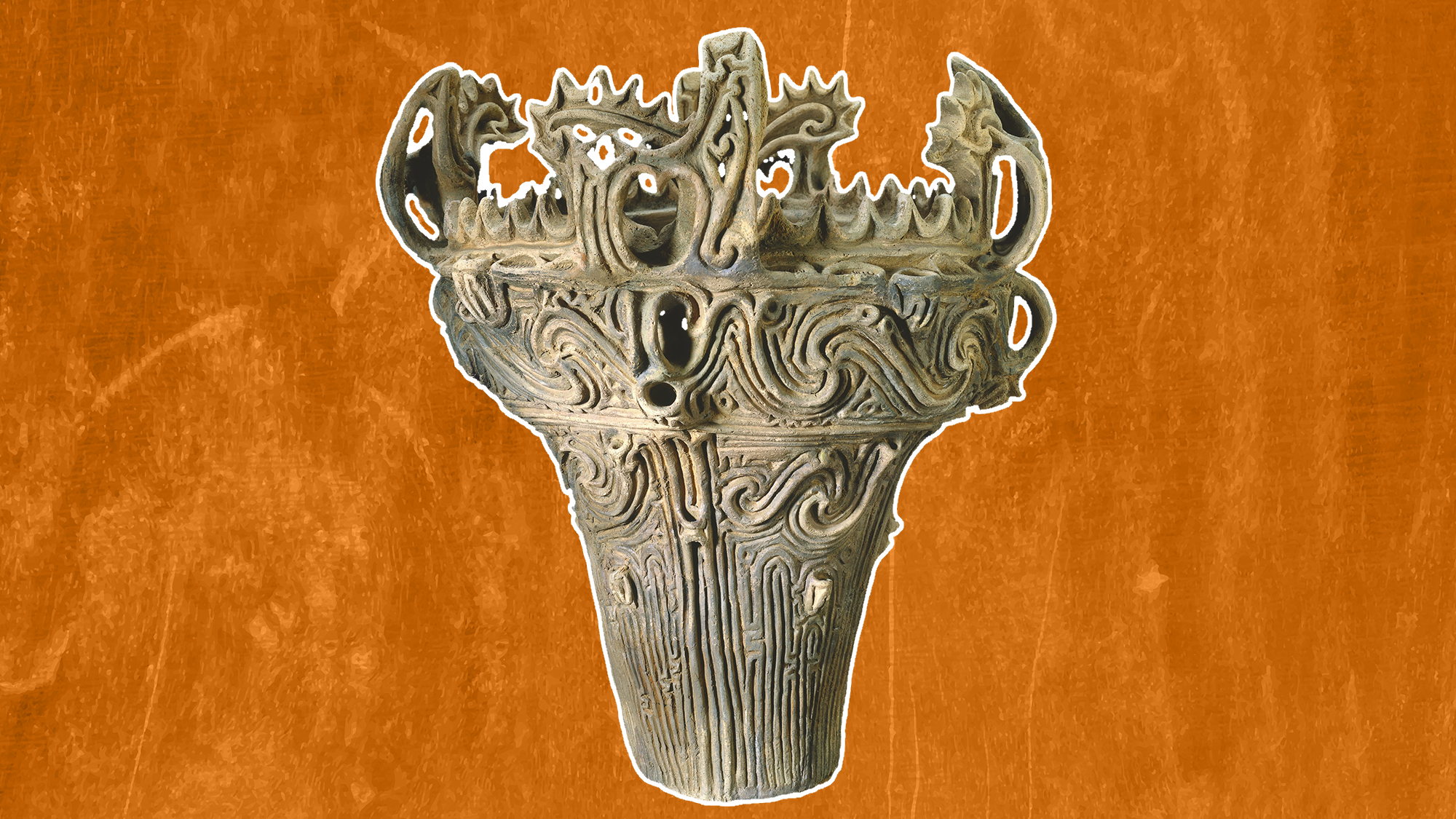
This beautifully decorated Jomon flame vessel from prehistoric Japan may have been used in a ritual, but archaeologists are still unsure of its exact purpose.
(Image credit: Cleveland Museum of Art, public domain)
Simple facts
Name: Flame device (Kaendoki)
What it is: Decorated ceramic vessel
Where it comes from: Honshu, Japan
When it was created: Around 2500 B.C.
This remarkable ceramic vessel was created on Honshu, Japan’s largest island, during the prehistoric Jomon period. It is often called a “flame vessel” or “flame pottery” because of the dramatic, flame-shaped decorations around its rim.
The Cleveland Museum of Art says the vessel is approximately 24 inches (61 centimeters) tall and 22 inches (56 centimeters) in diameter. Its lower section appears to have been added from another container, meaning the original vessel may have been shorter. Although other Jomon flame vessels have survived, this example is considered one of the largest and best-preserved of its kind.
The vessel was made during Japan’s Jomon period, which lasted from approximately 10,500 to 300 B.C. The Jomon people were hunter-gatherers who lived in settled communities, but they did not have a written language. As a result, archaeologists must rely on pottery, tools and other remains to understand how these communities lived and what their artworks may have meant.
Jomon pottery was built coil by coil. Craftspeople shaped the clay, added extra decorations and carved intricate patterns into the surface. The distinctive flame-like projections on this vessel’s rim were likely added during the final stages of production, creating a bold and highly recognizable design.
Latest videos from Live Science
Researchers believe Jomon pottery served many purposes, including storing, preparing and cooking food. Some flame vessels show soot marks, suggesting that at least some examples may have been placed directly in or near a fire. Their wide openings and narrow bases may also have allowed them to be partially buried in the ground while being used.
However, the Cleveland Museum of Art vessel is unusually elaborate and delicately preserved. Its pointed flame decorations would not have made a practical handle, and the vessel would have been too heavy to lift in that way. This has led some archaeologists to suggest that it was not ordinary household pottery.
James Ulak, former senior curator of Japanese art at the Smithsonian Institution, said in a Cleveland Museum of Art video that many researchers believe vessels of this type may have been used during religious ceremonies or to hold ritual offerings. Even so, the exact meaning of the flame imagery remains unknown.
The flame vessels demonstrate that Jomon communities possessed advanced ceramic skills thousands of years ago. They also show that prehistoric hunter-gatherers created pottery for aesthetic and possibly symbolic reasons, rather than only for practical use.
Despite decades of archaeological research, the symbolism of the flames and the precise function of this Jomon vessel remain a mystery. It may have been used for cooking, storage, display or ritual activity—or its purpose may have changed over time. For now, the vessel offers a rare glimpse into the creativity and beliefs of prehistoric Japan.
For more fascinating archaeological discoveries, explore our amazing artifacts archive.
Get the world’s most fascinating discoveries delivered straight to your inbox.