


Amateur Astronomer Helps Reveal a Possible 390-Million-Year-Old Impact Crater in Quebec
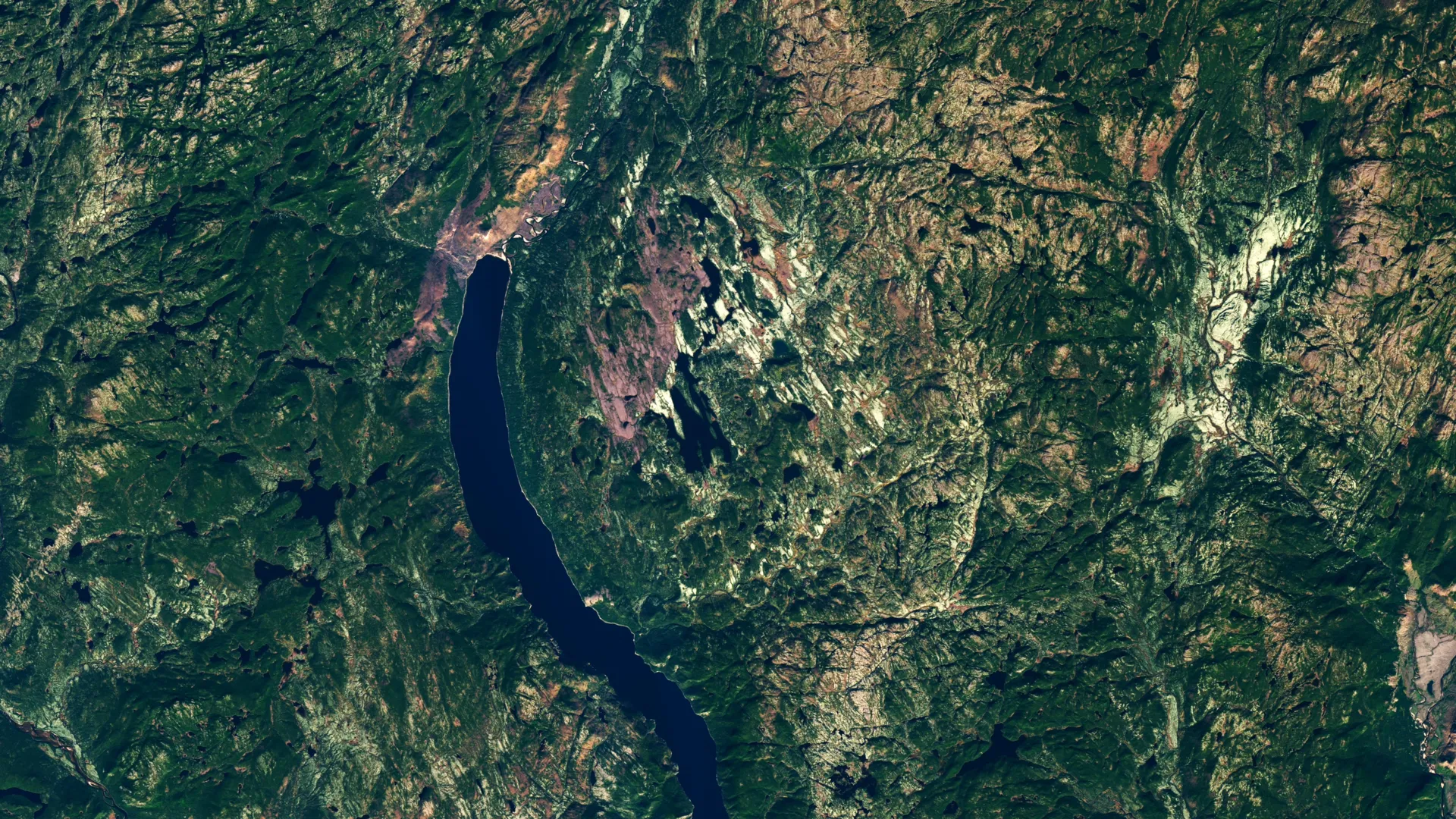
Amateur astronomer Joel Lapointe was studying satellite images while planning a camping trip in Quebec when he noticed something unusual: a vast circular feature near Lake Marsal that may be an ancient meteorite impact crater.
Geologists believe Earth has only about 200 confirmed impact structures, although hundreds more may remain unidentified. The Quebec feature could be one of these hidden structures—and, if confirmed, it would be one of the largest impact craters discovered in recent years.
A strange circle appears on a satellite map
In 2024, Lapointe was preparing for a trip to the remote Côte-Nord region of Quebec when he spotted a circular depression near Lake Marsal in an online satellite image. He suspected the feature might have been created by a powerful impact and contacted experts in Europe and North America.
His observations helped prompt French researchers to identify the region as a possible impact site. At the 2024 Meteorite Society meeting, the location was selected as the center of Quebec’s 11th known potential impact structure.
The possibility also attracted the attention of a planetary geologist at Western University involved with the Impact Earth database. Although Osinski was initially skeptical, he was intrigued enough to organize an expedition to the isolated site in October 2025.
An arduous expedition into the Quebec wilderness
Reaching the suspected crater proved difficult. Osinski and the other researchers arrived by seaplane, but the aircraft could not reach the shore. The team had to carry its equipment through 50 meters (165 feet) of water before reaching land.
The conditions remained challenging. The landscape was rugged and marshy, with swarms of insects and dense vegetation. Osinski described the area as having “deep, winding, troublesome vegetation.” Despite years of fieldwork across six continents, he said the region was among the harshest environments he had ever worked in.
Earlier geological investigations had interpreted local breccia—rock made of broken fragments—as evidence of funnel-shaped volcanic structures called diatremes. These structures form when explosive magma eruptions create pipes filled with shattered rock.
By the second day of the expedition, however, the researchers began finding evidence that pointed to a different explanation.
Shatter cones provide evidence of an ancient impact
The team discovered shatter cones in numerous rock outcrops. These distinctive, cone-shaped structures form under the intense pressure generated by a meteorite impact and are considered strong evidence that the landform was created by a collision rather than volcanic activity.
“This is the only unambiguous evidence of a collision event visible to the naked eye at the scene,” Osinski said.
The impactor was powerful enough to create a complex crater approximately 25 kilometers (16 miles) in diameter. The site includes a central ridge and high cliffs displaying columnar joints.
A similar impact in modern-day Quebec would have devastating consequences. Osinski said it could cause “regional devastation on a scale that would wipe out major cities and impact the global climate.”
Quebec crater may be about 390 million years old
Analysis of rock samples suggests that the crater formed approximately 390 million years ago. Researchers have also examined whether the timing could relate to studies of a significant increase in impact craters and possible evidence of an asteroid-belt collision on Earth, as discussed in related research.
After consultation with the Canine Council of Ekuanitosit, researchers called the crater Uhakkatik.
The research team believes the impact origin has been largely confirmed, although a committee of the Meteorological Society is expected to formally recognize the structure at its next meeting.
If confirmed, Uhakkatik will be the largest impact crater discovered since the 31-kilometer-long Hiawatha structure was found in 2018.
Why Uhakkatik is unlikely to become an astronaut training site
Osinski was part of NASA’s first Artemis geology team, which helps train astronauts in field geology. Even so, he does not expect Uhakkatik to become an astronaut training site because of its extreme remoteness and difficult access.
Kameshtashtan, also known as Lake Mistastin, is a newer and more accessible impact crater in Labrador. The site has hosted astronauts for geological training in the past, he said.
Amateur observations can lead to major discoveries
For Lapointe, alerting scientists to the possible crater was an unforgettable experience. When researchers confirmed that the feature was likely an impact crater, he said he was “over the moon,” according to CityNews.
“Even if it’s not your area of expertise, I encourage you not to ignore your intuition and observations,” he said in comments reported by another outlet.
How citizen scientists can participate in space research
People interested in contributing to scientific discovery can take part in NASA’s citizen science programs.
Through the Daily Minor Planet Project, volunteers can help search for asteroids and comets that could pose a threat to Earth. Through Impact Flash, participants can examine dark regions of the Moon for brief flashes produced by meteor impacts. The Outer Asteroid Project gives citizen scientists an opportunity to search for evidence of asteroids beyond our solar system.
Source: www.sciencedaily.com