


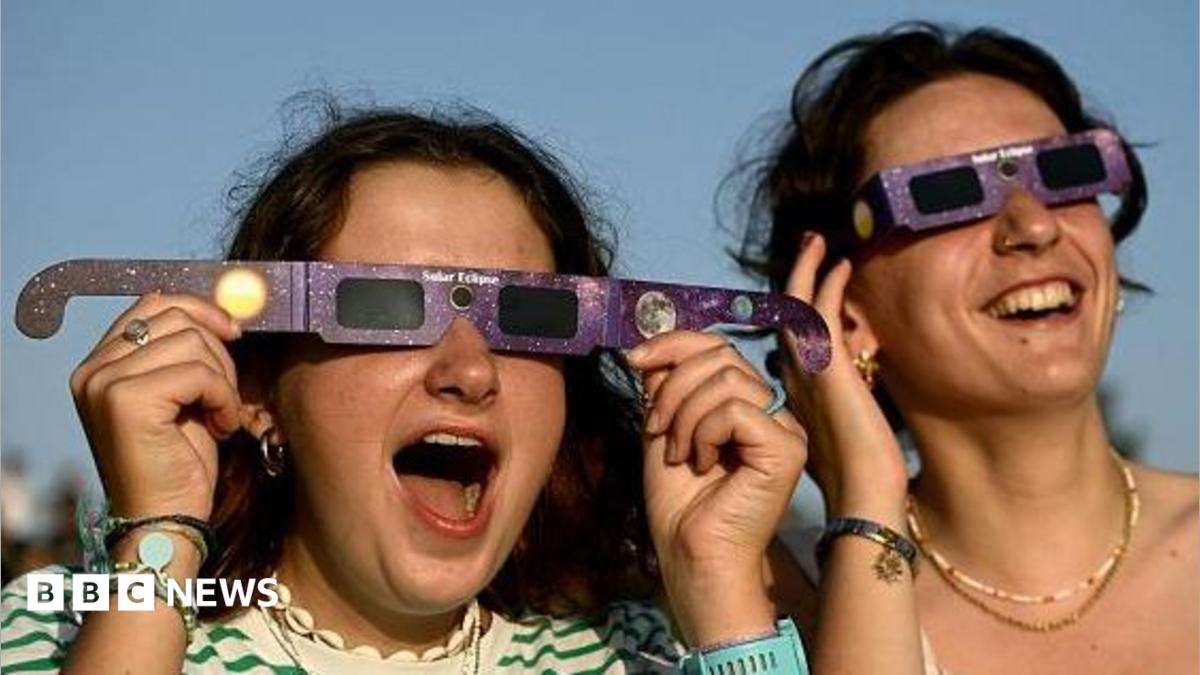
Alexander Ionides, a consultant eye surgeon at London’s Moorfields Eye Hospital, says symptoms of solar retinopathy can begin within hours of looking directly at the sun or a solar eclipse.
“The damage usually affects the center of your field of vision. Anything you look at, including a person’s face, words on a page, or a clock on the wall, may appear distorted.”
“You may notice a gray, yellow, or dark spot directly in the center of your vision.”
Solar retinopathy is often painless. “It does not hurt like you might expect from a burn. Instead, vision changes can develop gradually, which means some people may not immediately realize their eyes have been injured.”
Other possible symptoms of eye damage after viewing a solar eclipse include blurred or distorted vision, difficulty reading, and a blind or colored spot in the center of your sight.
Ionides advises anyone who believes they may have suffered eye damage after looking at the sun to seek urgent medical attention.
“There are several ways to arrange an eye test in the UK. You can visit your local optician, as most practices are now well equipped to assess possible eye injuries.”
“They can perform a retinal scan to check for solar retinopathy, which is damage to the retina caused by looking directly at the sun during a solar eclipse.”
“An optician can also refer you to a local eye specialist. Eye injury services are available locally too, and most hospitals have ophthalmologists on call.”
Because symptoms of solar retinopathy can develop slowly, it is not yet possible to determine how many people may have experienced eye damage.
During a partial solar eclipse, such as the event seen in the UK on Wednesday, the sun remains relatively bright. This may have discouraged some people from looking directly at it, potentially reducing the number of eye injuries.
Ionides said his hospital has received far fewer calls than it did after the 1999 solar eclipse.
“In 1999, hospital switchboards were overwhelmed and many people arrived concerned that they had suffered eye damage.”
“This time, it is still only the morning after the eclipse, but we have received far fewer calls and seen fewer injuries. That may indicate that more people understand the dangers of looking directly at the sun without proper eye protection.”
Source: www.bbc.co.uk