


Stem Cell Therapy for Type 1 Diabetes: Clinical Trial Results, Benefits and Risks
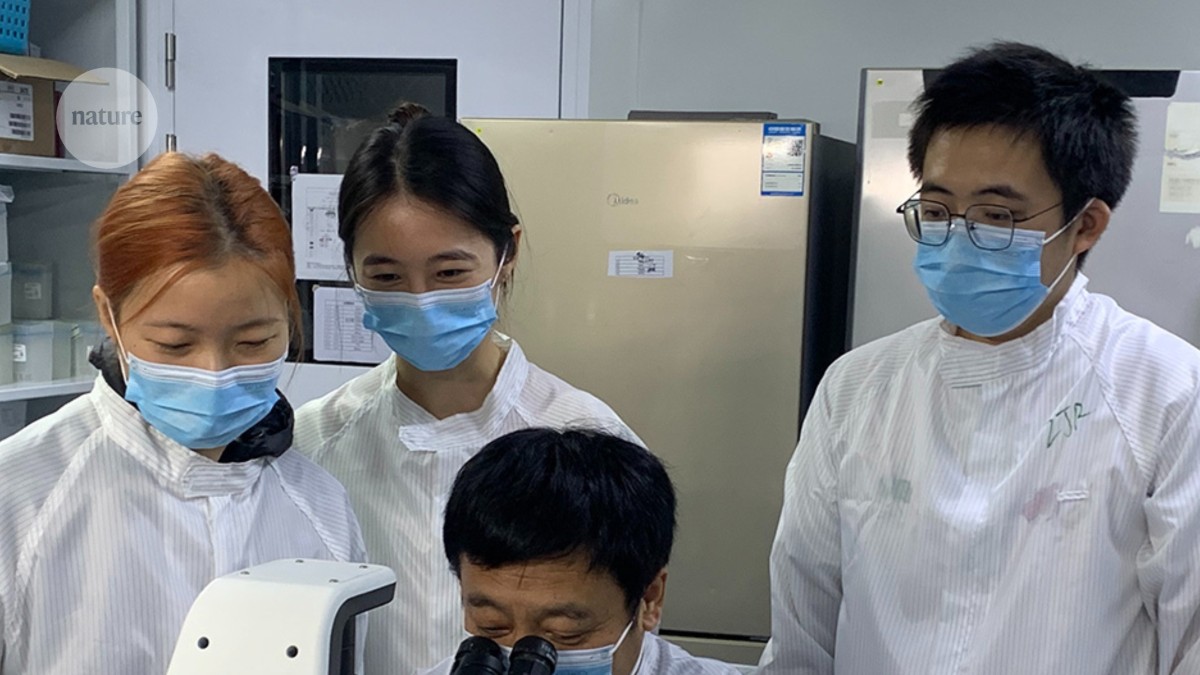
Students observe Hongkui Deng working on a clinical trial related to induced pluripotent stem cell transplantation.
By the age of 25, Mingyu, a pseudonym used to protect her privacy, had undergone two liver transplants and one pancreas transplant to treat type 1 diabetes. After living with the disease for 10 years, she experienced severe, life-threatening hypoglycemia three times despite intensive insulin treatment. When her doctor invited her to join a clinical trial at a Beijing hospital, she saw it as a rare opportunity to regain her health.
Type 1 diabetes occurs when the immune system attacks and destroys pancreatic beta cells, which produce insulin, the hormone that regulates blood sugar. People with type 1 diabetes require lifelong insulin therapy to survive.
Researchers at Beijing’s Peking University are investigating whether stem cell therapy can create new insulin-producing cells and restore insulin production in people with type 1 diabetes. For Mingyu’s clinical trial, the team took a small sample of her fat cells and reprogrammed them into induced pluripotent stem cells (iPSCs). These cells resemble embryonic cells and can develop into many different cell types. Researchers then directed the iPSCs to become pancreatic islets, clusters of hormone-producing cells that include beta cells, before transplanting the newly grown islet cells into Mingyu.
Nature Index 2026 Regenerative Medicine
The results were highly positive. Within a few months, Mingyu’s blood sugar levels remained healthy and consistent without insulin injections. Almost three years later, she remained in good condition, according to immunologist Hongkui Deng, leader of the Peking University team and co-author of the 2024 study describing the trial.1 “This has had a huge positive impact on her quality of life and overall physical, mental and emotional health,” Deng says.
Why stem cells could change treatment for autoimmune diseases
Type 1 diabetes is one of more than 100 autoimmune diseases. These include organ-specific conditions such as Graves’ disease, which primarily affects the thyroid, and systemic diseases such as rheumatoid arthritis and lupus, which can affect multiple organs and tissues. All involve a failure of the immune system to distinguish between harmful substances and the body’s own healthy cells. Most autoimmune diseases have no cure.
As many as 10% of people worldwide have at least one autoimmune disease. For reasons scientists do not yet understand, these conditions are becoming more common.2 The global prevalence of type 1 diabetes has nearly doubled over the past 40 years.3 This has increased the need for safe and effective treatments and preventive strategies, says Frederick Miller, an emeritus immunologist and rheumatologist at the National Institutes of Health in Bethesda, Maryland.
For decades, doctors could primarily manage autoimmune diseases indirectly by suppressing the immune system, reducing inflammation or replacing substances the body could no longer produce. Regenerative medicine is now offering a different approach: resetting dysfunctional parts of the immune system while restoring damaged or lost tissue.
Stem cells are among the most promising tools for this strategy, says Holger Rath, a stem cell biologist at the University of Florida in Gainesville. “Ten years ago, this was science fiction,” he says. “Right now, that’s actually happening as we speak.”
However, researchers still need to refine these treatments, reduce their risks and make them accessible. “All of these approaches are promising, but they require many tedious and detailed treatment trials for each disease,” Miller says.
Hematopoietic stem cell transplantation: resetting the immune system
Stem cell technology was first used to treat autoimmune diseases about 30 years ago. This approach uses hematopoietic stem cells (HSCs), which are found mainly in bone marrow. Unlike iPSCs, which can develop into almost any cell type, HSCs can differentiate only into blood and immune cells. Rather than replacing damaged tissue, HSC transplantation aims to rebuild or “reset” the immune system and eliminate the autoimmune response.
Doctors first use medication to move HSCs from the bone marrow into the bloodstream, where they can be collected. The cells usually come from the patient, although a genetically well-matched donor may be used in some cases. Patients then receive chemotherapy to destroy the existing autoreactive immune system. Finally, the HSCs are returned to the bloodstream, where they develop into new blood and immune cells.

Fibroblasts are used to produce induced pluripotent stem cells.Credit: Vshivkova/iStock/Getty Images Plus
About 70,000 HSC transplants are performed worldwide each year. Autoimmune diseases account for an estimated 4% of these procedures, or approximately 3,000 patients.4 One common use of HSC transplantation is systemic scleroderma, a chronic and painful disease that hardens the skin and connective tissue and can cause fatal organ failure.
HSC transplantation carries significant risks, including severe infection, disease recurrence and, in rare cases, treatment-related death. Even so, Keith Sullivan, a stem cell transplant researcher at Duke University in Durham, North Carolina, says it is often considered a first-line treatment for scleroderma because of the disease’s burden and the limited alternatives available.
“The important point is that this is a one-time procedure,” says Giorgio Orofino, a hematologist at San Raffaele Hospital and Vita-Salute San Raffaele University in Milan, Italy. More than 15 years ago, his colleague Raffaella Greco was part of a team that performed the first HSC transplants in two patients with neuromyelitis optica, an autoimmune disease that can cause blindness and paralysis.5
In June, Orofino, Greco and colleagues published a follow-up study.6 Both patients showed long-term remission. One regained the ability to walk without assistance, while the other remained in a wheelchair but experienced substantial neurological improvement. “This really provides a deep immune reset,” Greco says.
The treatment has drawbacks. New immune systems can take months to develop, leaving patients highly vulnerable to infections and increasing their risk of excessive bleeding and arrhythmias, or changes in heart rate. These risks require careful patient selection and monitoring, Orofino says.
Autoimmune disease can also return. Elizabeth Volkman, a rheumatologist at the University of California, Los Angeles, has treated patients whose disease returned years after HSC transplantation at other clinics. One woman required a lung transplant after her scleroderma came back. “It’s not a perfect treatment for all patients,” Volkman says.
HSC transplantation can reset the immune system, but it cannot replace tissue that has already been destroyed. People with type 1 diabetes, for example, still need new beta cells to produce insulin. Researchers are therefore combining immune-system therapies with a second branch of regenerative medicine: pluripotent stem cells.
Pluripotent stem cells and insulin-producing islets
Human pluripotent stem cells were first extracted from early-stage embryos in 1998 by researchers at the University of Wisconsin–Madison. In 2006, a team at Kyoto University in Japan showed that adult cells could be reprogrammed to create induced pluripotent stem cells. The term “induced” reflects their origin in adult cells rather than embryos.
By 2025, more than 600 studies related to iPS cells and diabetes had been published. Many used iPS cells to study disease biology and screen potential drugs, but an increasing number of researchers are exploring their use in treatments.

A laboratory technician holds a bag containing frozen hematopoietic stem cells at a cell therapy facility in Clamart, France.Credit: Phanie–Sipa Press/Alamy Stock Photo
Type 1 diabetes is particularly suited to this approach because it involves the loss of a clearly defined cell population: insulin-producing beta cells in pancreatic islets, says Xiaojun Lance Lian, a biomedical engineer at Pennsylvania State University in State College, Pennsylvania. Transplants of islet clusters from deceased donors can be effective, but donor organs are scarce. Pluripotent stem cells could provide a more scalable source of replacement islets, Lian says.
Deng and his colleagues were among the first researchers to transplant iPSC-derived islets into patients. They have published results from Mingyu’s case, while the other two patients in the trial had “very consistent” clinical outcomes, Deng says. Based on these results, the team is nearing completion of a larger clinical trial.
Another team last year published the first early-phase clinical trial of human pluripotent stem cell-derived islets for type 1 diabetes. The study involved 14 participants with a history of severe hypoglycemia.7 Instead of producing personalized cells from each participant, researchers used standardized, “off-the-shelf” islets manufactured by Vertex Pharmaceuticals in Boston, Massachusetts. The cells came from a human embryonic stem cell line established using donated in vitro fertilization embryos. Because the cells can divide indefinitely, they can be produced in large quantities and developed into islets in the laboratory.
Within six months of treatment, 10 of the 12 participants who received the full dose regained the ability to produce insulin and no longer needed insulin injections. Trevor Reichman, a surgeon and scientist at the University of Toronto in Canada and lead author of the study, described the results as a “functional cure.”
Lian, who was not involved in the research, said the results were encouraging but should be interpreted cautiously. For most participants, “the therapy functionally replaced the pancreatic beta cells lost in type 1 diabetes,” he said, calling the findings “very reassuring.”
However, the study was small, and it remains unclear how long the benefits will last. The results are a “compelling proof of concept” for some patients, Lian says, but “it’s too early to think of this as an established treatment.”
The challenge of immunosuppression
Patients who receive off-the-shelf islet products must take immunosuppressant medication for the rest of their lives to prevent their bodies from rejecting the transplanted cells. These drugs are used to treat dozens of conditions. Although they do not eliminate the immune system’s ability to fight disease, they increase vulnerability to infections and conditions such as cancer.
“Immunosuppression carries significant risks and limits the number of suitable candidates for these treatments,” says Audrey Parent, a stem cell scientist at the University of California, San Francisco.
The ultimate goal is to develop regenerative treatments for autoimmune diseases that do not require lifelong immunosuppression. “If we can solve the puzzle of immunosuppression, many people will benefit from it,” says Russ.
Source: www.nature.com