


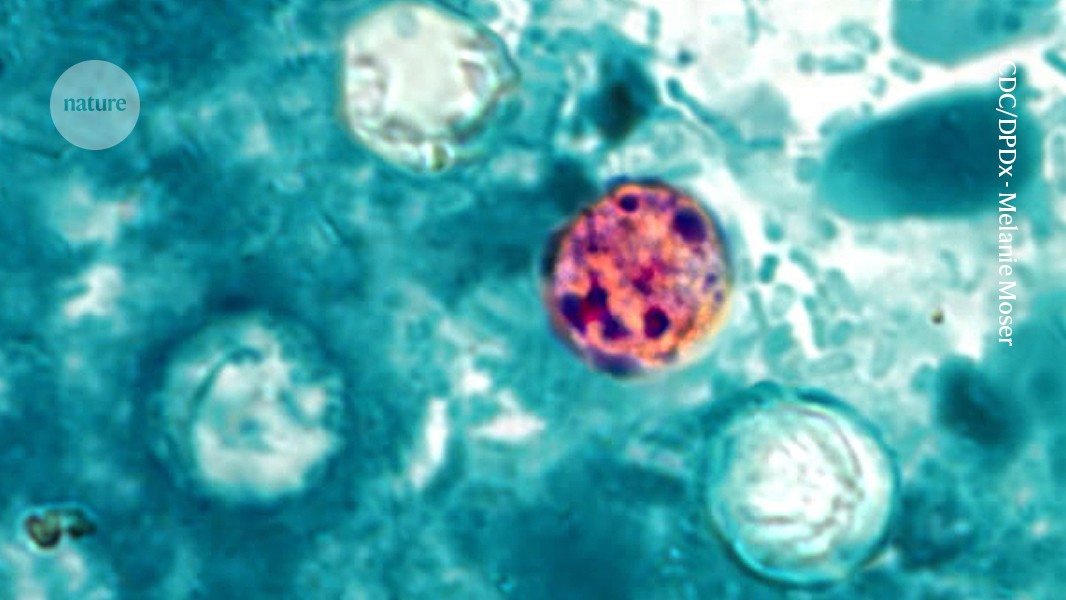
Diarrhea-inducing parasites Cyclospora cayetanensis reproduce through egg-like structures known as oocysts (illustrated in orange in this micrograph).
Credit: CDC/DPDx – Melanie Moser
Microscopic parasites in contaminated food are wreaking havoc on summer meals across the United States, marking the largest outbreak ever recorded. While Michigan leads in reported cases, health officials are still working to identify the infection’s source. Initial findings suggest that lettuce or salad greens may be to blame.

No vaccine for the deadly hantavirus: implications for future pandemics
Since May 1, 1,645 confirmed cases of Cyclospora cayetanensis have emerged, with over 5,100 additional cases under investigation. Joel Barratt, a molecular parasitologist at Emory School of Medicine in Atlanta, Georgia, noted that this spike far surpasses annual averages, with more than 100 cases resulting in hospitalization, but no fatalities reported.
Challenges in investigating this outbreak stem from a reduced workforce dedicated to monitoring, as Barratt indicates. He previously led the CDC’s parasite surveillance team until personnel cuts occurred under the Trump administration.
In a conversation with Barratt and Jitender Dubey, a microbiologist at the U.S. Department of Agriculture, we delve deeper into the outbreak’s ramifications and the response by health officials.
How Does Cyclospora Cause Illness?
C. cayetanensis is an intracellular parasite that infiltrates and disrupts host cells, primarily those in the intestinal lining. After entering the body, the parasites reproduce quickly and inflict cellular damage, with symptoms potentially manifesting after a week or more.
Typical symptoms include watery diarrhea due to inflammation of the intestinal lining, impairing nutrient absorption and leading to excess water expulsion. Although most infections resolve independently, symptoms can persist for weeks or even months.
Doctors commonly prescribe a combination of antibiotics—trimethoprim and sulfamethoxazole (marketed as Bactrim)—to combat the parasites. While antibiotics aren’t directly effective against Cyclospora, they inhibit its necessary vitamins for replication.
How Does Cyclospora Contaminate Food?
A Cyclospora infection typically arises from ingesting food or water tainted with human feces. C. cayetanensis reproduces through oocysts excreted in feces, which need to sporulate in warm environments (22 °C to 32 °C) for 1 to 2 weeks before becoming infectious. This maturation process contributes to summer outbreaks.
Measles is spreading globally: Are you at risk?
Despite being traditionally linked to tropical regions, C. cayetanensis is now increasingly problematic domestically, with recent U.S. outbreaks in 2018 and 2020 associated with crops cultivated locally. This trend indicates the parasite’s geographical reach is expanding.
Barratt emphasizes that poor sanitation is often the root cause of contamination, citing untreated sewage runoff and inadequate toilet access for farmworkers as primary pathways for spreading the parasite.
As infection rates continue to rise, concerns mount over climate change’s role—creating conditions that support parasite oocyst maturation, as recent studies suggest.
Ongoing research focused on farm sanitation practices and monitoring of farmworker health could shed light on outbreak origins, along with investigating asymptomatic carriers’ potential to spread the parasite, according to Dubey.
How Are Researchers Tracing the Outbreak’s Origins?
Effective tracking of the parasite demands collaboration between state and federal health agencies. State laboratories gather fecal samples from symptomatic individuals and forward them to federal facilities. Positive test results for Cyclospora trigger health officials to trace symptom onset and dietary histories from the weeks prior.
Source: www.nature.com