


Geminis are impressively human-like, providing insightful answers that reflect their interactions with others. Occasionally, responses may be lengthy, so prepare for that. However, Google Gemini consistently outsmarts other similar assistants. It can answer questions about its own schedule and check an artist’s preferences for songs that have multiple covers.
Gemini for Home is available for free; however, some features are secured behind a paywall. For instance, Google has rebranded its video camera subscription to “Google Home Premium.” This subscription combines smart home assistant features with video storage at one price point. There are two tiers: Standard ($10/month or $100/year) includes 30 days of event-based video history, intelligent notifications for familiar faces and packages, Gemini Live, and AI tools to create smart home routines. The Advanced tier ($20/month or $200/year) offers 60 days of event-based video history, 10 days of 24/7 video history, descriptive notifications, searchable video history, daily summaries of recorded events, along with all features from the Standard plan.
Gemini Live is a key feature behind the paywall, allowing users to switch their smart speaker to a more conversational mode. Using this, I had an engaging conversation about my 3-year-old’s sleep patterns, sunburns, and more, even referencing an episode of Love Island. While it worked effectively, I wouldn’t consider using this feature outside of testing.
Gemini Live is not compatible with all speakers. However, it works seamlessly with the Google Home speaker and all versions of the Nest Hub smart displays, including the 10-inch Nest Hub Max. It offers enhanced capabilities like acting as a digital photo frame powered by Google Photos. Your Google Account provides up to 15 GB of free storage, enabling convenient access to numerous photos.
Nest Hub Max boasts a robust sound profile with its dual 10-watt tweeters and a 30-watt woofer. The 10-inch touchscreen is perfect for managing smart home controls, streaming videos, browsing recipes, and displaying your photos. Many functions depend on having a smart display; thus, they can’t operate on traditional smart speakers. While the Nest Hub Max isn’t the only smart display on the market, it offers a cleaner interface than Amazon’s Echo Show 11, without any annoying ads. The built-in camera is useful for video calls and gesture controls, but without a physical cover, you can disable it if desired.
Ideal for Amazon Users

- Impressive, room-filling sound, particularly for its compact size.
- Compatible with Alexa and Alexa+, it excels at hearing requests even with loud music.
- Includes a built-in smart home hub.
- Pricing is steep for such a small speaker.
Most smart speakers in homes today are from the Amazon Echo lineup. While numerous options exist, many people use older models like the Echo Dot. Although these models remain functional, some may lack access to Amazon’s new AI-powered assistant, Alexa+. Upgrading requires a Prime subscription, costing $20 monthly if you do not have Prime, which is generally cheaper at $15/month and offers various benefits.
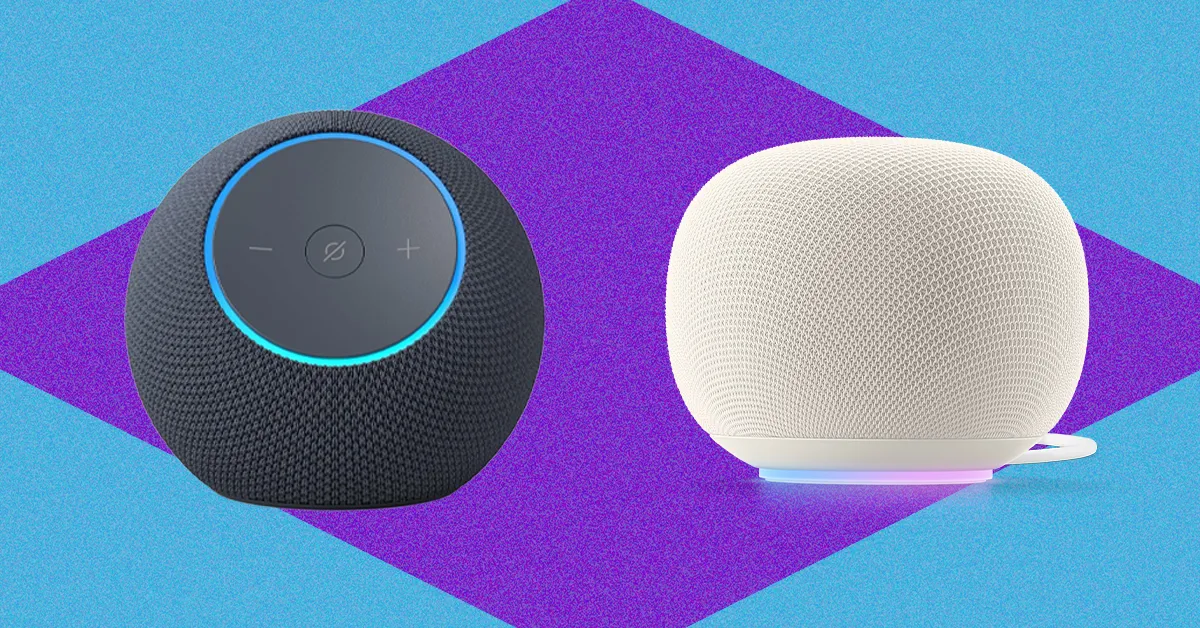
The Echo Dot Max, launching in late 2025, enhances the classic Dot with superior sound quality, a built-in smart home hub, and both Alexa and Alexa+ capabilities, all while maintaining a compact design. Despite its small size, it delivers loud, clear sound even in noisy environments, efficiently picking up voice commands. For those not needing premium audio, the affordable Echo Dot (5th generation) might fulfill your requirements at a lower price.
Source: www.wired.com