


Rocket launches are becoming increasingly common across the globe.
Recently, China successfully executed an orbital mission, joining the ranks of nations capable of safely landing boosters back on Earth. This marks the beginning of a robust effort by both public and private sectors in China to advance rocket reusability. Meanwhile, in Asia, Japan’s space agency is conducting hop tests, while Honda has also carried out a vertical reuse test.
In the United States, SpaceX frequently performs launches and landings of reusable rockets, often several times a week. Blue Origin has shown promising capabilities with large orbital boosters, although operations for the New Glenn booster are currently temporarily halted. Other American companies, such as Stoke Space, Rocket Lab, and Relativity Space, are making significant strides toward developing partially or fully reusable rockets.
But what about Russia, known for its rich space exploration history and recognized as the first to launch into orbit nearly 70 years ago? Recent developments from Russian space authorities may not inspire confidence.
Awaiting Amur
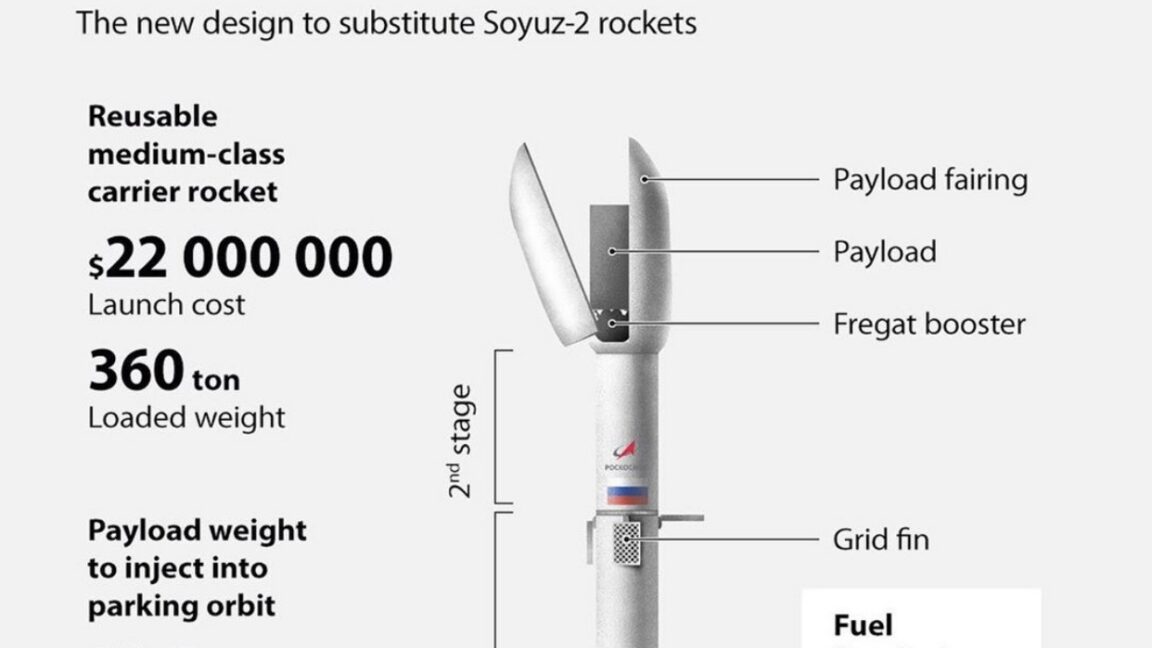
It has been approximately six years since Russia’s state space agency, Roscosmos, announced plans for a reusable rocket named Amur LNG. Designed as a response to SpaceX’s Falcon 9, Amur aims to feature a reusable first stage powered by a methane-fueled engine, with the capability to transport 10.5 metric tons to low Earth orbit.
Initially, Russian officials had projected the rocket’s debut for 2026, which means the timeline is nearing its deadline.
This week, in an interview with the RBC business publication, Dmitry Baranov, Roscosmos’ deputy director for rocket programs, provided updates on the development timeline for the Amur rocket. He stated that the current focus is on creating a “demonstrator” for the rocket’s first stage.
Source: arstechnica.com