


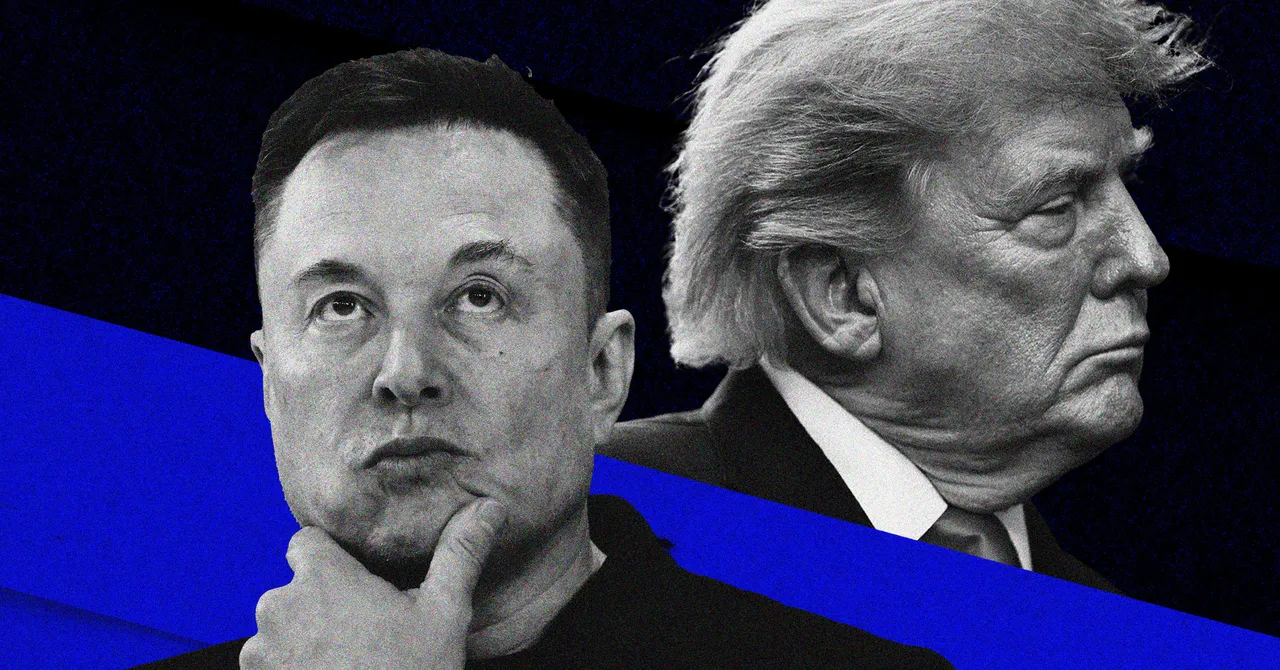
US Government Backs Elon Musk and X in Challenge to EU’s $137 Million Fine
US government The US government is seeking to intervene in Elon Musk and X’s legal challenge against a $137 million fine imposed by the European Union, amid growing criticism of the bloc’s technology regulations.
The US Department of Justice said it has filed an application, with support from the State Department, to back Musk’s and X’s challenge before the European Union’s General Court. The Luxembourg-based court will now decide whether the United States has the right to intervene in the case.
Why the US is challenging the EU’s action against X
The US government says it should be involved to protect American companies. The fine established the region’s first sanction under the Digital Services Act, which requires major online platforms to do more to address illegal and harmful content.
Many of the affected services—including Meta’s Facebook and Instagram, Google’s YouTube and Microsoft’s LinkedIn—are headquartered in the United States and contribute significantly to the US economy, the report said.
“We will not tolerate the Commission’s regulatory overreach in its efforts to control the engines of American innovation and economic growth,” said Assistant Attorney General Brett A. Shumate of the Justice Department’s Civil Division.
Shumate warned that the case could also affect relations between the US and the EU. The Digital Services Act has become a major source of tension between the two sides.
Trump and Vance criticize EU technology regulations
US President Donald Trump has called the penalties “foreign extortion.” Last year, he threatened to impose tariffs on countries that enforce digital regulations, arguing that they were “all designed to harm or discriminate against American technology.” Vice President J.D. Vance has criticized the DSA’s content-moderation rules as “authoritarian censorship.”
Why the EU fined X €120 million
The European Commission fined X €120 million, equivalent to about $137 million, in December after a two-year investigation found that the company had breached its transparency obligations.
The Commission ruled that X’s blue-checkmark system was deceptive because users could appear to have a “verified account” simply by paying for the status. It also said that the platform’s advertising repository was inaccessible and incomplete, while its failure to provide researchers with access to public data hindered research into X’s risks.
In July, the Commission accepted X’s plan to address the data-access issue. X now has six months to implement the plan.
Musk and X appeal the EU ruling
Musk and X appealed the ruling in February. They argued that the EU investigation was “incomplete and superficial” and that its interpretation of the DSA’s obligations was “distressed.” They also said they were denied “the right to a defense,” suggesting prosecutorial bias.
Musk has separately criticized the financial and administrative burden of increased transparency requirements as governments around the world seek to better understand and limit the risks posed by social media platforms.
In July, he argued that Australia’s “invasive” information-gathering powers under its social media ban for people under 16 violated international law. At the time, Julia Hörnle, a professor of internet law at Queen Mary University of London, told WIRED that Australian regulators had the right to order disclosures related to a company’s operations in the country.
Source: www.wired.com