


USC Scientists Develop a Renewable Supply of Cancer-Fighting Immune Cells
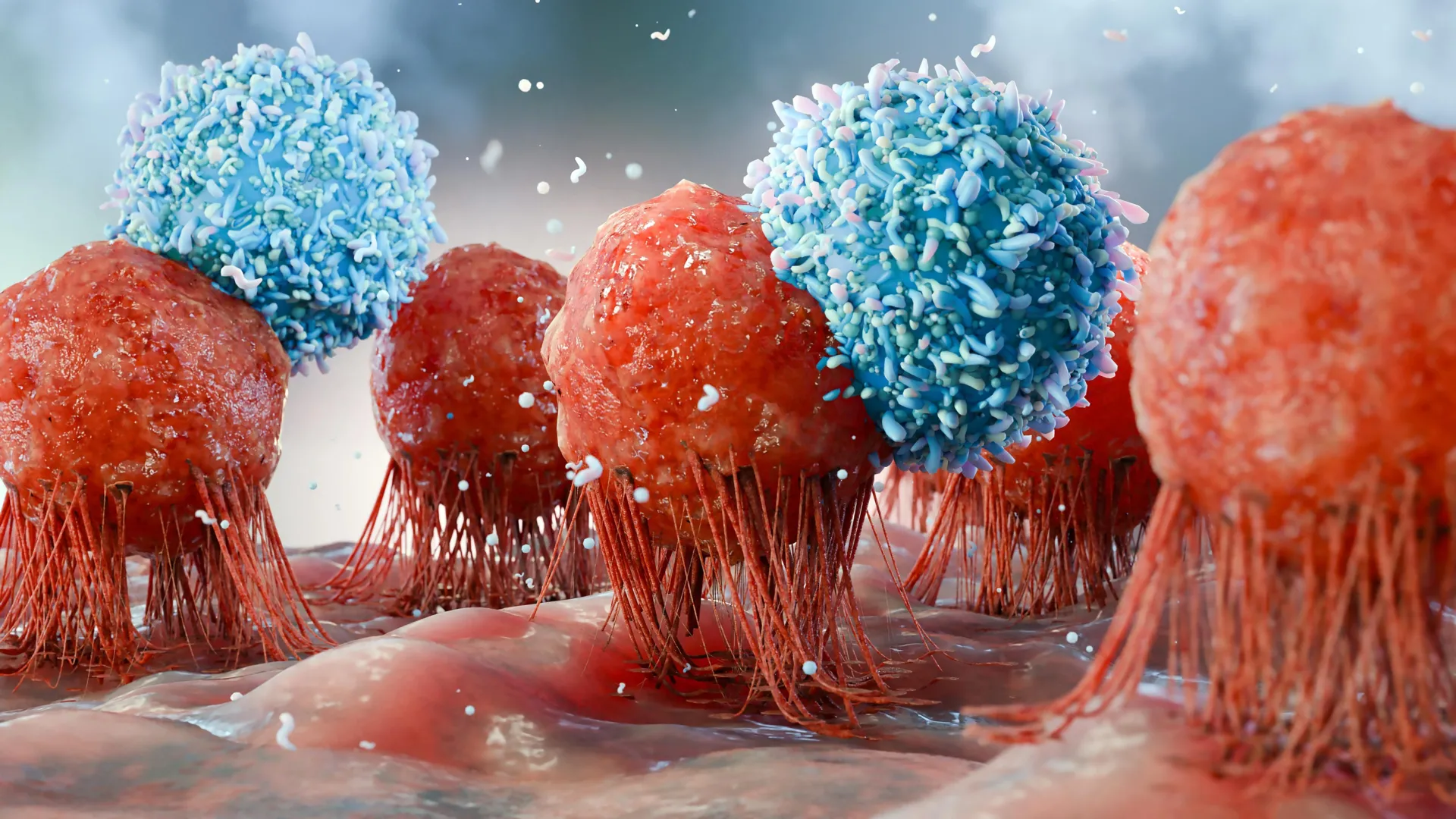
Scientists at the University of Southern California (USC) have developed a way to produce a renewable supply of genetically engineered immune cells that can recognize tumors and activate the body’s natural defenses. The approach uses immature immune cells that can be expanded in the laboratory and later developed into cancer-fighting cells.
Research published in Cell could help address major challenges in cancer immunotherapy, including the difficulty of manufacturing enough immune cells and keeping them active in the body. In experiments involving mice, the engineered cells colonized the bone marrow, generated new immune cells, and slowed the progression of both blood cancers and solid tumors.
Immune cell precursors may offer a scalable path to immunotherapy
The USC stem cell research team focused on granulocyte-monocyte progenitor cells, or GMPs. These immature immune cells normally develop into macrophages and other immune cells that help protect the body from infection and coordinate immune responses.
Researchers found that GMPs can be grown extensively in the laboratory while retaining their ability to develop into functional immune cells. The cells can also be genetically engineered to recognize cancer markers and enhance a broader immune response.
“This study establishes a scalable and operational GMP platform for cellular immunotherapy and introduces a concept that we believe has the potential to have broad implications for both cancer immunotherapy and stem cell biology,” said Qi-Long Ying, MD, corresponding author of the study and professor of stem cell biology and regenerative medicine at the USC Keck School of Medicine.
Scientists uncover unexpected self-renewal abilities
The findings also challenge long-standing assumptions about how blood and immune cells develop.
Stem cells are known for their ability to self-renew, allowing them to divide repeatedly while retaining their original properties. In the blood-forming system, this ability has traditionally been associated primarily with hematopoietic stem cells, which can generate the major types of blood and immune cells.
Progenitor cells are generally considered to be more developed and limited in their ability to self-renew. They are typically expected to mature into a narrower range of cell types rather than divide indefinitely.
However, the USC researchers demonstrated that GMPs can maintain self-renewal under carefully controlled laboratory conditions. Instead of rapidly maturing, the progenitor cells continued to multiply while retaining their identity and ability to produce functional immune cells.
“It is commonly believed that long-term self-renewal in the blood system is primarily a property of hematopoietic stem cells, which can generate all types of blood and immune cells,” Ying said. “We found that under the right conditions, GMPs can also self-replicate and divide extensively while maintaining their identity and ability to produce functional immune cells. This provides a scalable starting point for designing cell therapies for cancer, infectious diseases, and potentially many other conditions.”
This capability could be particularly valuable for treatments that require large, reliable supplies of genetically engineered immune cells.
Why macrophages could help fight solid tumors
Macrophages are versatile immune cells that surround and engulf bacteria, damaged cells, and other unwanted material. They also release signals that influence the activity of other immune cells.
Some macrophages can enter tumors and attack cancer cells, making them attractive candidates for cancer immunotherapy. Their ability to migrate into tissues could be especially useful against solid tumors, including cancers that form masses in organs and other tissues.
Engineered T-cell therapies have shown their greatest success against certain blood cancers, while solid tumors have proved more difficult to treat. Macrophages may provide a different strategy because they naturally move into tissues and can infiltrate tumors.
Turning mature macrophages into practical treatments, however, presents several challenges. Once fully mature, macrophages are difficult to multiply in large numbers outside the body. They can also be difficult to genetically modify and may be damaged during freezing and storage, complicating the manufacture and distribution of cell therapies.
After administration, mature macrophages may collect primarily in organs such as the lungs and liver rather than spreading throughout the body. Their relatively short persistence may also limit how long treatment effects last.
To address these limitations, the researchers began with cells at an earlier stage of immune development.
Creating a renewable supply of engineered immune cells
Rather than attempting to produce large numbers of mature macrophages, first author Shi Yue, MD, PhD, and colleagues in Ying’s laboratory focused on GMPs, the progenitor cells that can produce macrophages.
The researchers developed a precisely defined chemical mixture that allowed GMPs to survive and grow in the laboratory for extended periods. The mixture prevented the cells from maturing prematurely and preserved a renewable population of progenitor cells.
Even after extensive expansion, the GMPs retained the molecular characteristics that define them. They also continued to develop into functional macrophages and other related immune cells when needed.
This approach could make it possible to produce large quantities of engineered immune cells from a population that can be continuously expanded, rather than repeatedly collecting and preparing mature cells.
Collaborators in the laboratory of Ravi Majeti, MD, PhD, at Stanford University independently demonstrated that GMPs could be maintained over long periods and genetically manipulated. Their findings provided additional support for the reliability of the platform and its potential use in future cell therapies.
“This method for expanding and manipulating GMPs, like expanding and manipulating T cells, opens the door to numerous translational applications,” said Majeti, director of Stanford’s Institute for Stem Cell Biology and Regenerative Medicine. “We have already demonstrated engineering these cells to drive multiple powerful functions, and there is much more to explore.”
CAR-engineered cells are designed to recognize tumors
The researchers next tested whether the expandable progenitor cells could be programmed to fight cancer.
They genetically engineered GMPs to carry a chimeric antigen receptor, or CAR. This modified receptor enables immune cells to identify specific molecular markers on the surface of cancer cells and direct their activity toward the tumor.
CAR technology is already used in cancer immunotherapy, particularly in treatments that modify a patient’s T cells to recognize and attack cancer. The USC team investigated whether a similar strategy could generate engineered macrophages and other immune cells from GMPs.
Some progenitor cells were also equipped with additional immune-activating signals designed to recruit and stimulate nearby immune cells, including T cells. This modification was intended to help create a broader antitumor response.
The added signals provided another potential benefit: their effects persisted even when the immune characteristics of the donor cells did not match those of the recipient.
This raises the possibility of developing “off-the-shelf” treatments made from pre-manufactured donor cells. Unlike personalized cell therapies, which must be prepared separately from each patient’s cells, off-the-shelf products could be produced in larger batches for use in multiple patients.
Engineered progenitor cells slowed cancer in mice
After expanding and modifying GMPs from both mice and humans, the researchers evaluated their therapeutic potential in mouse experiments.
When administered to mice, the progenitor cells colonized the bone marrow and other sites involved in blood cell production. These environments enabled the GMPs to generate additional engineered macrophages and related immune cells.
This differed from treatment with mature macrophages, which may disappear relatively quickly. Progenitor cells could provide a continuing source of replacement immune cells from within the body.
The researchers tested the engineered cells in mice with blood cancers and solid tumors. CAR-equipped GMPs slowed disease progression in both types of cancer.
The effect was stronger when the progenitor cells carried both CAR receptors and additional signals designed to activate other immune cells. The combination improved the cells’ ability to stimulate a broader antitumor response.
These findings remain preclinical. Further research is needed to determine whether genetically engineered GMPs can be used safely and effectively in humans, particularly if the cells are intended to produce immune cells over an extended period.
Potential applications beyond cancer
The researchers also examined whether the platform could help treat conditions involving impaired immune defenses.
In separate mouse experiments, they studied chronic granulomatous disease, a genetic disorder that interferes with the ability of certain immune cells to kill harmful microorganisms. People with the condition are vulnerable to recurrent bacterial and fungal infections because their immune cells cannot effectively eliminate some pathogens.
When the researchers administered GMPs to mice with the disease, the cells restored the animals’ ability to fight bacterial infections.
The results suggest that regenerative, genetically engineered immune cell progenitors could eventually have applications beyond cancer, including inherited immunodeficiencies and potentially infectious diseases.
The researchers say the broader lesson is that the developmental stage of an immune cell may be as important as the genetic modifications used to turn it into a therapeutic cell.
By modifying cells before they fully mature, scientists may be able to develop treatments that are easier to manufacture, adaptable to different conditions, and capable of maintaining a continuing supply of specialized immune defenses.
“Our study suggests that the future of immunotherapy may depend not only on the design of better CAR receptors, but also on the selection of the appropriate developmental stage of cells,” Ying said.
Study details
The study, titled “Granulocyte-monocyte progenitor cell expansion and CAR engineering for cellular immunotherapy,” was published in Cell.
In addition to Ying, Yue, and Majeti, the research team included Zheng Guo, Crystal Pan, Xueyuan A. Jing, Tai Nguyen, Jiaqi Tang, Yanpui Chan, Humberto Contreras-Trujillo, Du Jiang, Xue Yan, Hang Xiang, Xugen Liu, Xiao Wang, Ziyuan Wang, Natalie Shu, Daniel B. McKim, Rong Lu, and Chao Zhang.
Other contributors included Litao Tao and Celia Bloom of USC; researchers from Creighton University; Asili Ediriwickrema and Sebastian Kocharde of Stanford University School of Medicine; and Yingxiao Shi of Harvard Medical School and Dana-Farber Cancer Institute.
Funding came from Zhongmei Group’s Chen Yong Foundation, sponsored research projects from Myelogene Inc., the LK Whittier Foundation, the Eli and Edythe Broad Innovation Award, the Ming Hsieh Institute for Research on Engineering Medicine for Cancer Award, the USC SBIR/STTR Planning Award, the Xia Research Fund, and the Wu & Jiang Research Fund.
Majeti also reported support from the Ludwig Cancer Institute. Guo received funding through the California Institute for Regenerative Medicine Predoctoral Training Fellowship.
Source: www.sciencedaily.com