


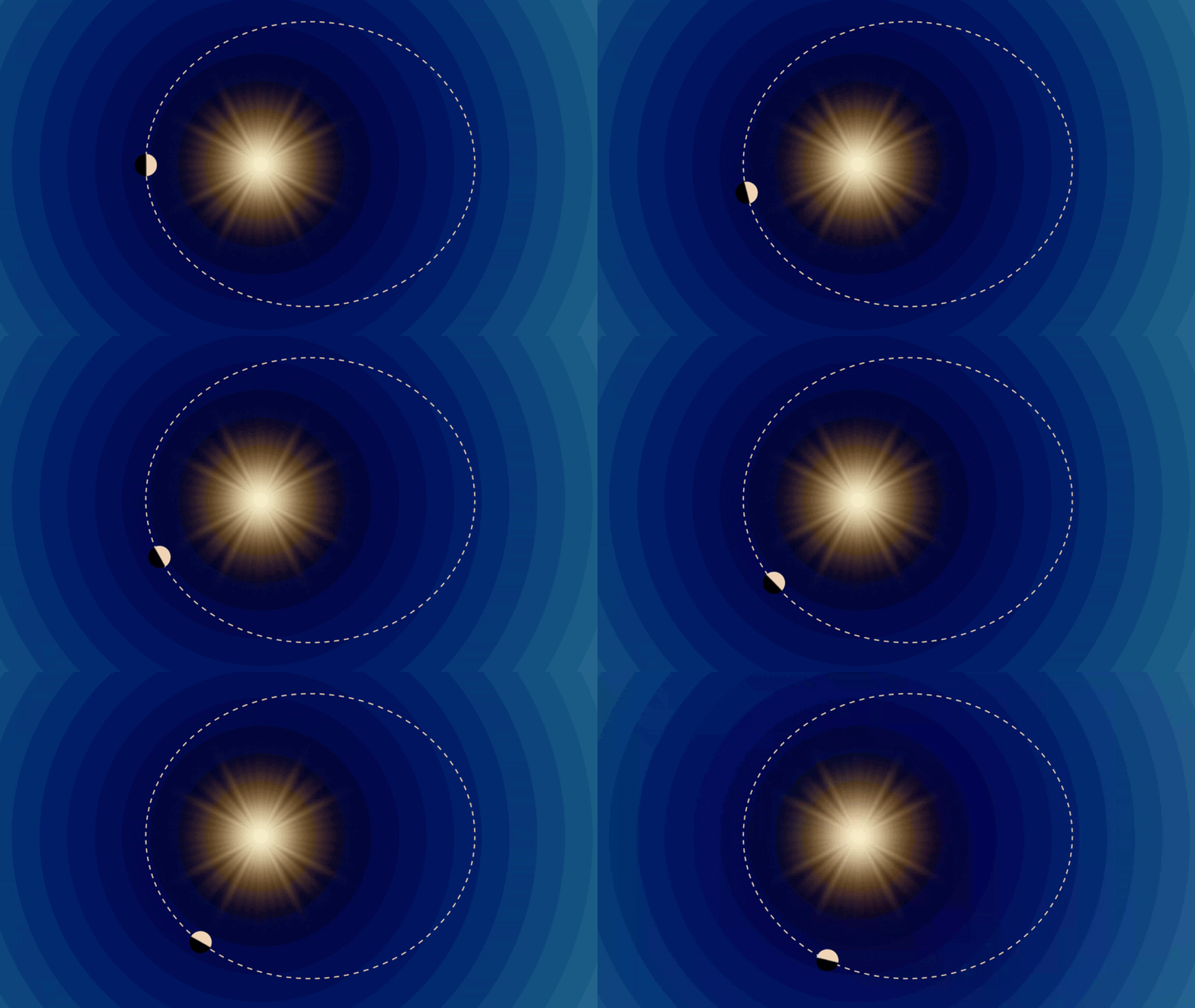
What Is the Closest Object to the Sun?
Mercury is the closest planet to the Sun, but it is far from being the closest object overall. Asteroids, comets and spacecraft have ventured much nearer to our star—and some natural objects have even passed through the Sun’s outer atmosphere.
How close does Mercury get to the Sun?
At its closest point to the Sun, called perihelion, Mercury comes within 29 million miles (47 million kilometers) of the star, according to NASA.
The closest known asteroid
Some asteroids travel much closer to the Sun than Mercury. Asteroids with orbits that cross Mercury’s orbit are known as transmercurial bodies.
According to Scott S. Sheppard, an astronomer at Carnegie Science, these objects have highly eccentric orbits. They likely did not form in their current locations but were scattered toward the Sun from the main asteroid belt.
A search of NASA’s Small-Body Database identifies asteroid 2024 YL3 as the current record holder among known asteroids. The skyscraper-sized space rock is about 463 feet (141 meters) long and has a perihelion of 6.4 million miles (10.3 million kilometers) from the Sun.
Could undiscovered Vulcanoids be even closer?
Another possible group of objects could pass even closer to the Sun: the hypothetical Vulcanoids. These asteroids are thought to have nearly circular orbits inside Mercury’s orbit. Their name comes from Vulcan, a theoretical planet once proposed to exist in that region.
Martin Beech, professor emeritus of physics at the University of Regina in Canada, told Live Science that numerical models suggest a Vulcanoid could have a stable orbit between 5.58 million and 23.23 million miles (8.98 million to 37.39 million kilometers) from the center of the Sun.
That means some Vulcanoids could orbit closer to the Sun than any known Mercury-crossing asteroid. However, their existence remains unproven, and a 2013 study found no evidence of them.
The closest spacecraft to the Sun
Human-made spacecraft have also traveled extraordinarily close to the Sun. NASA’s Parker Solar Probe launched in 2018 and was designed to fly through the Sun’s outer atmosphere, or corona.
During the final three orbits of its main mission, Parker Solar Probe followed an eccentric orbit that brought it within 4.5 million miles (7.3 million kilometers) of the Sun’s center. The spacecraft survived the extreme environment using a carbon-foam heat shield.
Although Parker Solar Probe has come closer to the Sun than any other spacecraft, some comets have passed much closer still.
Sun-grazing comets can pass incredibly close
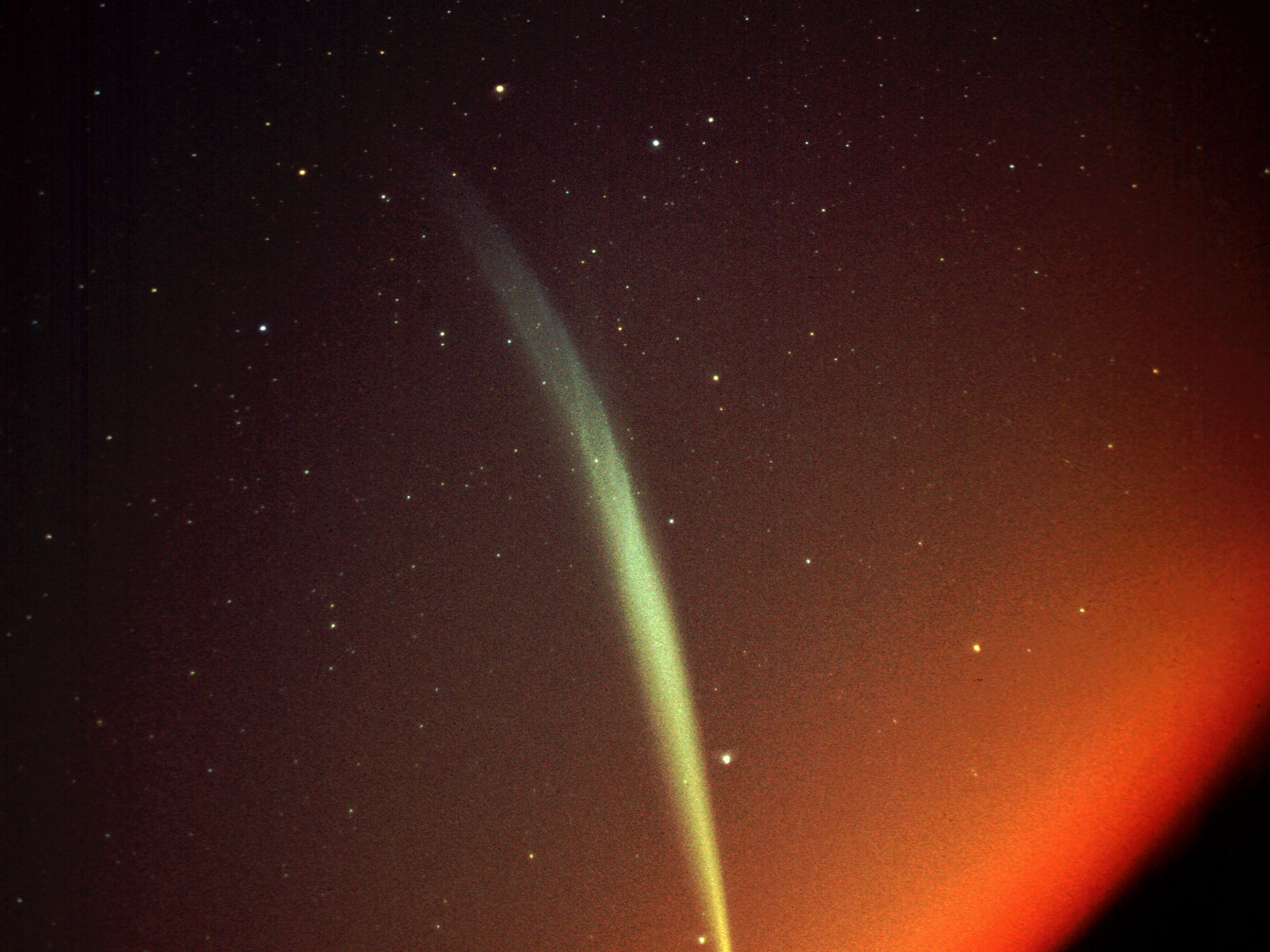
Sun-grazing comets can pass within less than 1.49 million miles (2.39 million kilometers) of the Sun’s center, according to a 2018 study. Their exact distance depends on the details of their orbits.
Small sungrazers, some only about 30 feet (10 meters) wide, can heat unevenly and break apart as they rotate. Larger comets may be torn apart by the Sun’s powerful gravity, although some survive their close approaches.
One of the closest observed examples was the Great Southern Comet of 1887, which passed within just 446,187 miles (718,070 kilometers) of the Sun.
What is a “sundiver” comet?
The ultimate solar visitors are sometimes called “sundiver” comets. These rare comets cross the Sun’s visible surface, or photosphere, and plunge into the Sun.
Although no sundiver has been identified, a 2018 study found that a comet would need a perihelion smaller than the Sun’s radius—about 432,244 miles (695,630 kilometers) from the Sun’s center—to enter the solar disk. Such a comet would not make a second pass; it would be destroyed inside the Sun.
So, what is the closest object to the Sun?
Among observed natural objects, the Great Southern Comet of 1887 is the closest known object, passing within 446,187 miles (718,070 kilometers) of the Sun’s center. If astronomers discover a sundiver comet, it could beat that record by about 13,943 miles (22,439 kilometers).
Parker Solar Probe remains the closest human-made object to the Sun, while Mercury is the closest planet.
How much do you know about the Sun? Test yourself with our Sun quiz.
Topics
Source: www.livescience.com