


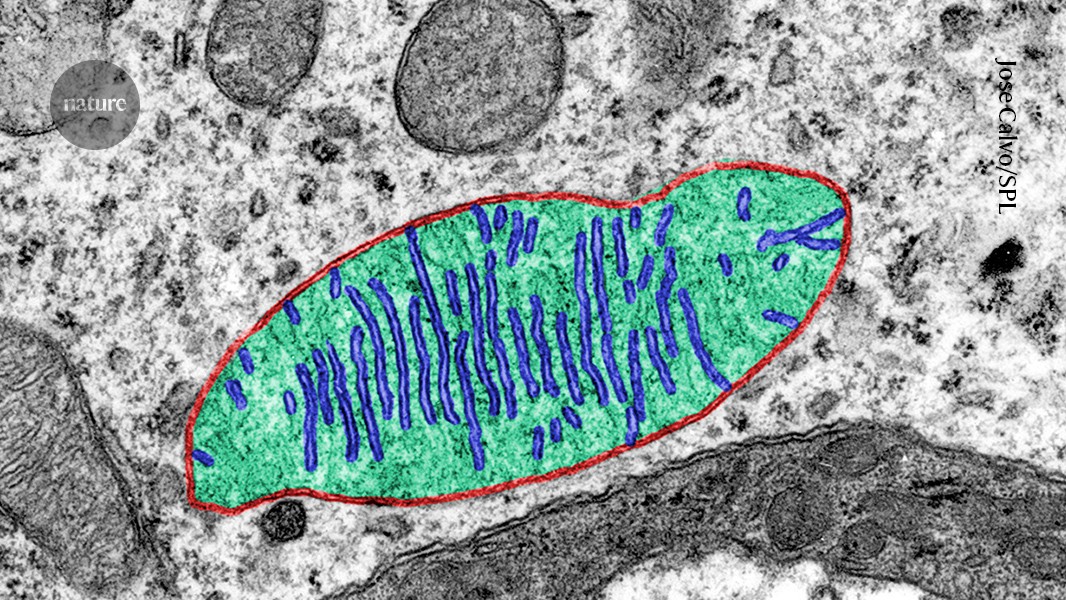
Mitochondria (depicted in green in this pseudocolor transmission electron micrograph) may influence the physiological impacts of microgravity.
Credit: Jose Calbo/SPL
Recent research indicates that prolonged exposure to microgravity aboard the International Space Station significantly reduces protein production in human cells and the mitochondria of C. elegans (worms).
This comprehensive study uncovered a new molecular pathway that mediates the influence of gravity on mitochondria through mechanical reactions in cell adhesion. This pathway may explain the decline in protein activity when gravitational influences are absent. This research was published in Nature Communications on June 30th1.
Astrobiologist Thomas Corydon from Aarhus University in Denmark comments on the findings, noting, “This discovery could have significant implications for space travelers. It helps us understand how to better prepare astronauts for long-duration space missions.”
Previous investigations into space-flown human cells, murine models, and astronaut samples indicated that microgravity exposure leads to mitochondrial damage2. Researcher Afshin Beheshti from the University of Pittsburgh highlighted that “we now have a clearer understanding of how mitochondrial dysregulation occurs.” However, he noted the need for more insight into the molecular mechanisms linking gravity and mitochondrial function. Earlier studies have also shown that reduced gravity impacts the process of transcribing DNA to messenger RNA3.
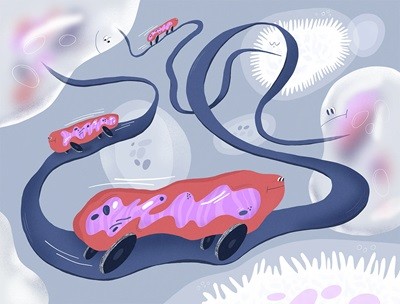
How are cells compensating by replacing mitochondria? Implications for human health.
In this latest investigation, molecular biologist Shintaro Iwasaki and his team at RIKEN in Wako, Japan, aimed to study the effects of microgravity on protein translation, where ribosomes use mRNA to synthesize proteins.
Collaborating with astronauts aboard the International Space Station, the researchers cultured human cells for either 24 or 48 hours in a lab module on the station, then froze the samples. Control samples remained in a centrifuge, simulating Earth’s gravitational conditions.
Upon returning to Earth, analysis indicated that human cells exposed to microgravity for just 24 hours exhibited reductions in mitochondrial mRNA, while mitochondrial ribosomes generated fewer proteins compared to control cells.
Interestingly, a similar but less pronounced effect was observed in C. elegans larvae, comparing nematodes cultured in microgravity to those maintained in centrifuges for four days.
Additionally, the researchers utilized a clinostat—an apparatus that simulates low gravity—to further analyze how gravity affects protein synthesis in the lab. After 24 hours in the clinostat, production of 13 mitochondrial proteins was reduced. Extending the duration of exposure to up to 72 hours further diminished protein synthesis.
“It is well recognized that microgravity can reduce or alter gene expression,” Corydon explains. This study yields crucial evidence regarding how these effects occur “at the protein level.”
Destructive Power of Microgravity on Mitochondrial Function
Source: www.nature.com