


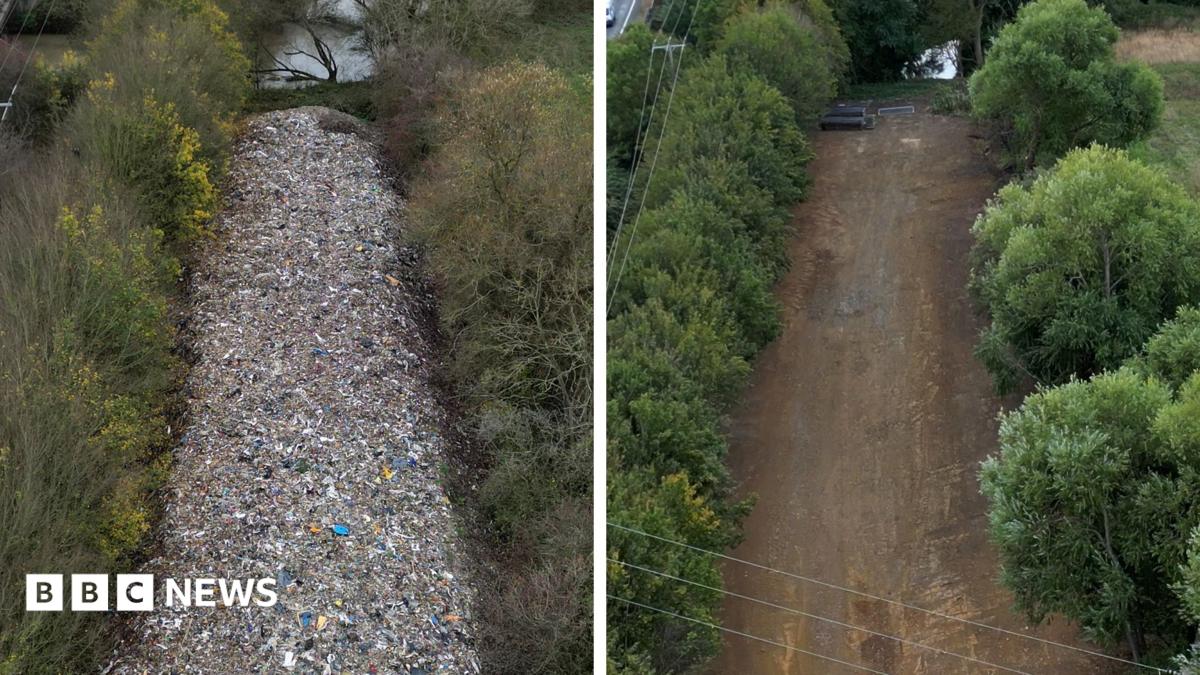
The UK government estimates that around 20% of the country’s waste is managed illegally, highlighting the growing scale of waste crime across the nation.
Under the Waste Crime Countermeasure Plan, external, launched under Keir Starmer’s government, the Environment Agency said it would intervene “on an exceptional basis to clear sites where waste poses an intolerable risk to the public and the environment”.
Private landowners whose property is used for illegal waste dumping are generally expected to cover the cost of removing the waste and cleaning up the site.
Last week, Prime Minister Andy Burnham announced a national crackdown on waste crime, including plans to target three more of the UK’s largest illegal waste sites.
Six major illegal waste sites will be assessed for clearance using public funds. The first sites identified are:
-
Power Station Road – Isle of Sheppey, Kent
-
Eimer Close – Runnymede, Surrey
-
Midland Road – Bradford, West Yorkshire
-
Alan Ramsbottom Way – Hyndburn, Lancashire
-
Worthing Road – Sheffield, South Yorkshire
-
Bolton House Road – Bickershaw, Greater Manchester
Environment Secretary Dame Angela Eagle said: “We are taking decisive action after years of neglect allowed waste crime to worsen.
“By putting more police on the front line and using drones to catch criminals, we are sending a clear message to criminal organisations that they have nowhere to hide.”
However, many other illegal waste supersites remain uncleared. It is not yet clear when these sites will be removed or who will ultimately be responsible for the costs.
One of the sites is located in rural Ober, Gloucestershire, where Charlie Coates, chairman of Hynham Parish Council, is calling on the Environment Agency to take action.
He told the BBC that the fines imposed on waste criminals were “ridiculous”, adding: “The income they get from them dwarfs any fine, so it’s not a deterrent at all.”
Gavin Lane, chairman of the CLA, which represents around 28,000 landowners, farmers and rural businesses in England and Wales, also called for stronger measures to ensure criminals pay for illegal waste dumping and site clean-up costs.
“The punishment has to be real: seize their cars, recover the money owed and make waste crime a loss-making business,” he said.
The Environment Agency told the BBC that some confiscation orders remain unpaid because they are still within the six-month payment period allowed under the settlement. It said any failure to pay after that period is a matter for the courts.
The agency added that further assets could be seized if additional information about the criminals’ finances comes to light.
Four men have been arrested in connection with alleged illegal waste tipping in Kidlington. All four have since been released, and the investigation remains ongoing.
Source: www.bbc.co.uk