


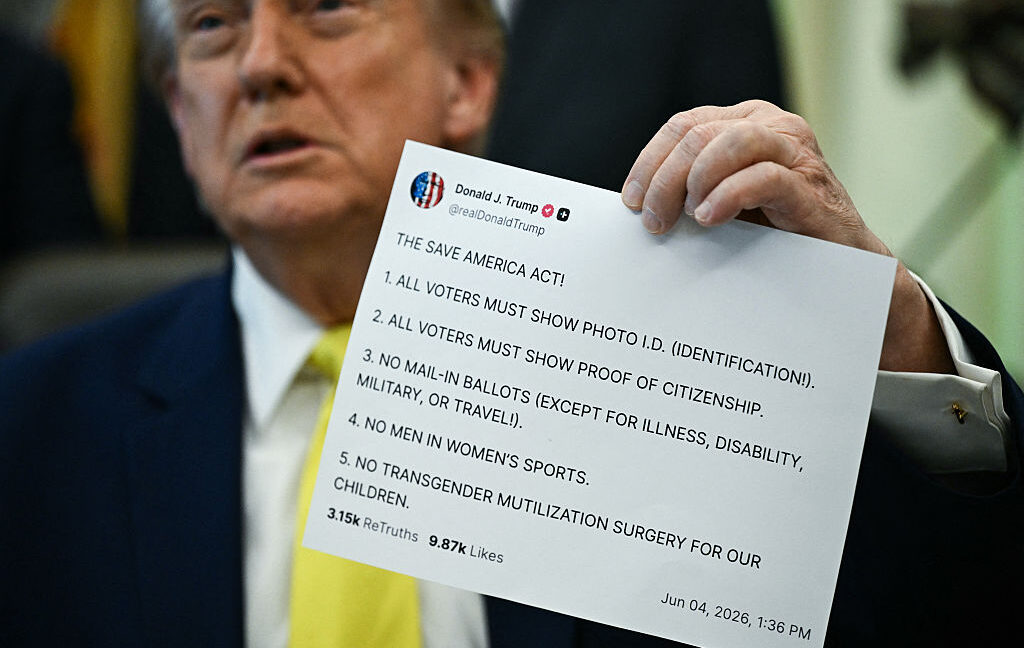
Judge Weighs Whether Trump Can Charge Up to $100,000 for Early Access to Truth Social Posts
A federal judge is expected to decide in the coming weeks whether Donald Trump can become the first president to personally profit from selling early access to government information published on social media.
At a Wednesday hearing, Justice Department civil attorney Brantley Meyers argued that President Trump does not violate the law by charging as much as $100,000 per month for instant API access to Truth Social posts that frequently contain breaking news from his administration.
Trump is the largest stakeholder and majority owner of Trump Media & Technology Group, the parent company of Truth Social. The value of the API access is largely tied to Trump’s position as president and the information shared through his personal account.
News organizations challenge Trump’s Truth Social API fees
The news organizations that filed the lawsuit argue that Trump’s fees violate the First Amendment and the Presidential Records Act. According to their complaint, the fees create a tiered system for accessing government information posted on a social media account that Trump does not technically own.
The organizations also argue that the fees undermine the Fifth Amendment, which they say prohibits the government from charging unjustifiable amounts for public benefits or granting preferential access to important government information for arbitrary and unreasonable reasons.
DOJ compares Trump’s posts to Roosevelt’s fireside chats
Meyers compared Trump’s Truth Social posts about military strikes, ceasefires, tariffs, immigration policy and major changes to his administration with President Franklin D. Roosevelt’s radio addresses, known as “fireside chats,” Courthouse News reported.
The Justice Department argued that Trump’s personal feed provides a genuine public service rather than representing an effort to profit from government information.
However, Trump could make as much as $1.2 million per year from each subscriber paying $100,000 per month for access to the posts. Before Meyers could continue his argument, U.S. District Judge Paul Oetken interrupted him.
“Well, President Roosevelt didn’t charge money for fireside conversations, did he?” Oetken asked.
Justice Department argues that radio was also a barrier to access
Meyers responded that while Roosevelt did not charge broadcast fees, similar “barriers to entry” prevented some Americans from listening to his broadcasts. He argued that some people in the 1930s and 1940s could not afford a radio, just as some news organizations today may be unable to pay between $60,000 and $100,000 for access to Trump’s Truth Social API.
Source: arstechnica.com