


Human Remains Found Inside Giant Roman Storage Jar at Deultum
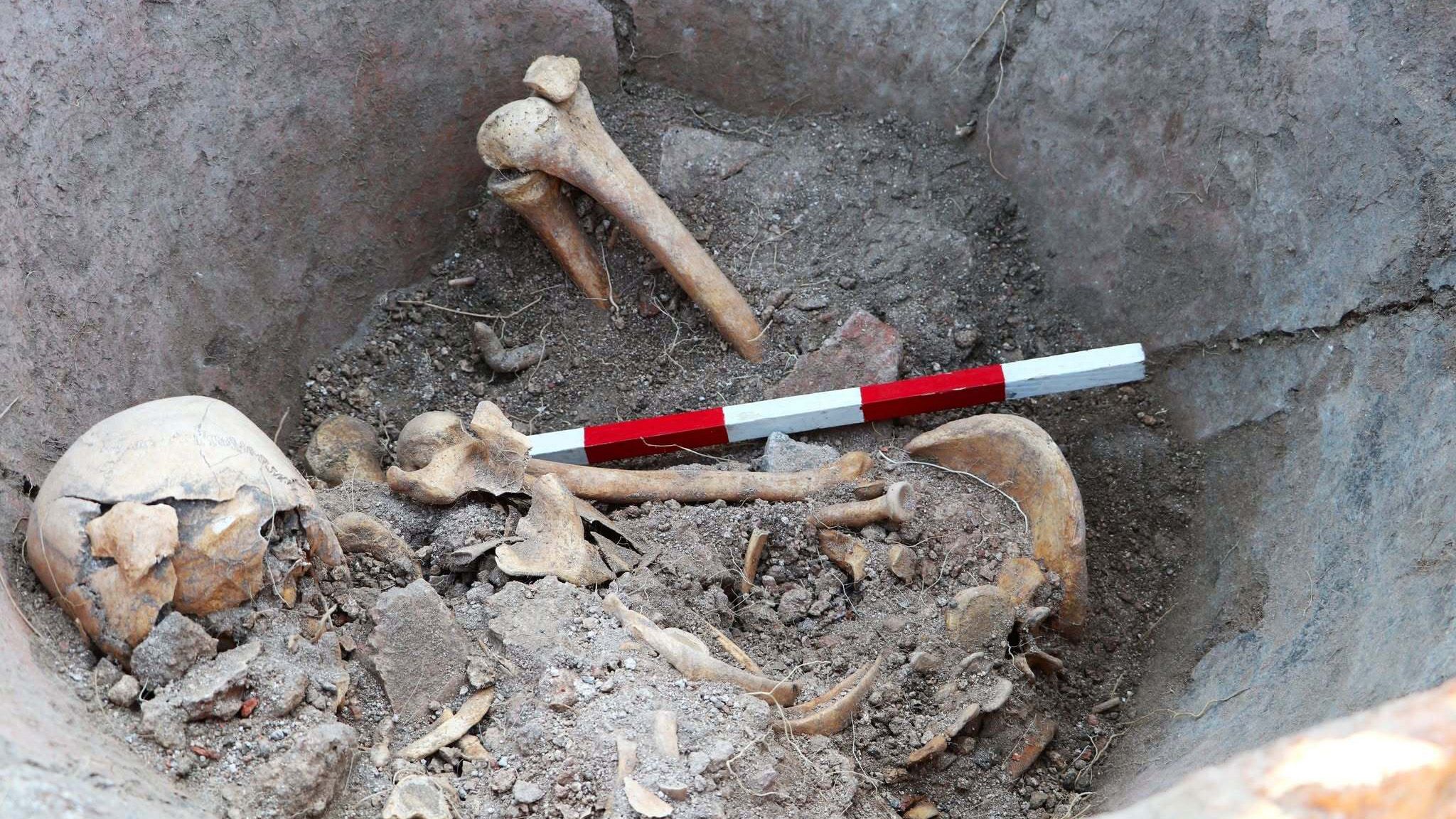
Bulgarian archaeologists have discovered human bones inside a large Roman storage jar at the ancient city of Deultum. The unexpected find may belong to a young man who sought shelter during an enemy attack more than 1,600 years ago, before being trapped and killed by a devastating fire.
The discovery was made on August 10 during excavations of a late Roman turret, or small defensive tower, located near the Western Roman Gate of Deultum in southeastern Bulgaria. Archaeologists believe the city experienced repeated attacks by East Germanic tribes and other invading groups during the fourth and fifth centuries A.D.
Lead archaeologist Lyudmil Vagalinski of the Bulgarian Academy of Sciences told Live Science that the team did not expect to find human remains inside the Roman tower.
The skeleton was discovered inside a vessel known as a dolium—a massive ceramic container used in the Roman world to store food and liquids. Archaeologists commonly found dolia in warehouses, homes and military settlements. They were used to hold supplies such as olive oil, wine, grain and other provisions.
The largest Roman dolia could hold more than 260 gallons (1,000 liters). The vessel discovered at Deultum is smaller, measuring approximately 3 feet (1 meter) in diameter, although only its lower portion remains.
The man’s remains were found with two iron knives and a belt. His position inside the jar suggests that he may have climbed into the empty container to hide or seek protection as violence and fire spread through the settlement.
From the latest videos Live Science
Excavations around the dolium revealed extensive evidence of destruction. Researchers found ash, charcoal, broken bricks, roof tiles, debris, a darkened wall, pieces of melted glass and animal bones. The team also uncovered bronze coins that may have been dropped during the chaos of the attack.
“We were surprised,” Vagalinski said in an email. Human remains are rarely found inside ancient cities unless unusual circumstances—such as earthquakes, volcanic eruptions or enemy attacks—prevented survivors from recovering and burying the dead.
The evidence suggests that residents may have brought livestock into the fortified area after receiving a warning about an approaching attack. The fire may have started during the assault, although archaeologists have not yet determined its exact cause.
Archaeologists found the remains of a person inside a large Roman storage jar, along with two iron knives.
Image credit: Bulgarian Archaeology
Preliminary analysis indicates that the event occurred around A.D. 400, but researchers expect to establish a more precise date after examining additional archaeological evidence from the excavation.
Vagalinski said the individual was probably a young man. One of the iron knives may have been positioned between his legs, possibly so he could defend himself if attackers discovered him. The second knife was found near his belt.
However, the man’s position suggests that he did not attempt to escape the vessel. His body was arranged in a way that resembles someone lying down or sleeping, indicating that he may have remained hidden inside the dolium until he died.
After the attack, residents appear to have leveled the damaged tower and constructed a new floor over the ruins. They likely had no idea that human remains were still concealed at the bottom of the large ceramic container.
The bones will be transported to Sofia, Bulgaria, where physical anthropologists will study them. Researchers hope to learn more about the individual’s age, health, injuries and possible cause of death.
The archaeological team plans to return to Deultum next summer to continue excavating the late Roman Western Gate, which dates to approximately A.D. 300. They will also investigate the northern turret and establish a more complete chronology for the destruction layer and the human remains.
Deultum has produced other significant discoveries. Earlier in the year, archaeologists uncovered a Roman latrine, the Latin term for a toilet, dating to the second or third century A.D. near the city gate.
How well do you know the rulers of ancient Rome? Test your knowledge with this Roman emperor quiz.
Source: www.livescience.com