


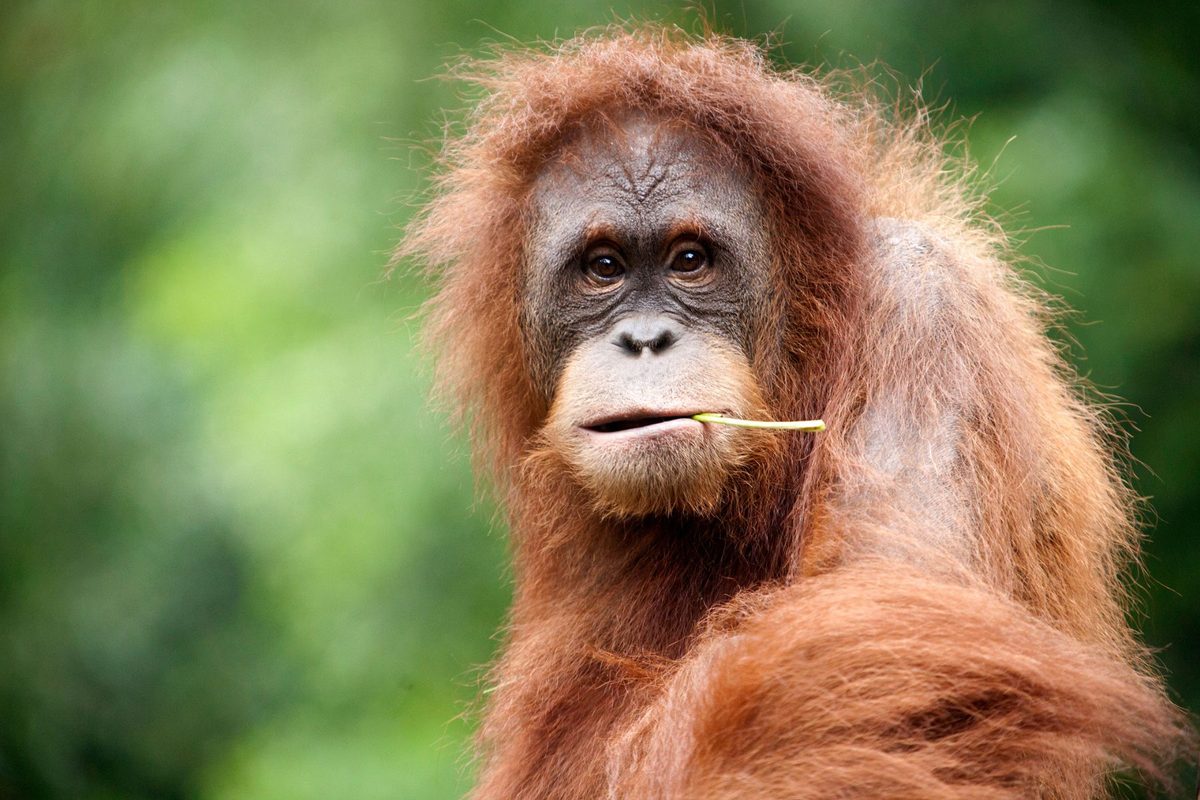
When observing orangutans consuming leaves, it’s easy to assume they simply select the most accessible plants. However, recent research reveals that orangutans actively seek out plants with medicinal properties.
This groundbreaking study, based on over 20 years of meticulous observations of wild orangutans in the Sebangau peat swamp forest of Central Kalimantan, Borneo, demonstrates that these incredible primates can “self-medicate” by using a sequence of specific plants.
Our research focused on identifying non-random dietary choices among the orangutan population. When scientists analyzed their consumption patterns, they discovered that orangutans included a significantly higher number of plants with known medicinal benefits than anticipated. Notably, many of these plants possess antibacterial, anti-inflammatory, or wound-healing compounds.
“At this stage, we cannot assert that orangutans consciously ‘diagnose’ themselves like humans do,” states Georgia Allen, the lead researcher and a master’s student in conservation and biodiversity at the University of Exeter. The research findings were published in the journal Scientific Reports.
“Nevertheless, our findings indicate that orangutans selectively consume certain medicinal plants in ways that extend beyond basic nutrition,” she adds.
Interestingly, many of the plants included in their diet are not staples, suggesting they are consumed for their specific health benefits rather than for daily sustenance.
The origins of this behavior—whether it’s an innate instinct or cultural knowledge passed down through generations—remain unclear. However, similar “self-medication” behaviors have been documented in chimpanzees, bonobos, gibbons, and gorillas, all of which also consume plants that alleviate internal parasites.
The research, spearheaded by Allen, under the guidance of Dr. Kimberly Hockings and Dr. Elodie Fryman, underscores a fascinating observation: some plants consumed by orangutans are also utilized for medicinal purposes by local indigenous communities.
This correlation highlights the crucial need to preserve indigenous knowledge as part of broader biodiversity conservation efforts.
Read more:
This version retains the original HTML tags and is optimized for SEO by incorporating relevant keywords, enhancing readability, and maintaining a clear structure.
Source: www.sciencefocus.com