


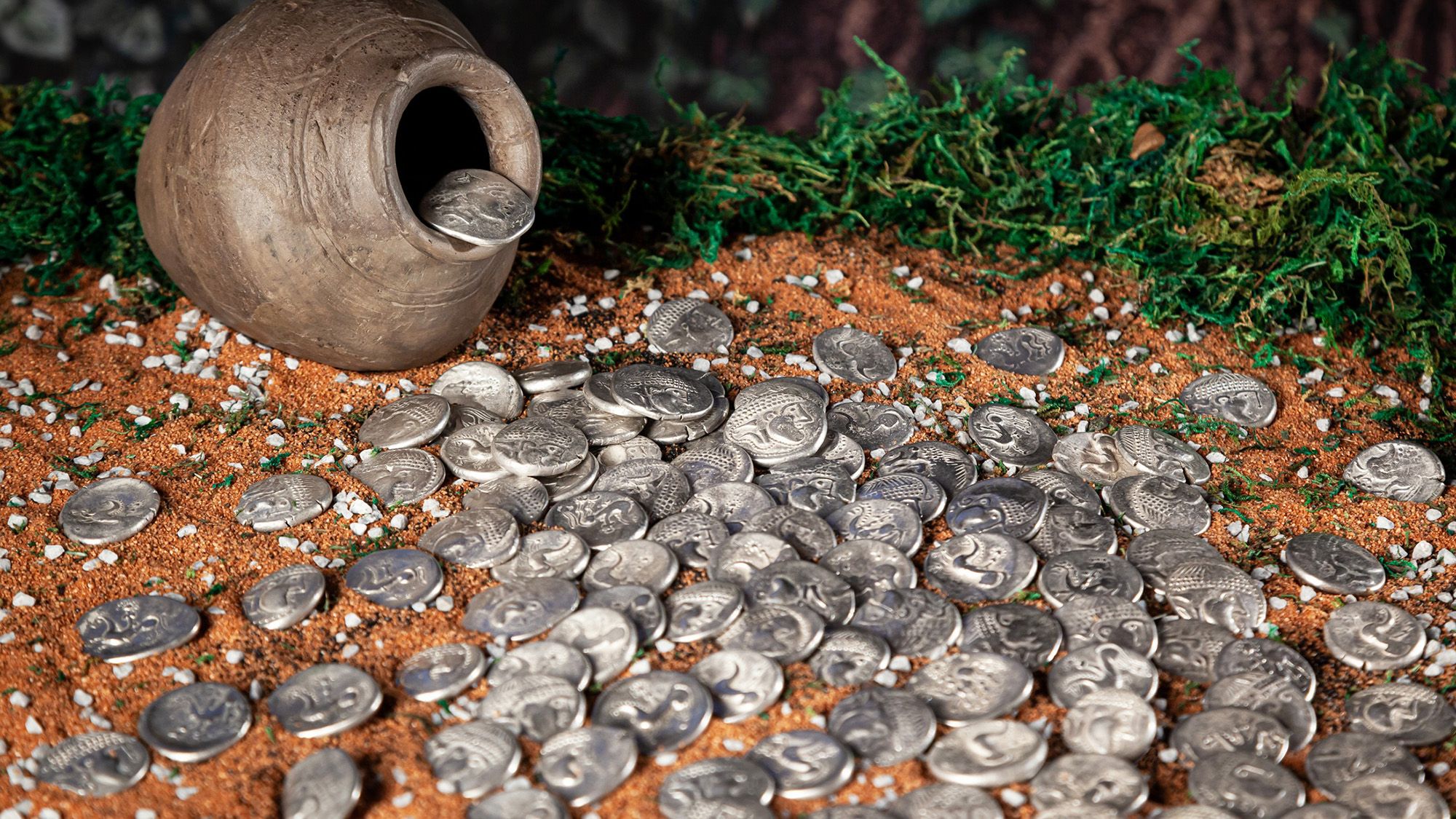
Hungarian archaeologists have discovered more than 200 Celtic silver coins dating back more than 2,000 years at a site in western Hungary. Found during excavations conducted between 2023 and 2025 ahead of an electrical-substation project, the hoard is one of the largest treasure discoveries made in the country in recent decades.
A buried Celtic hoard
According to a statement from power company E.ON, the coins date from the late second century B.C. to the early first century B.C. The hoard weighs approximately 4.4 pounds (2 kilograms). The silver alone could be worth more than $2,000 at today’s market prices, but its rarity and historical significance make it virtually priceless, the statement said.
The site was once part of a farm, and several coins had been found there when the land was plowed in recent decades. During the latest excavation, archaeologists initially uncovered a few coins. They then searched the area with metal detectors and located the larger hoard, which had been placed in a small ceramic container about 40 centimeters underground.
“This is rare in Europe,” Estelle Kreiter of the Hungarian National Institute of Archaeology said at a press conference, according to local news outlets. Kreiter added that the last similar discovery in Hungary was made in the late 1960s.
Greek-inspired Celtic coins
The coins are modeled on the Greek tetradrachm, a large silver coin first introduced in the late sixth century B.C. The newly discovered Celtic copies belong to a type known as a “velem,” named after the fortified Celtic hilltop settlement of Velem St. Vid oppidum. Similar coins have been found about 10 miles (15 kilometers) to the west.
One side of each coin bears a stylized head, probably representing the Greek god Apollo. The other shows a helmeted rider and a horse.
Excavations have revealed evidence of more than 7,000 years of human occupation at the site, officials said. The finds include an approximately 7,000-year-old polished stone chisel used for woodworking and a glass bead with a peacock-eye pattern that may have been part of jewelry from the sixth or seventh century B.C.
A Roman villa at the same site
Kreiter said a Roman villa was built at the site in later centuries without disturbing the buried hoard.

Although the villa has long since been demolished, archaeologists were able to reconstruct its floor plan, including an underfloor heating system. They also found a Roman brick bearing dog footprints. Artifacts from the site will become part of the museum’s exhibits.
Celtic coinage in central Europe
According to Museum Wales, the Celts were closely related Iron Age peoples descended from Proto-Indo-European speakers. One Celtic group that emerged in central Europe occupied much of central and western Europe from about the 10th century B.C. to the first century B.C.
Julius Caesar’s Roman forces eventually defeated the Celtic Gauls at Alesia, in present-day eastern France, in 52 B.C. The Britons were also Celts, although most people of Celtic descent would not have used that name themselves. Some modern ethnic groups, including the native Irish and the Bretons of France’s Atlantic coast, trace their ancestry to Celtic populations. Regions with strong Celtic origins are sometimes called the “Celtic periphery” of Western Europe.
British coin expert Christopher Howgego, emeritus curator and emeritus professor of Greco-Roman numismatics at the University of Oxford, wrote in the Journal of Roman Studies that Celtic tribes in the Carpathian Basin, now spanning Hungary and Romania, began minting their own silver coins after Celtic mercenaries encountered Greek coins while serving in Hellenistic armies in Greece and Macedonia.
Howgego writes that Greek-inspired Celtic coins combined adaptations of classical Greek portraiture with distinctive Celtic designs. The copy tetradrachms were so valuable to their makers that they were rarely used for everyday purchases. Instead, they were often hoarded as wealth or buried as ritual offerings.
Source: www.livescience.com