


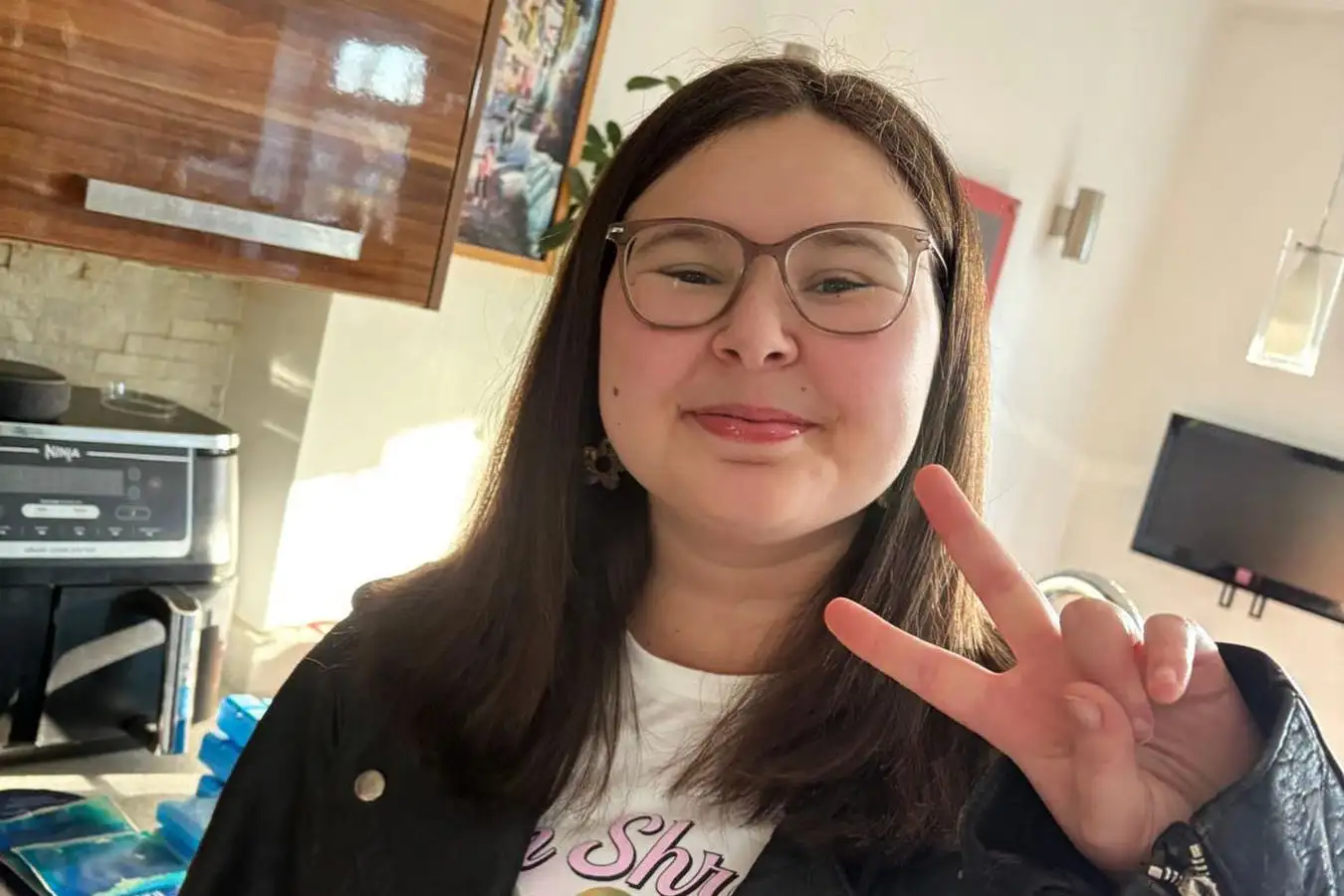
Alyssa Tapley received life-saving CRISPR treatment
Credit: Alyssa Tapley
After my bone marrow transplant failed to treat my leukemia, I thought I was out of options. Doctors had reassured my family it would only be problematic for a few weeks—not months or years.
At just 13 years old, I faced the harsh reality: “I just turned 13. How can I grow up and live a normal life like everyone else?”
Fortunately, we learned about a clinical trial at Great Ormond Street Hospital in London. It sounded like something out of science fiction. “We’re going to use CAR T therapy; the cells will multiply and go hunt down cancer cells,” the doctors explained.
This journey began after Easter 2021. Returning to school post-lockdown, I was constantly fatigued—struggling to walk home and dozing off during breaks. Soon, I fell seriously ill and could no longer attend school.
Early one morning, my dad noticed my labored breathing, and we rushed to A&E. I ended up in intensive care with double pneumonia. When I awoke, I learned that I was already undergoing chemotherapy for leukemia, where immune cells in the blood turn cancerous.
My parents later revealed that it took days for doctors to pinpoint my illness, as I had T-cell leukemia, which is less common than B-cell leukemia.
The next steps unfolded rapidly. I underwent a month of chemotherapy at Leicester Royal Infirmary, but it proved ineffective. Stronger chemotherapy attempts also failed, leading to a bone marrow transplant at Sheffield Children’s Hospital in late October. The goal was to eradicate the unhealthy blood stem cells and replace them.
I spent five and a half weeks in the hospital, dreading the prospect of missing Christmas. Though I returned home for the holiday, a fever forced me back to Sheffield, and it became clear the transplant was ineffective.
With no further options available, the dire situation became a crushing blow for my parents, particularly for my mother, who felt hopelessness more keenly than I did.
My parents searched tirelessly for alternatives, exploring options in other countries and considering refinancing our home. They repeatedly encountered information about CAR T therapy, which is designed to attack B-cell leukemia. However, we soon discovered it was ineffective against T-cell leukemia, as T cells would essentially attack one another.
Then my consultant from Sheffield reached out about a trial led by Professor Waseem Qasim, who was innovatively using CRISPR base editing to modify CAR T cells, allowing them to avoid attacking each other. My case seemed like a perfect fit, leading us to Great Ormond Street to meet Professor Qasim and Dr. Robert Chiesa, who conducted the trial.
Initially, my parents had reservations about me participating, worried about potential failure and the pain I had already endured in the hospital. Yet, they ultimately let me choose.
I felt compelled to participate—not just for myself, but to potentially help future patients. At 13, I had little control over my life. This was my chance to regain some power and make a meaningful impact.
Before harvesting the CAR T cells, I underwent two weeks of preparatory treatment in the hospital. I even had camera crews capture the experience— it was surreal. A week later, Dr. Chiesa shared that the cells had multiplied; that was a strong indication of success.
The staff at Great Ormond Street were incredible. Even after two months without meeting my friends, we stayed connected through texts and notes shared through windows. However, I tragically lost a friend who was unable to get a bone marrow transplant.
Four weeks post-treatment, I underwent a bone marrow test and discovered no detectable cancer cells remained. When tested again two weeks later, my marrow still showed no signs, allowing for a second bone marrow transplant to replace my blood stem cells.
The most challenging part? Returning home. In the hospital, support was constant, but at home, I was isolated to avoid infections and couldn’t see friends. My only companion was my dog, Holly, as my mom resumed work.
I am still in remission, though not entirely in the clear. My thyroid is underactive, a side effect of chemotherapy rather than the CAR T therapy. Continuous follow-up care is crucial to improving cancer treatments, potentially directing future patients straight to CAR T without the need for intensive chemotherapy.
Now 17, I’m pursuing A-levels and learning to drive, albeit nervously. My ambition is to study biomedical science so that I can contribute positively to someone else’s journey, just as the treatments transformed mine.
I also attend conferences to share my story. Recently, I had the profound privilege of meeting Professor David Liu, the pioneer of base editing—a moment that brought me to tears.
I feel incredibly fortunate to share my experiences and underline the vital importance of scientific research. Without it, my story would likely have ended differently.
as told to Michael Le Page
Topics:
Source: www.newscientist.com