


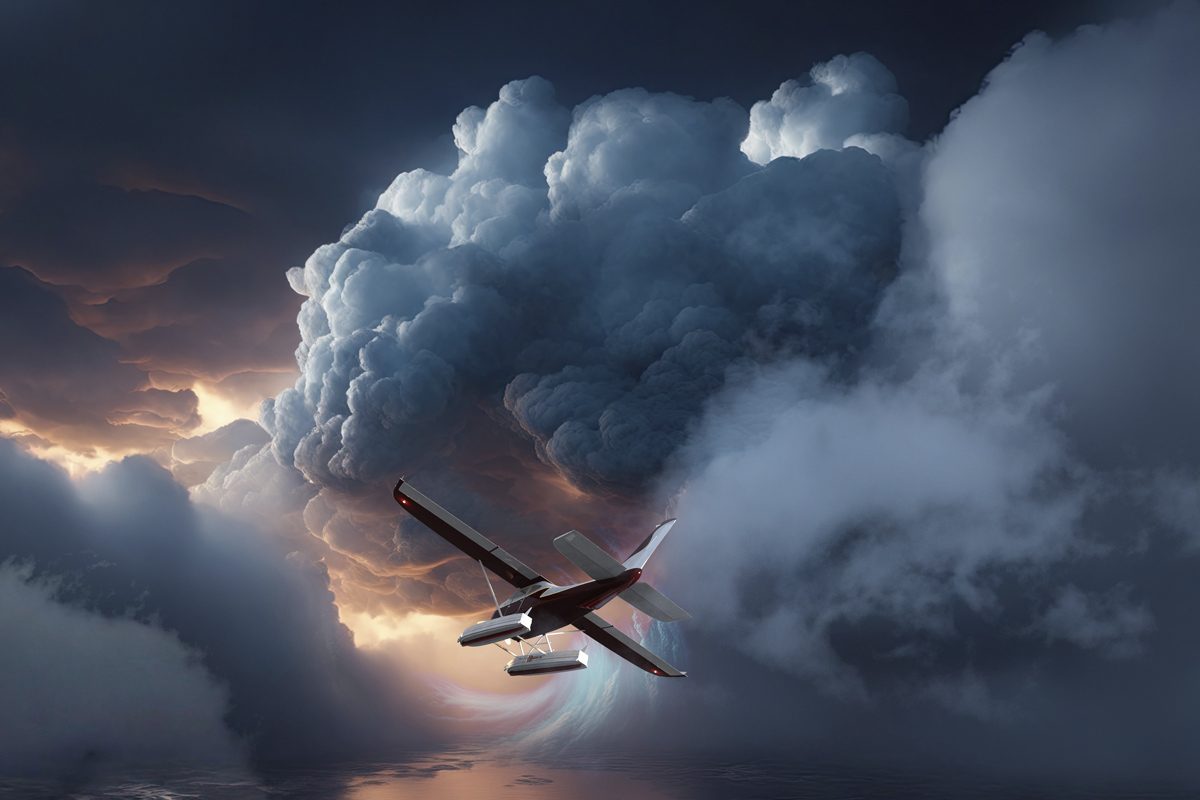
The Bermuda Triangle, a notorious stretch of ocean between Florida, Puerto Rico, and Bermuda, gained a legendary reputation in the mid-20th century due to numerous tales of mysterious aircraft and vessel disappearances.
One of the most infamous cases was the disappearance of Flight 19 in 1945, involving five U.S. Navy bombers on a training mission. Over the decades, many shipwrecks and aircraft incidents have been linked to the supposed perils of the Bermuda Triangle.
In 1975, author Larry Kush published a book that debunked several myths surrounding the area, revealing that the reported incidents were often exaggerated or unverified. His research indicated that the number of events in the Bermuda Triangle is not significantly greater than in other parts of the ocean.
Despite this, numerous theories—both natural and supernatural—have emerged over the years. Some attribute the phenomena to remnants of Atlantis, while others speculate the triangle is a portal to a parallel universe.
Among the natural explanations, one of the most peculiar is the hypothesis that methane bubbles rising from the ocean floor could capsize ships. Nevertheless, a study by the U.S. Geological Survey confirms that there have been no significant methane emissions in the past 15,000 years.
The frequent hurricanes in this region may have had severe impacts in an era before reliable weather forecasting allowed pilots and captains to navigate around dangerous storms.
Research indicates that intense storms can generate waves as high as 30 meters (almost 100 feet), capable of sinking even large vessels. A laboratory simulation confirmed that such waves can indeed be destructive, though there is no evidence that these waves specifically occur in the Bermuda Triangle.
Claims of magnetic anomalies affecting navigation have circulated, suggesting that sailors and pilots may have veered off course. However, no such anomalies have been documented. In the early 20th century, true north and magnetic north coincided in this area, potentially leading to navigational errors.
Importantly, the U.S. Coast Guard has not identified any unique dangers associated with the Bermuda Triangle, and it was notably absent from a 2013 study identifying the world’s most hazardous waters for maritime travel.
Despite significant air and sea traffic and a high frequency of hurricanes, the Bermuda Triangle does not statistically stand out for shipwrecks and crashes.
The persistence of this legend stems from human fascination with mysteries; early reports of disappearances garnered substantial media attention. As the myth gained traction, subsequent incidents were often erroneously tied to the Bermuda Triangle. Fortunately, modern technology has improved tracking of maritime and aerial navigation, diminishing the allure of the myth.
This article addresses the question raised by Cardiff resident Diane Johnston: “What happened in the Bermuda Triangle?”
If you have any questions, feel free to email us at: [email protected] or reach out through our social media Facebook, Twitter, or Instagram (please include your name and location).
Explore our ultimate fun facts and dive into more fascinating science topics.
Read more:
Source: www.sciencefocus.com