


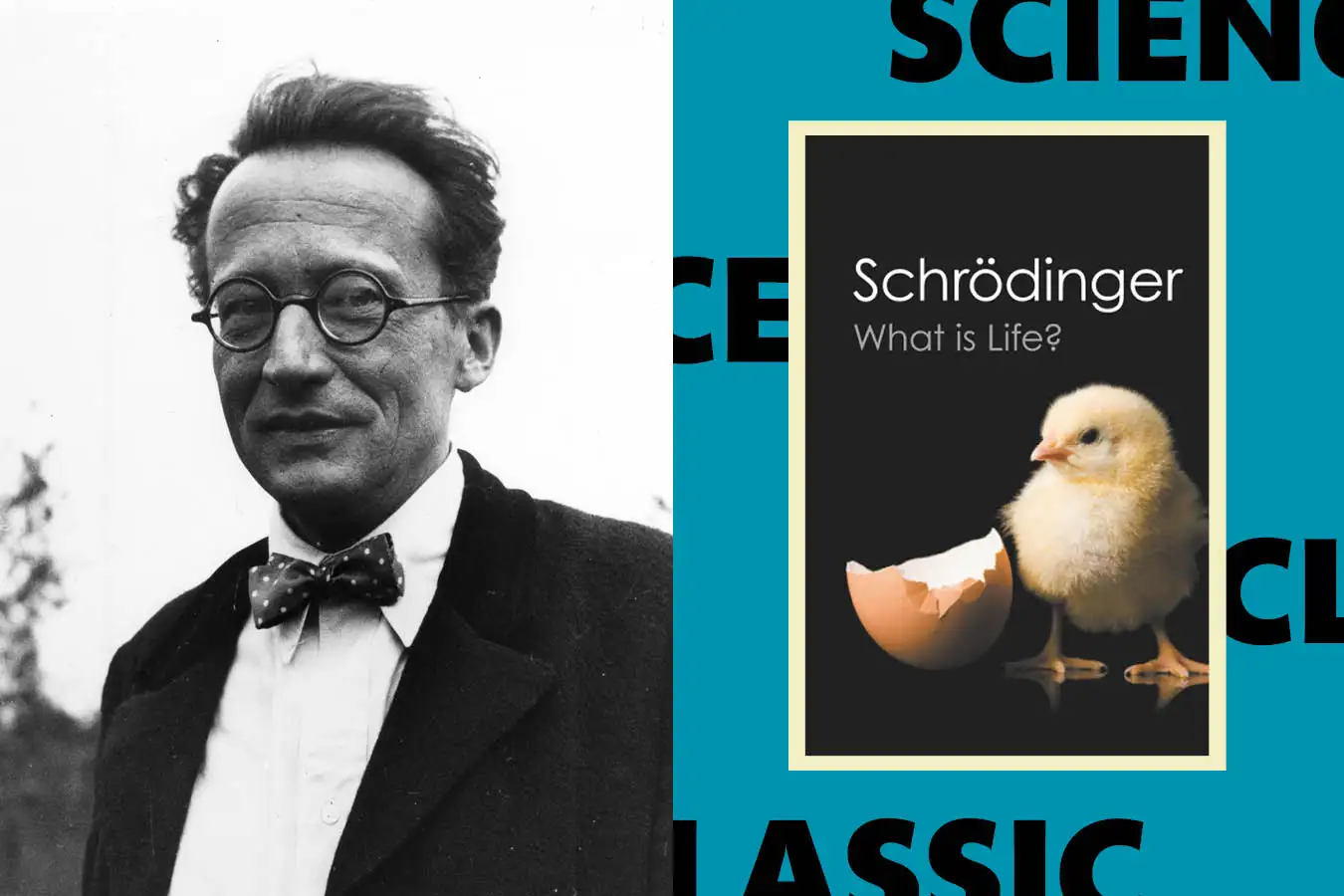
What Is Life? Is It Still Impactful?
In his seminal 1944 work, What Is Life?, Erwin Schrödinger, a pivotal figure in quantum science, argued that scientists have a responsibility to engage deeply with their areas of expertise. He challenges readers to explore the essence of life, transitioning from the world of inanimate matter to the vibrant realm of living organisms. This book spans 90 influential pages, positioning Schrödinger among the notable figures in popular science literature of the twentieth century.
Originally based on lectures given in Dublin in 1943, What Is Life? is conversational yet rooted firmly in the language of physics. Schrödinger poses a critical question: “How can the phenomena occurring within living organisms be explained through the lens of physics and chemistry?”
His investigation unfolds through a physicist’s lens. The text, subtitled Physical Aspects of Living Cells, begins by examining the microscopic building blocks of life, such as atoms, and their compliance with statistical physics. He adeptly explains how physicists can only offer average insights about a large collection of particles, rather than precise details about individual components.
The principles of physics indicate that systems tend toward increasing disorder, yet living organisms are remarkably organized. Schrödinger likens them to intricate clock mechanisms, marveling at how minimal genetic material enables reproduction and trait inheritance—a concept that puzzled him.
Written before the comprehensive understanding of DNA, Schrödinger speculated about the nature of genetic material while incorporating his research on radiation-induced mutations. He theorized about the solidity of this material and how quantum theory could clarify its stability. His significant hypothesis was that living beings require “negative entropy” to resist eventual disorder, continuously sourcing order from their environment. He posits that fully understanding this phenomenon might necessitate new laws of physics.
Since its publication in 1944, What Is Life? has significantly influenced scientific dialogue, inspiring numerous physicists to delve into biology. The book frequently appears on bestseller lists, evidencing its enduring popularity among general readers, although many chemists and biologists have critiqued its insights.
Nobel Prize laureate Max Perutz highlighted Schrödinger’s exploration of contemporary biological work, pondering how a deeper understanding of enzymatic functions could have clarified his queries about genetic material stability during cell division. Perutz also took issue with the notion of negative entropy.
Writers like Philip Ball have suggested that Schrödinger might have comprehended the entropy-information connection better if he had explored concepts like Leo Szilard’s 1929 solution to Maxwell’s Demon paradox, illustrating how disorder’s rise seems paradoxically impeded.
Despite valid critiques, I believe What Is Life? resonates well with those familiar with biology. Time and again, discussions with biophysicists echo Schrödinger’s queries. In a recent interview, one researcher expressed long-term aspirations for identifying new physical laws applicable to living entities, while another cautioned, according to physicist Philip Pincus from UC Santa Barbara, “If you’re at equilibrium, you’re dead,” reflecting Schrödinger’s 1940s mindset.
In 2021, biophysicist Rob Phillips from Caltech noted that What Is Life? serves as a “manifesto on the frontiers of physics,” suggesting that new phenomena require innovative concepts and may usher in new physical laws. I concur; although Schrödinger’s grasp of biology and chemistry was limited, his physicist’s intuition remains remarkably relevant.
Are physicists the right individuals to uncover the precise mechanisms distinguishing life from mere collections of atoms? This philosophical query remains open, yet future research could yield answers, evoking a mix of excitement and frustration that Schrödinger identified over eight decades ago.
Topic:
Source: www.newscientist.com