


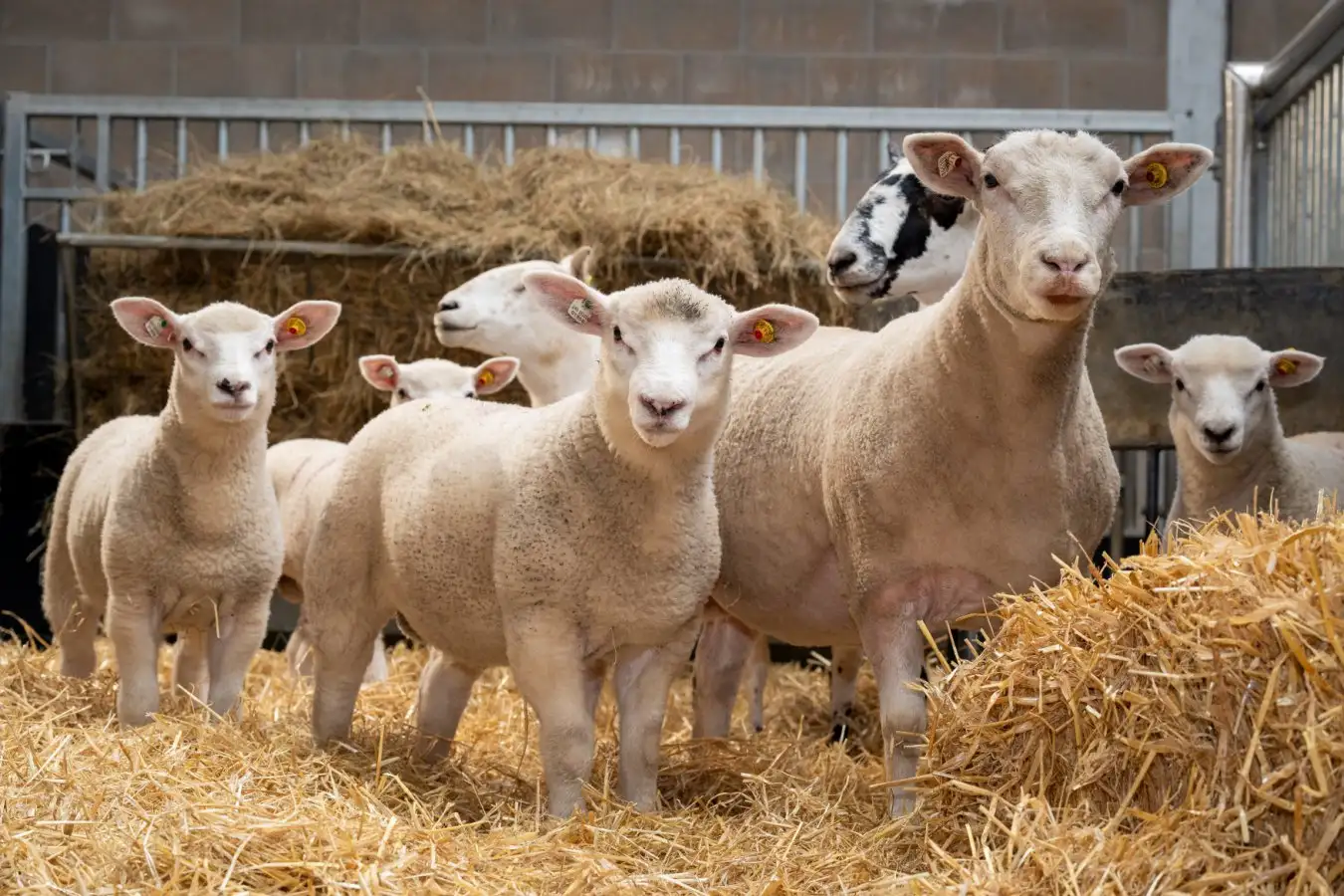
Breakthrough in Experimental IVF: Five Sheep Born, One Producing Two Offspring
Credit: Lawrence Winram
An innovative procedure in in vitro fertilization (IVF) involving the maturation of immature eggs in a laboratory has successfully led to the birth of a healthy lamb. This milestone marks the first time this method has been validated in large animals, offering hope for enhanced fertility treatments and improved success rates in IVF. Additional research is necessary, particularly for women whose ovaries may have been compromised by cancer therapies.
“This is a significant advancement,” states Stein Christensen, a professor at Copenhagen University Hospital, who was not part of the study.
Over three decades ago, similar techniques resulted in the first live birth of a mouse. “Reproductive processes in sheep resemble those in humans more closely than those in mice,” he adds. Manjushree Boob, doctors at Shubham Hi-Tech Hospital and Test Tube Baby Center in India, were also not involved in this groundbreaking research.
Conventional IVF treatments require daily hormone injections over one to two weeks to stimulate the maturation of around 10 eggs. Typically, only 6 to 8 of these eggs successfully fertilize in a lab setting. However, these methods pose the challenge of a live birth success rate of about 20%.
Considering these low success rates, researchers are exploring the potential of immature eggs. Women are born with a reserve of hundreds of thousands to over a million follicles, but this number diminishes over time. While one follicle typically matures during each menstrual cycle, the rest remain dormant.
In the latest study, Helen Picton and colleagues from the University of Leeds collected numerous follicles from sheep. They were treated with a specialized mixture of reproductive hormones and growth factors, such as follicle-stimulating hormone, to promote growth and egg maturation to about 60 percent.
About 30% of these eggs were fertilized, resulting in embryos implanted into 18 sheep, leading to the birth of a female lamb in early 2024, followed by four additional lambs this year. The female subsequently gave birth to two lambs, as detailed by Mr. Picton during his presentation at the European Society of Human Reproduction and Embryology conference in London on July 7th.
The promising results indicate that this technique could potentially increase available eggs for fertilization and enhance conception rates. However, Christensen mentions that this approach will likely supplement standard IVF, which may not necessarily simplify the process and could increase costs.
Picton cautions that this new approach might not become a routine practice as retrieving follicles requires a more invasive procedure compared to collecting mature eggs in traditional IVF.
However, women whose ovaries have been affected by cancer treatments stand to gain, as doctors often preserve fertility by extracting and freezing ovarian tissue, which brings a risk of transplanting cancer cells. Harvesting immature eggs does not carry the same risks, as cancer typically affects surrounding tissues.
Before this method can be widely adopted, research must first ensure that human eggs generated using this technique are viable for fertilization. Christensen notes that studies on this aspect are planned for the upcoming years. If successful, future trials could explore achieving healthy births; however, obtaining ethical approvals could take five to ten years, with the focus on ensuring that benefits will outweigh potential risks for both parents and future children.
Topics:
Source: www.newscientist.com