


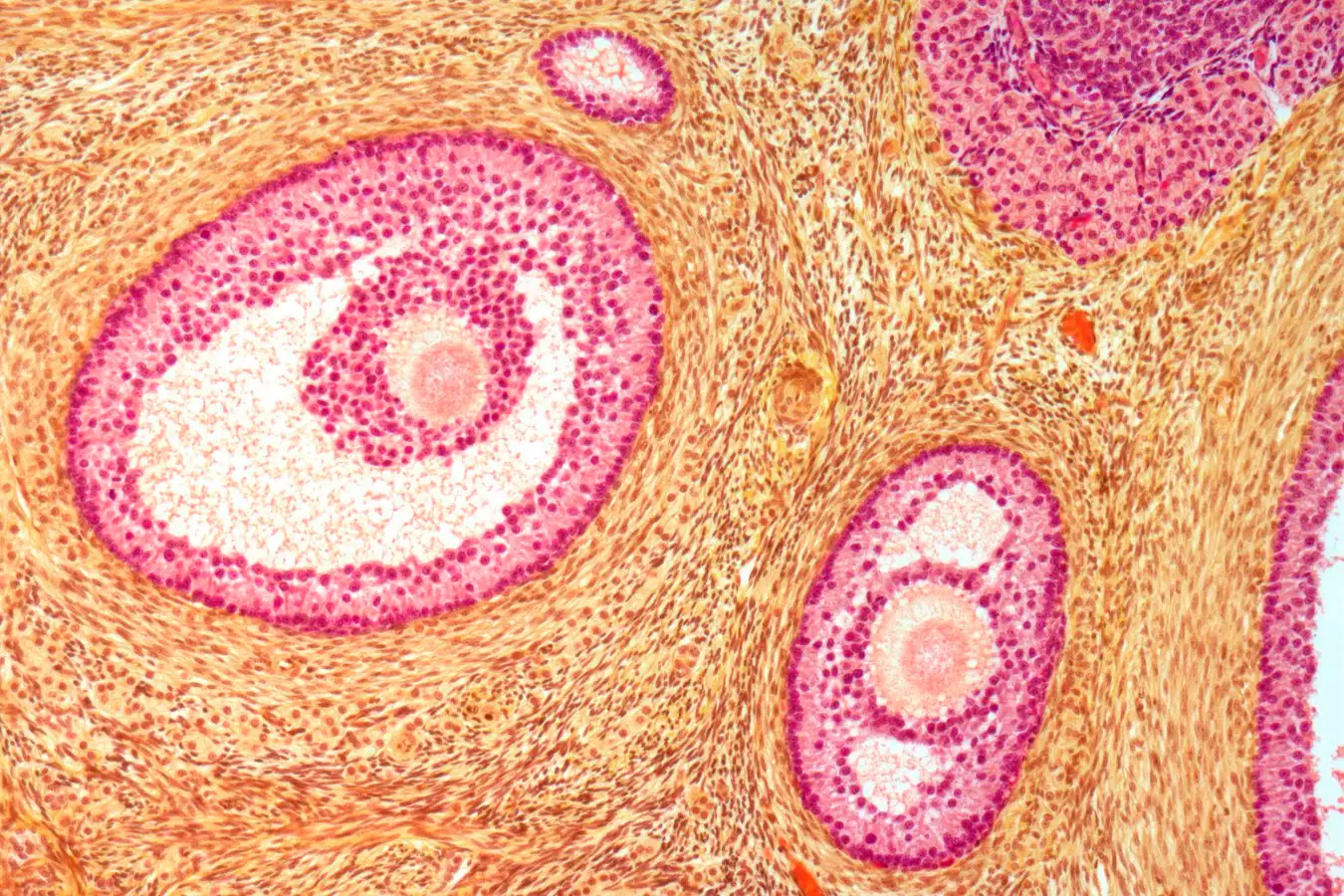
Light micrograph of a cross-section of an ovarian follicle containing an immature egg (orange) surrounded by fluid-filled cavities (light pink) and granulosa cells (dark pink) providing nutrients and hormones.
Steve Gschmeisner/Science Photo Library
Recent studies show that by softening ovarian hardness, we can enhance fertility. A drug that relaxes these organs has more than doubled conception rates and increased litter size five-fold in older, subfertile rats. While further research is necessary for human applications, these findings are promising for women seeking to conceive later in life.
Female fertility begins to decline in the mid-30s. However, many individuals in countries like England and Wales choose to have children later. The quantity and quality of immature eggs decrease with age, and ovarian stiffness can exacerbate this situation, impacting egg quality and development.
To investigate the underlying causes, Professor Wang Shixuan at Huazhong University of Science and Technology measured protein levels in the ovaries of women aged 18-28, 35-42, and 47-52, all with a history of gynecological cancer but no effects from ovary removal.
Findings indicate that the protein interleukin-11 increases in the ovaries with age, activating fibroblasts that produce collagen, thus increasing ovarian stiffness. This stiffness can significantly impact fertility.
The research team also genetically modified mice to make them resistant to interleukin-11. This led to a decrease in ovarian stiffness and an increase in ovulation compared to unmodified mice.
Finally, researchers tested an experimental drug targeting interleukin-11 production. Injections were administered to 36-week-old mice, corresponding to humans in their late 30s or early 40s, twice weekly for a month.
The results showed a 36% reduction in ovarian firmness and doubled conception rates, from 25% to 50%. Additionally, average litter sizes increased from three to five calves. Similarly, in aged rats, conception rates rose from 20% to 50%, with the number of litters increasing fivefold.
Researcher Francesca Duncan from Northwestern University suggests these findings might translate to premenopausal women, as interleukin-11 levels rise with age in human ovaries. However, it is essential to note that the study participants had a history of gynecological cancer, and further research is necessary to assess the implications for women without such conditions.
Additional studies could provide significant benefits for women’s overall health. Barbara Vanderheiden from the University of Ottawa posits that preserving fertility and prolonging ovarian function may help mitigate menopause-related health concerns like osteoporosis and cardiovascular disease.
The goal is to deliver the drug directly to the ovaries before human trials commence. So far, no significant side effects have been noted in animal models. However, Duncan cautions that interleukin-11 exists in various tissues in human bodies, necessitating high safety standards for any drugs targeting the ovaries.
It remains uncertain how long the drug must be administered to positively impact reproductive outcomes. “Reducing ovarian stiffness might be possible,” Vanderheiden states. “While short-term treatments are available, there is limited information regarding the duration required for effective results.”
Source: www.newscientist.com