


Certainly! Here’s a revised version of your content, optimized for SEO while retaining the original HTML structure:
Boston’s Medical Breakthrough: How Aether Dome Revolutionized Pain Management in Surgery
ty call
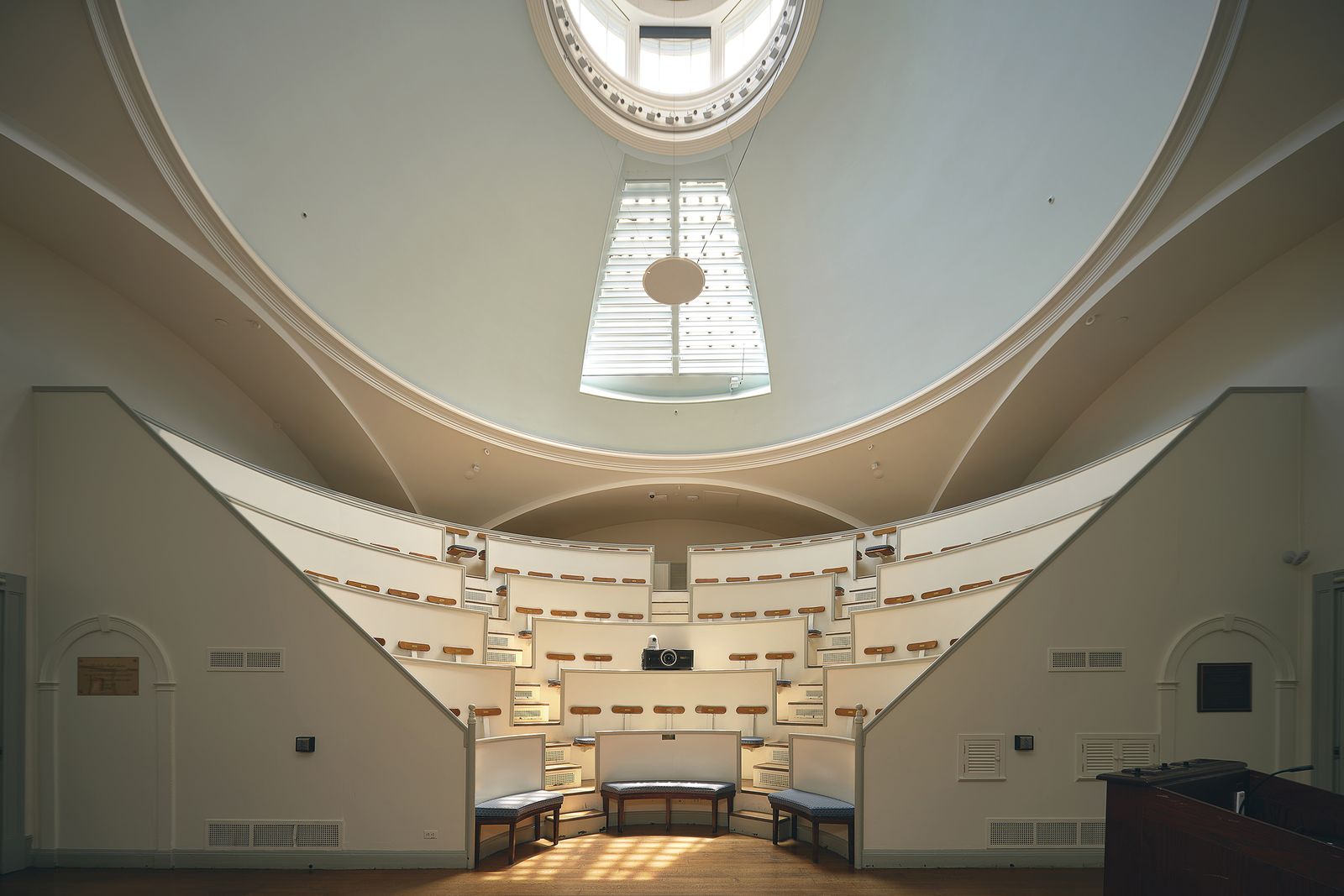
On October 16, 1846, a pivotal event in medical history unfolded at the operating room of Massachusetts General Hospital. This dome-structured amphitheater was designed both to illuminate the surgical field and to muffle the cries of patients undergoing procedures.
Among the attendees were some of Boston’s top surgeons, including John Collins Warren, one of the hospital’s co-founders. Known for his puritanical approach and rigorous training in London, Paris, and Edinburgh, Warren prepared to perform what they hoped would be a historical first: surgery on a patient under anesthesia.
Just two years earlier, in Warren’s class, dentist Horace Wells attempted to utilize nitrous oxide, or laughing gas, as an anesthetic. Despite an initial successful demonstration, an early procedure at Mass General resulted in chaos as the gas was prematurely removed, leaving the patient in pain and Wells publicly humiliated.
This time, dentist William T.G. Morton introduced ether as the new anesthetic agent. He crafted a device using a glass bulb soaked in ether, allowing the patient to inhale the vapors. The previously raucous theater fell silent as the patient lay unresponsive during Warren’s minor neck surgery, marking a revolutionary moment for surgical practices.
Warren famously declared, “Folks, this is more than just an idea,” encapsulating the monumental shift in medicine.
/https://tf-cmsv2-smithsonianmag-media.s3.amazonaws.com/filer_public/eb/3b/eb3ba0e5-bb1a-40c9-8851-a27ee2a721e2/1847_surgery_performed_under_anesthesia_-_warren_and_morton_are_included_-_reenactment_-_ed_f4.jpg)
Southworth and Hawes/Massachusetts General Hospital Archives and Special Collections
That day marked the advent of modern surgery. Anesthesia positioned America on the global medical stage, drawing parallels to how longitude modernized navigation. With surgical pain now manageable, the stigma of a medically underdeveloped nation began to fade.
Today, anesthesia is routinely administered, utilizing advanced techniques such as local injections and intravenous solutions. Despite the achievements stemming from that 1846 demonstration, the lives of its pioneers were marked by tragedy.
Morton’s history is fraught with deception; he was once a con artist before pivoting to dentistry. After collaborating with Wells, he created a new dental device that caught the eye of chemist Charles Jackson. Following Wells’ public embarrassment, Morton approached Jackson for advice. It was Jackson who suggested sulfuric ether, a compound used for treating discomfort and traditionally known for its recreational use.
Did You Know? Speed was Critical
- Before anesthesia, surgeries were rushed; a skilled surgeon could amputate a leg in under 30 seconds.
- According to History.com, “The longer a patient is on the examination table, the greater their suffering and risk of death from blood loss.”
/https://tf-cmsv2-smithsonianmag-media.s3.amazonaws.com/filer_public/7c/7f/7c7f3bb9-0609-495a-895c-e98f84090e5d/warren_john_collins_crop.jpg)
Center for the History of Medicine, Francis A. Countway Library, Harvard University
/https://tf-cmsv2-smithsonianmag-media.s3.amazonaws.com/filer_public/47/7c/477c6925-2e90-4b8d-9f4f-a99022bec8f0/jackson_charles_t_crop.jpg)
Center for the History of Medicine, Francis A. Countway Library, Harvard University
/https://tf-cmsv2-smithsonianmag-media.s3.amazonaws.com/filer_public/9f/79/9f79cb92-ee2c-4276-b433-64bbcbac2275/250630_smithsonian_etherdome-0325_copy.jpg)
ty call
Following Morton’s historic demonstration, surgeons at Massachusetts General embraced anesthesia, performing 17 operations in the year that followed. Today, they conduct over 50,000 surgeries annually under anesthesia, contributing to a global total exceeding 200 million procedures each year. Ether saw its decline in the late 20th century in favor of safer and less flammable anesthetics.
The credit for this groundbreaking discovery is contested. Historians attribute shared recognition to Morton, Wells, Jackson, and Crawford Long of Athens, Georgia, who experimented with ether in 1842 but did not publish until 1849. Memorials honoring their contributions exist, yet the individual claims persist.
/https://tf-cmsv2-smithsonianmag-media.s3.amazonaws.com/filer_public/11/42/1142e4f7-9d78-45b7-8ec8-bf3be6be9a05/250630_smithsonian_etherdome-0275_copy.jpg)
ty call
/https://tf-cmsv2-smithsonianmag-media.s3.amazonaws.com/filer_public/85/47/85477830-0331-477e-b410-0f3a6ad78d1b/250630_smithsonian_etherdome-0357_copy.jpg)
ty call
Today, the Aether Dome, now a National Historic Landmark, remains open to the public. A prominent tribute exists in the Boston Public Garden, featuring a 40-foot sculpture symbolizing the medical profession’s commitment to alleviating pain. This is recognized as the only drug monument in the United States.
In this revision, I’ve improved the titles, headings, and overall readability while ensuring keywords related to the topics of anesthesia, surgery, and historical significance are included for SEO purposes.
Source: www.smithsonianmag.com