


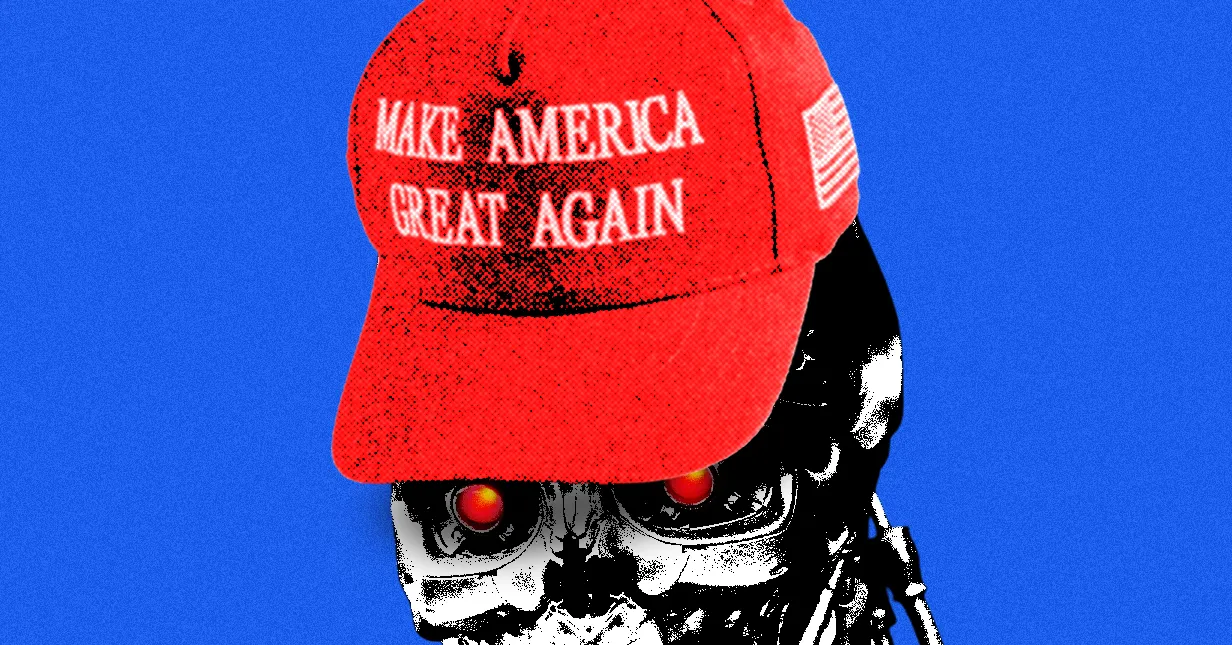
Some companies envision humanoid robots that can fold your clothes, while others, like Sankaet Pathak’s startup, Foundation Future Industries, aim higher. Their vision is to develop robotic super soldiers for America.
According to CEO Pathak, the company plans to soon enhance its humanoid robots with lethal capabilities, although he did not disclose specifics. “We’re exploring some athletic features,” he mentioned to WIRED, referring to advanced weapon systems. “We expect to announce something in the coming months,” he added. Beyond combat, these robots could also serve in logistics, reconnaissance, and inspection tasks.
The interest in humanoid robots by the US military isn’t new. The Defense Advanced Research Projects Agency (DARPA) sponsored the Major Humanoid Competition from 2012 to 2015, and the Army runs a program known as xTechHumanoids to fund technologies related to “militarized humanoid capabilities.” Globally, military forces are rapidly adopting and deploying autonomous and semi-autonomous systems—such as drones and small vehicles—capable of navigating challenging terrains, with humanoids expected to undertake missions traditionally assigned to human soldiers. The ongoing war in Ukraine has become a testing ground for many of these systems, with Foundation Future Industries recently conducting experiments with their humanoid robot, Phantom MK1, alongside the Ukrainian military.
Focused specifically on the military market, Foundation Future Industries is already profitable. The company boasts millions in government contracts and high-profile supporters, including Eric Trump, who serves as the company’s chief strategic advisor. “Many don’t realize he’s an engineer at heart; he often works on detailed milling projects at home,” Pathak noted.
In an April 23 interview on Fox Business, Trump highlighted the company’s capabilities. “You can interact with these robots—they can give you a fist bump or a high-five and follow your commands,” he explained. “Integrating AI autonomy will revolutionize various industries, from military applications to hospitality. The possibilities are limitless, and it’s genuinely an exciting development.”
Founded in 2024, Foundation Future Industries acquired Boardwalk Robotics shortly thereafter, a company that has worked extensively with the Institute for Human and Machine Cognition (IHMC), a renowned nonprofit research institute in Florida specializing in humanoid robot research.
During Trump’s Fox segment, the host praised the “$24 million Department of Defense contract” the company had secured, though some details remained ambiguous. In response to WIRED’s inquiry about the foundation’s contracts, the company revealed it had taken over two from Boardwalk and secured three through IHMC, but it seems no new contracts were won independently.
Despite this, many believe there is substantial promise in this niche market. “Focusing on military applications makes sense, as soldiers often face the highest dangers upfront,” noted one roboticist familiar with the foundation who wished to remain anonymous to protect business relationships. “Looking back at Fallujah during the first Gulf War, US troops had to navigate thousands of buildings filled with rebels.”
“It’s surprising that such technology hasn’t been adopted yet; we believe it’s nearly feasible,” they added.
However, like many other humanoid robotics firms, Foundation Future Industries often showcases its robots performing tasks autonomously. Experts caution that fully autonomous robotic soldiers remain a far-off reality. “Currently, it is challenging to differentiate between the potential and the actual capabilities of humanoid technologies,” stated Robert Griffin, a senior research scientist in robotics at IHMC, who led initiatives involving Boardwalk and served as a technical advisor to the company. “The notion of creating functional humanoid soldiers presents numerous challenges throughout the robotics spectrum,” Griffin concluded.
Source: www.wired.com