



US cybersecurity company F5 has urged customers to install an out-of-band hotfix for critical BIG-IP vulnerabilities that could let unauthenticated attackers disrupt traffic, terminate the Traffic Management Microkernel (TMM), or potentially execute arbitrary code on affected systems. The flaws affect BIG-IP Access Policy Manager (APM) and BIG-IP iRules functionality, while more than 177,000 BIG-IP instances are currently exposed to the internet, according to Shadowserver.
Critical BIG-IP vulnerabilities require urgent patching
The five stack-based buffer overflow vulnerabilities are tracked as CVE-2026-121805, CVE-2026-120292, CVE-2026-120285, CVE-2026-116953, and CVE-2026-123637.
They affect F5’s BIG-IP Access Policy Manager centralized access-management proxy and BIG-IP iRules programmable scripting functionality. F5 rates the issues as Critical and says an unauthenticated attacker could exploit them to terminate TMM and remotely execute arbitrary code on a system with a vulnerable configuration.
F5 also disclosed CVE-2026-126822, an integer underflow, or wraparound, vulnerability that a remote, unauthenticated attacker could exploit to cause a denial-of-service (DoS) condition.
“Traffic is disrupted while the TMM process is restarted. This vulnerability could allow a remote, unauthenticated attacker to cause a denial of service (DoS) and perform RCE on a BIG-IP system,” F5 said. “There is no control plane exposure; this is a data plane issue only.”
F5 releases an out-of-band hotfix
Administrators should install the out-of-band hotfix released on Wednesday on vulnerable devices and upgrade their systems to the latest available version.
Shadowserver is currently tracking more than 177,000 BIG-IP instances exposed to the internet. However, there is no information about how many of those systems are honeypots or have already been patched.
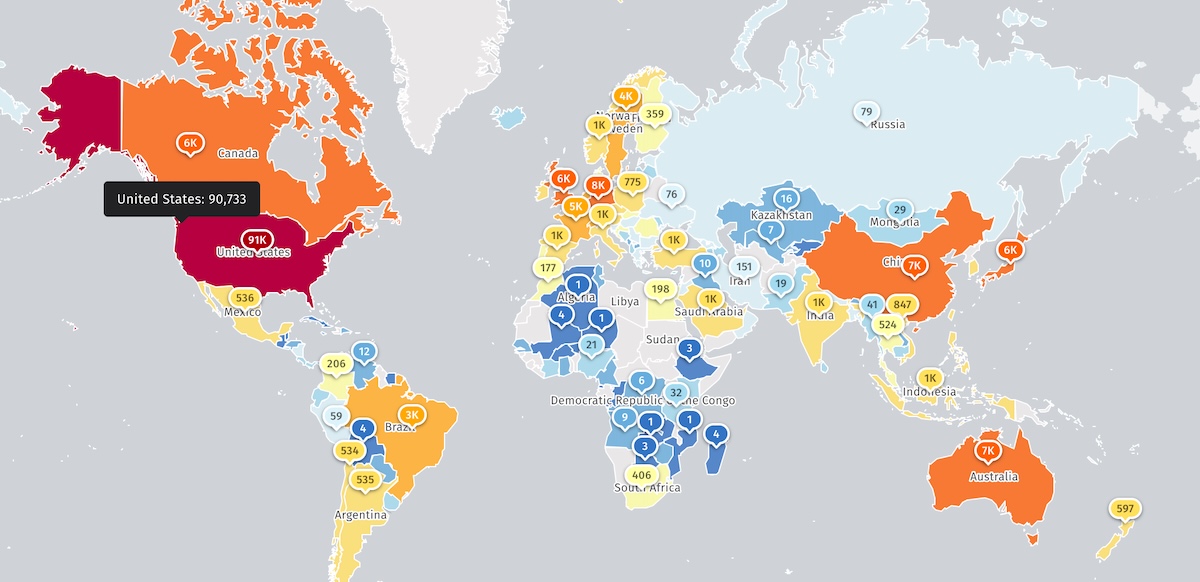
F5 flaws have been repeatedly targeted
F5 has not said that these vulnerabilities are being exploited in attacks. However, cybercriminals and nation-state threat groups have frequently targeted F5 security flaws. In recent years, attackers have used vulnerabilities in F5 products to infiltrate corporate networks, map internal servers, hijack devices, deploy data-erasure malware, and steal sensitive files from victims worldwide.
The US Cybersecurity and Infrastructure Security Agency (CISA) has warned about seven F5 vulnerabilities that have been actively exploited since November 2021. Four of those vulnerabilities have also been used by ransomware gangs.
Most recently, in September, F5 patched a critical BIG-IP APM vulnerability, CVE-2026-94127, which was actively exploited in zero-day remote code execution attacks.
F5 also revealed a year ago that state-sponsored hackers had infiltrated its systems in August 2025 and stolen source code and information about undisclosed BIG-IP security vulnerabilities.
F5 is a Fortune 500 technology company that provides cybersecurity, application delivery networking (ADN), and other services to more than 23,000 customers, including 80% of the Fortune Global 500 and 48 of the Fortune Global 50 companies.
Source: www.bleepingcomputer.com