


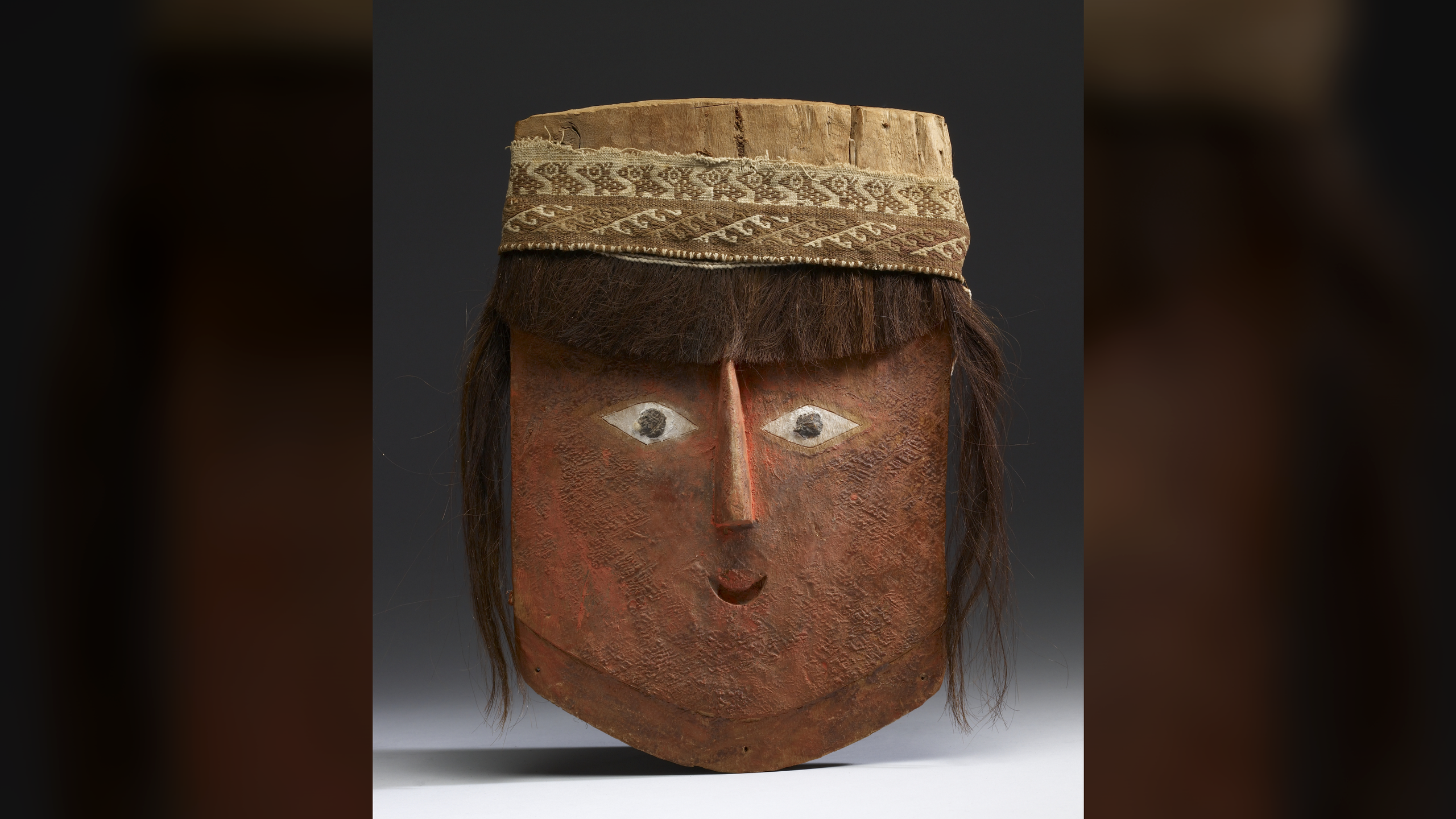
Essential Facts
Name: Mummy Mask Wig
Description: Wooden Carved Mask
Origin: Peru
Time Period: Circa 1000 to 1450 AD
This ancient wooden mask, adorned with human hair and a woven headband, adorned Andean mummies approximately 1000 years ago. Crafted by skilled Chancay artists, it was painted in red using cinnabar, a mercury-containing pigment.
The Chancay people, a significant part of the Inca civilization, inhabited the central coast of Peru during the Late Middle Period (1000-1450 AD). A notable Chancay tradition involved the funeral bundle, where the deceased were wrapped in layers of fibers, plant materials, and animal skins. These bundles were often buried in pits along with grave goods like tools, food, and figurines. Due to the common fetal positioning in which bodies were wrapped, identifying specific features, such as the head’s location, was challenging.
According to the Walters Art Museum in Baltimore, which houses this mask, “false heads” made from fabric or wood were occasionally attached to Chancay funeral bundles, serving as focal points for honoring ancestors.
Latest Videos from

This nearly life-sized mask measures 12 x 8 inches (30.5 x 20.3 centimeters). Chancay funeral masks feature exaggerated attributes, such as diamond-shaped eyes and a triangular nose, along with a distinctive U-shaped smile. Microscopic examinations by the Walters Art Museum in 2017 confirmed that the wig was predominantly crafted from human hair.
The Chancay artist who crafted this mask colorized it in red using cinnabar, a toxic mercury sulfide compound. This pigment was commonly associated with Andean funeral rituals, symbolizing purification and remembrance. Notably, the cinnabar paint on the mask shows signs of being wrapped in fabric, indicating it was likely not placed on the outer layer of the burial bundle.
Although the Chancay culture is less recognized than the Incan civilization, recent discoveries highlight that Chancay pottery and mummified ancestors with tattoos illustrate a sophisticated society with notable artistic achievements.
For more incredible archaeological finds, visit the Amazing Artifacts archive.
Did you catch last week’s remarkable discovery? Check out last week’s amazing artifact!
Topics
Source: www.livescience.com