


1 minute read
Exciting Preparations for Upcoming Moonwalk Simulation Underwater
Pole Tanks
Brookhaven Science Associates
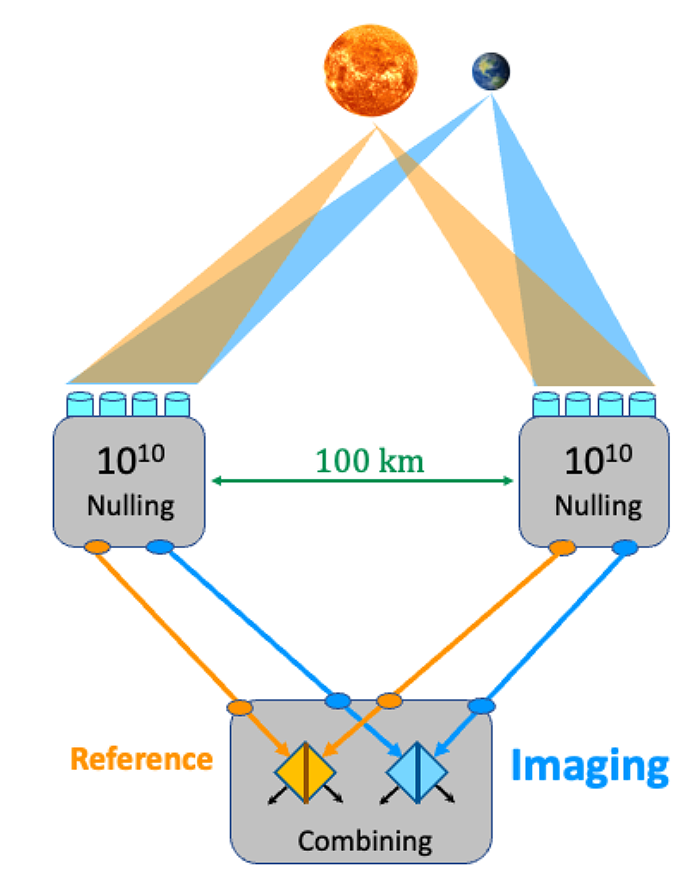
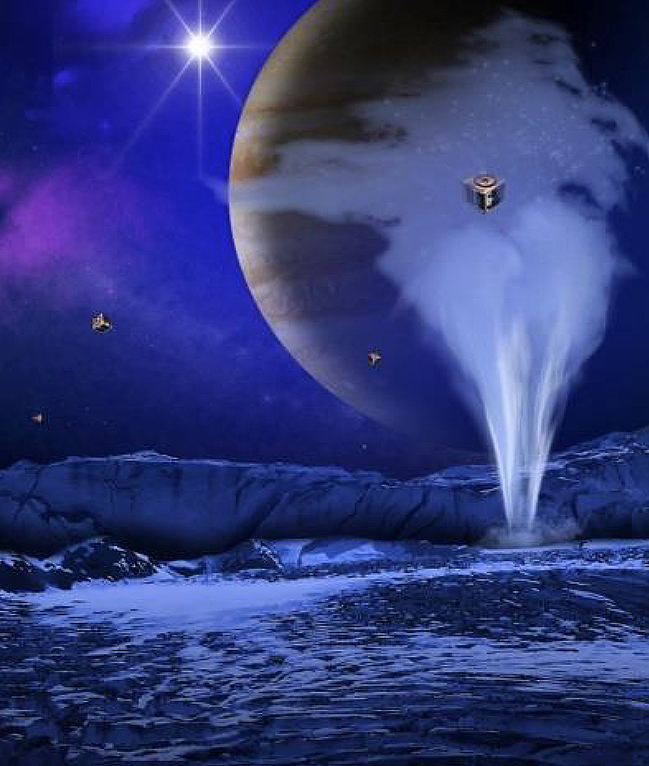
The aim of this innovative study is to reconstruct detailed images of Earth-like exoplanets orbiting nearby stars in visible light, allowing us to identify surface features. The process unfolds in two key stages. Initially, a revolutionary nulling interferometer design known as “dynamic hierarchical nulling” aggregates inputs from multiple apertures to distinguish starlight from planetary light with an impressive contrast ratio exceeding 10^10 in the visible spectrum. Subsequently, Michelson interferometric imaging is implemented to merge output beams from two nullers spacecraft positioned about 100 km apart, achieving the necessary angular resolution. Importantly, the hierarchical nuller records starlight in a separate beam, which serves as an interferometric phase reference. This capacity to analyze Earth-like exoplanets perfectly aligns with NASA’s strategic objectives and is sure to captivate public interest.
2026 Selection
Share This
Details
Related Terms
Discover More NIAC Topics
Source: www.nasa.gov