


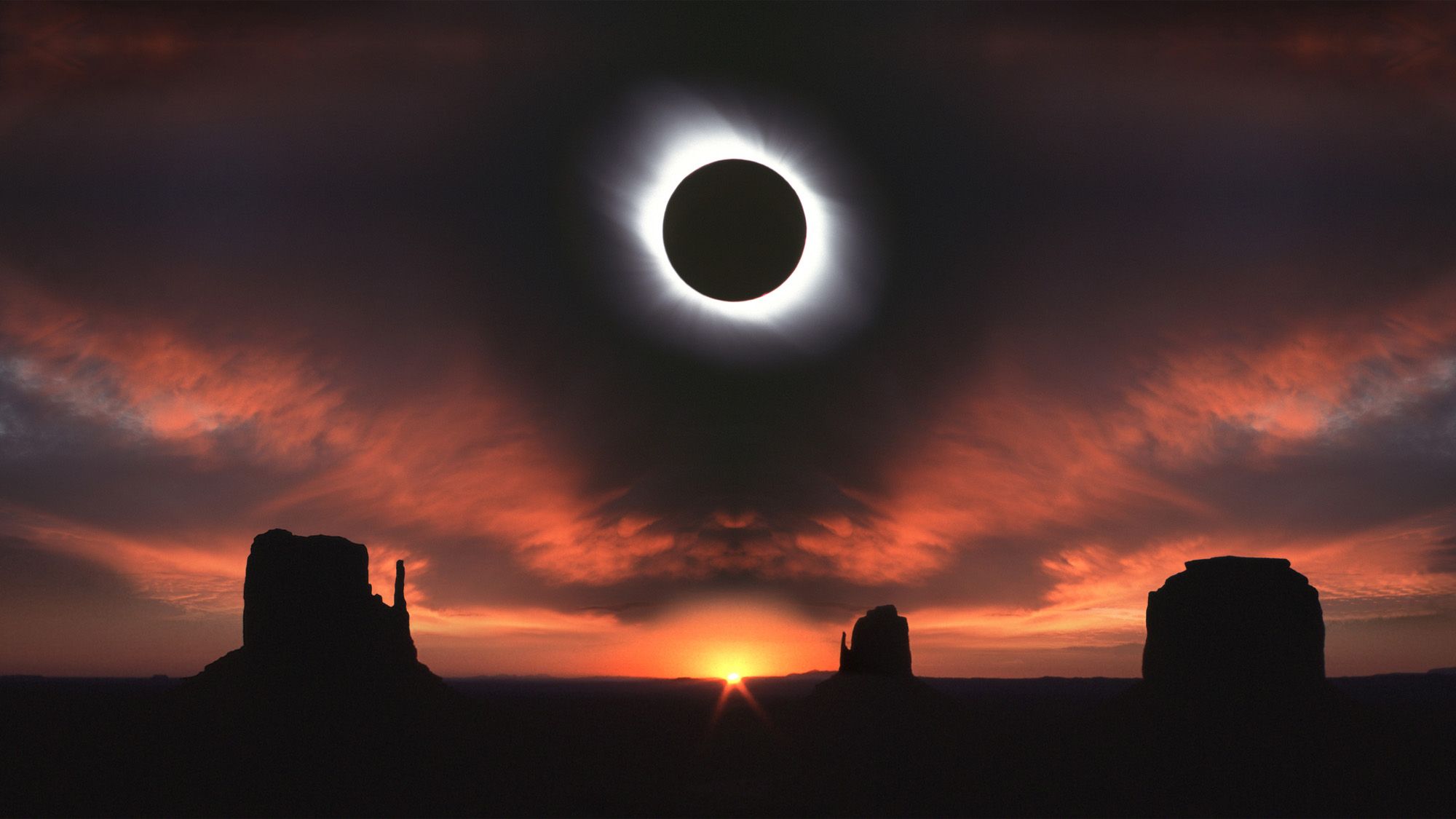
One of the biggest myths about solar eclipses is that you need expensive solar viewing equipment to enjoy them. Professional eclipse photographers may travel with telescopes, tracking mounts, cameras, telephoto lenses and specialist solar filters, but most observers can have an unforgettable experience with a much smaller and more affordable kit.
That will be especially useful on Aug. 12, 2026. A total solar eclipse will cross Greenland, Iceland and Spain, while a partial solar eclipse will be visible across much of Europe, Canada and the northeastern United States. Later that night, the Perseid meteor shower will reach its annual peak under moonless skies.
That makes the 2026 eclipse an unusual double-header: a daytime solar eclipse followed by a night of meteor watching. Whether you want to observe, photograph or simply relax beneath the stars, the best eclipse kit depends on your budget.
Here is what to buy for the Aug. 12, 2026 solar eclipse and Perseid meteor shower, from low-cost essentials to advanced photography equipment.
Under $50: Build a simple solar eclipse kit
Certified solar eclipse glasses are the most important item in any eclipse kit.
(Image credit: Getty Images)
A budget of less than $50 is enough to create a safe and enjoyable solar eclipse viewing kit. You do not need a telescope or camera to appreciate the changing light, the Moon moving across the Sun and, during totality, the Sun’s spectacular corona.
Your first purchase should be a pair of certified eclipse glasses. Choose products from safe suppliers that meet the ISO 12312-2 standard for solar viewers. Buying several pairs is a good idea because friends, family or fellow travelers may forget their own.
A handheld solar viewer is another affordable option. It generally provides a larger and more comfortable view than eclipse glasses, although both are designed for safe, direct solar viewing when used correctly.
Use any remaining money for practical items. A portable power bank can keep your phone charged for maps, eclipse timings and photos, while a reclining camping chair will make the long wait for the eclipse and the Perseid meteor shower much more comfortable.
If you are in the path of totality, eclipse glasses must be removed only when the entire bright surface of the Sun is covered by the Moon. Put them back on immediately as totality ends. During a partial eclipse, keep your certified solar glasses on whenever you look toward the Sun.
Under $200: Upgrade to solar binoculars

Solar binoculars reveal more detail during the partial phases of an eclipse.
(Image credit: Jason Parnell-Brookes)
A budget of around $200 opens the door to one of the most useful upgrades for eclipse observers: dedicated solar binoculars. Compact models such as the Celestron EclipSmart 10×25 and Lunt 6×30 Mini Sunoculars are easy to carry, while larger models such as the Celestron EclipSmart 10×42 and 20×50 provide a wider, more detailed view.
Solar binoculars show features that are difficult or impossible to see through eclipse glasses, including sunspots and the Moon’s progress across the Sun. They offer a significant improvement in detail without requiring the setup and technical knowledge of a telescope. This makes them particularly valuable for anyone watching a partial solar eclipse outside the path of totality.
Get the world’s most fascinating discoveries delivered straight to your inbox.
If you are traveling into the path of totality, conventional binoculars may be a better choice. The partial phases can be viewed through certified eclipse glasses, but the fully eclipsed Sun and its corona are the main attractions during totality. You may look at the totally eclipsed Sun with the naked eye or through ordinary binoculars only while the entire bright solar disk is covered by the Moon.
A good pair of 10×42 or 10×50 binoculars can reveal the solar corona, prominences and other details during totality. They will also be useful after dark for observing the Milky Way, star clusters and bright deep-sky objects while you wait for the Perseid meteor shower.
Do not use ordinary binoculars to view the Sun during the partial phases. Concentrated sunlight can cause severe and permanent eye damage. To convert conventional binoculars for solar observation, use a properly designed solar filter over the front of one objective lens and keep the other lens securely capped. Never place a solar filter over the eyepiece.
Under $500: Try a smart telescope

Smart telescopes can automatically track and photograph a filtered Sun.
(Image credit: Jamie Carter)
At around $500, a smart telescope becomes a compelling option for an eclipse photography setup. Portable instruments such as the Seestar S30, Seestar S30 Pro, DwarfLab Dwarf Mini and Vaonis Vespera Pro can automatically track celestial objects and capture images with relatively little user input.
Before buying, confirm that the telescope is compatible with a manufacturer-approved solar filter. Some models include a filter, while others require one to be purchased separately. A solar filter is essential for photographing the partial phases of an eclipse.
The main advantage of a smart telescope is convenience. Once it is aligned and fitted with the correct solar filter, it can follow the Sun and record the eclipse while you watch the event with your own eyes. During totality, the filter can be removed to photograph the corona, but it must be replaced before the bright solar surface reappears.
After the eclipse, many smart telescopes can capture deep-sky objects at night. You can use one to photograph star clusters or nebulae while watching the Perseid meteor shower with the naked eye. A telescope is not the best way to observe meteors because their sudden, wide-ranging streaks are easiest to see with an unobstructed view of the sky.
Over $1,000: Capture a close-up of the eclipse

A camera, telephoto lens and solar filter can produce detailed eclipse images.
(Image credit: Jamie Carter)
Budgets above $1,000 offer many ways to build a serious solar eclipse photography kit. One of the most convenient upgrades is a pair of image-stabilized binoculars. Models such as the Canon 10x42L IS WP, Canon 15×50 IS All Weather and Canon 12×36 IS III combine high-quality optics with stabilization that reduces hand shake.
Image-stabilized binoculars are particularly useful during the few minutes of totality, when the solar corona and prominences appear around the dark Moon. For the partial phases, use a properly fitted solar filter on the front of the binoculars. Never look at the partially eclipsed Sun through unfiltered binoculars.
For advanced photography, consider a mirrorless or DSLR camera, a telephoto or zoom lens, a sturdy tripod and a certified solar filter. A telescope paired with a solar or star-tracking mount can provide additional reach and allow the camera to follow the Sun automatically. However, long focal lengths require careful planning and practice.
If you also want to photograph the Perseid meteor shower, add a wide-angle lens with a bright aperture. A wide lens is better for capturing meteors across a large section of sky, the Milky Way and an interesting foreground. Bring spare batteries, memory cards and a reliable power bank because eclipse day can involve many hours of waiting.
Research, practice and prepare before eclipse day
The biggest mistake is assuming that more equipment automatically creates a better eclipse experience. It does not. Many photographers bring thousands of dollars of gear but spend totality adjusting camera settings instead of looking up and enjoying the event.
Whatever your budget, research the eclipse timeline, check the weather forecast, choose an observing location and arrive early. Practice using your camera, telescope or binoculars before the eclipse begins. Pre-focus your equipment, charge every battery and make sure your solar filters fit securely.
Remember that the Perseid meteor shower will peak later that night, so pack warm clothing, a reclining chair, a red-light flashlight and a blanket. Allow your eyes time to adjust to the darkness and avoid bright phone screens while meteor watching.
Whether you spend $50 or $5,000, the best solar eclipse kit is the one that helps you observe safely and stay present. Certified eclipse glasses, a clear sky and a little preparation are enough to make the Aug. 12, 2026 eclipse — and the Perseid meteor shower that follows — an unforgettable celestial experience.
Source: www.livescience.com