


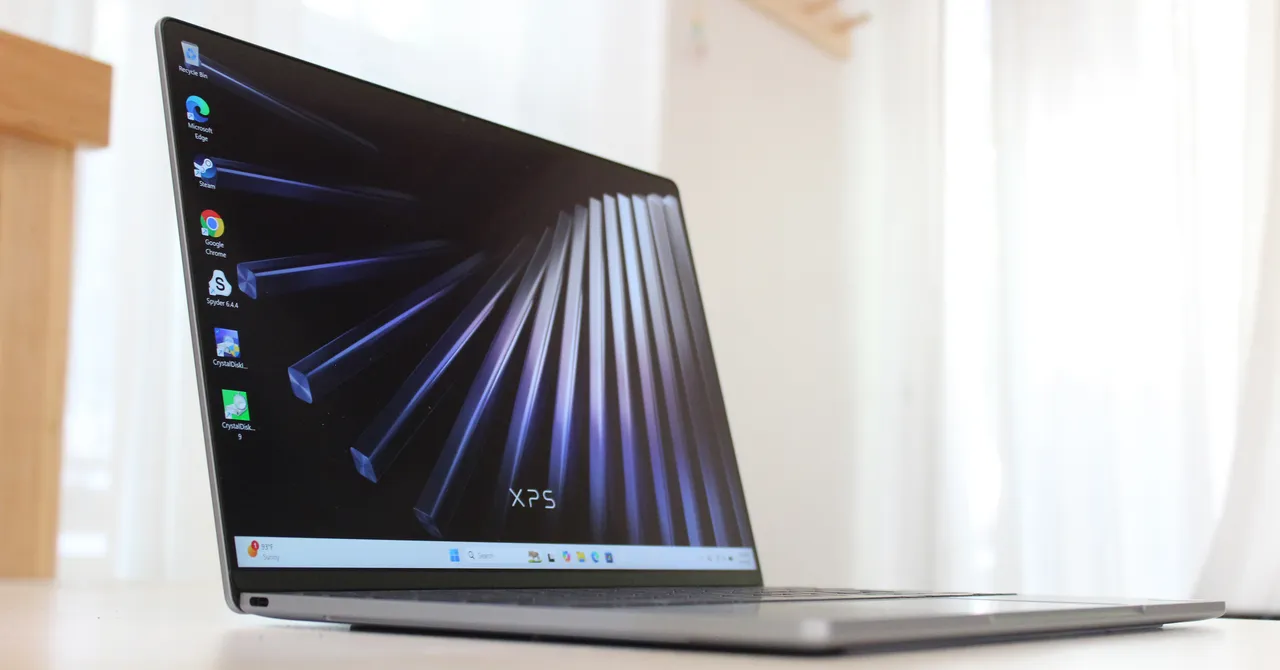
Unlike most Windows laptops priced below $1,000, the Dell XPS 13 delivers a premium design, high-resolution display, and impressive build quality at an affordable starting price. Even the base model features a 2560 x 1600 touchscreen with a smooth 120Hz refresh rate, brightness of up to 427 nits, and excellent color accuracy.
The glass touchpad is comfortable and responsive, while the aluminum chassis feels exceptionally solid with virtually no flex. The laptop can be opened with one finger, and its sturdy hinge keeps the display steady. Slim bezels give the Dell XPS 13 a modern appearance, and its 0.5-inch thickness makes it nearly as sleek as the MacBook Neo. Overall, the design makes an excellent first impression.
The new Dell XPS 13 also includes several features that the MacBook Neo lacks:
- High-resolution touchscreen display
- 120Hz refresh rate
- Backlit keyboard
- Two USB-C ports with 10Gbps transfer speeds
- Support for two 4K monitors, or three with the laptop lid closed
- Fast solid-state storage
The biggest omission is a headphone jack, especially since the MacBook Neo includes one. However, Dell deserves credit for maintaining high-quality connectivity. There is one USB-C port on each side of the laptop, and both ports support 4K displays at 60Hz, charging, and file transfers at speeds of up to 10Gbps.
The Dell XPS 13’s speakers are not a standout feature, but the system includes two tweeters with a combined 8 watts of output. Audio performance is at least comparable to the MacBook Neo. The 1080p webcam also delivers similar quality, while the integrated IR camera enables fast and secure Windows Hello facial recognition.
With this combination of premium features, you may wonder how Dell manages to sell the XPS 13 at a starting price of $700. As with most affordable laptops, there are a few compromises.
The Compromises Behind the $700 Dell XPS 13
Photo: Luke Larsen
Dell made two key compromises to keep the XPS 13 affordable. The first is the processor: the laptop uses the low-power Intel Core 5 320. Dell saves money with this six-core chip, but its performance is more impressive than its modest specifications suggest. The XPS 13 is among the first laptops to use this newer processor family, known as the Intel Wildcat Lake lineup.
Several other laptops now use chips from the same family, which is designed to compete with the Apple A18 Pro found in the MacBook Neo and Qualcomm’s Snapdragon X platform. Dell also offers an Intel Core 7 350 configuration, but it is available in a 16-inch laptop and does not provide the same compact design as the XPS 13. For shoppers seeking a lightweight, premium Windows laptop, the Dell XPS 13 remains the more attractive option.
Source: www.wired.com