


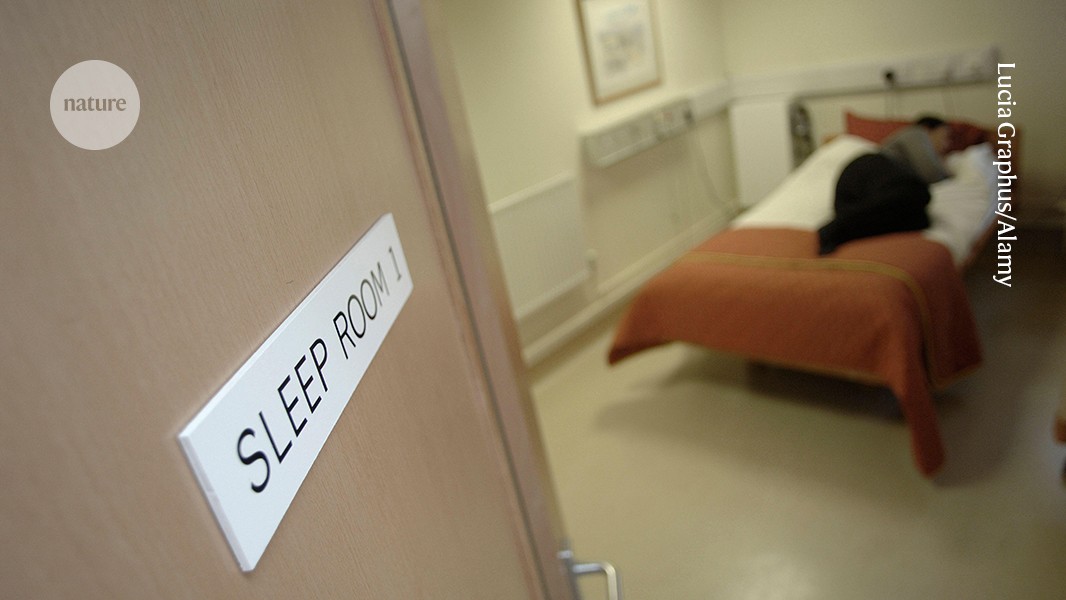
Doctors are testing a new narcolepsy treatment to determine whether it helps patients stay awake during the day and sleep through the night.Credit: Lucia Graphus/Alamy
Earlier this month, the U.S. Food and Drug Administration approved the first drug designed to address the underlying cause of narcolepsy. The sleep disorder affects millions of people worldwide, causing severe daytime sleepiness, disrupted nighttime sleep and, in some cases, sudden muscle weakness.

A ‘timer’ in your brain tracks your sleep and predicts when you’ll wake up
The drug, called obepolexton and marketed as Orzeiful, is being welcomed by people living with narcolepsy. “This is the best thing that ever happened to me,” says Tyler Chapman, who participated in one of the clinical trials that supported the drug’s approval. Researchers are also optimistic that it could mark the beginning of a new generation of treatments for sleep disorders.
These medicines, known as orexin agonists, are designed to mimic the brain chemical orexin. They could do more than relieve narcolepsy symptoms: by targeting a biological mechanism involved in the disease, they might also provide insights into other neurological and psychiatric disorders. Pharmaceutical companies are investing heavily in the approach as the narcolepsy treatment market is expected to exceed US$6.4 billion annually by the early 2030s.
“This is a very exciting time for patients, clinicians and scientists who have been working on this for many years,” said Barry Lubarski, vice president of medical affairs at Alkermes, a pharmaceutical company based in Dublin, Ireland, that is developing its own narcolepsy treatment.
A New Chance at Everyday Life
For Chapman, a 19-year-old student at the University of Tennessee, Knoxville, the treatment has been life-changing. Chapman previously experienced extreme daytime sleepiness, sometimes sleeping for as many as 16 hours a day, struggling at school and relying heavily on caffeine. Laughter could cause the body to suddenly collapse while consciousness remained intact — a symptom known as cataplexy. Instead of enjoying a typical college experience, Chapman rarely went out.
That changed after Chapman joined a clinical trial of a new narcolepsy drug developed by Takeda Pharmaceuticals America in Cambridge, Massachusetts, earlier this year. Before the trial, Chapman had tried more than a dozen medications, including stimulants, but often experienced serious psychological side effects.

Orexin agonists are designed to mimic the neuropeptide orexin. Shown here is one form of orexin made up of 28 amino acids.Credit: Laguna Design/Science Photo Library
After receiving the treatment, Chapman says it became possible to remain awake and alert during the day while sleeping more peacefully at night. “My quality of life is much better,” Chapman says. Chapman and their mother are even planning a trip to Mount Everest’s base camp to celebrate.
Managing narcolepsy symptoms can be difficult. The disorder affects approximately 3 million people worldwide. Both type 1 and type 2 narcolepsy can cause excessive daytime sleepiness, nighttime awakenings, sleep paralysis and hallucinations. Type 1 narcolepsy is also characterized by cataplexy, or sudden muscle weakness triggered by emotions such as laughter or surprise.
For many years, the cause of narcolepsy remained unclear. Beginning in the late 1990s, however, researchers found that people with type 1 narcolepsy often lack a brain peptide called orexin.1 Orexin is produced by approximately 70,000 neurons in the hypothalamus. In people with type 1 narcolepsy, these cells appear to be destroyed. Without orexin, the brain has difficulty regulating the sleep–wake cycle. Type 2 narcolepsy does not appear to be linked to orexin deficiency, and scientists are continuing to investigate its causes.
The Long Road to an Orexin-Based Treatment
With this understanding of narcolepsy biology, Takeda scientists searched a large database of compounds for molecules capable of mimicking orexin. The resulting compounds activate orexin receptors in the brain, helping to stabilize the neural circuits that control wakefulness and sleep. Takeda researchers first identified the candidate compound in 2011, then spent years developing and testing it as an oral tablet.
Lack of sleep hinders memory: Here’s why
Takeda enrolled 273 people with type 1 narcolepsy in two Phase III clinical trials. Participants received either the oral drug or a placebo twice daily. In both studies, people who took the treatment were better able to stay awake during the day and sleep through the night. Participants taking Orzeiful also reported improvements in symptoms including cataplexy, sleep paralysis and hallucinations.
Emmanuel Mignot, a sleep-medicine specialist at Stanford University in California, said the drug “makes patients more or less like normal people.” He added: “All of a sudden, they really knew what it was like to wake up.” Mignot led Takeda’s late-stage clinical trials and was also among the researchers who helped establish the link between orexin deficiency and narcolepsy.
Source: www.nature.com