


Teenage Sex and Death at Camp Miasma is made for anyone who watched horror and slasher movies too young, felt completely confused by them, and is finally ready to laugh about the experience.
The latest film from director Jane Schoenbrun, Teenage Sex and Death at Camp Miasma, combines teen sexuality, gruesome deaths, surreal comedy, and emotional horror. Shocking, provocative, strange, warm, witty, and deliberately numbing, the movie is a slasher fan’s dream. Its opening sequence features David Fincher-esque attention to detail and draws on insights gathered from horror convention attendees.
Although the film is packed with references designed to satisfy horror superfans, it also works to remain accessible to a broader audience. The movie’s manic self-awareness occasionally threatens to become exhausting, but its jokes, visual gags, and knowing winks keep the story moving. Beneath all the slasher commentary, Schoenbrunn is telling a much more fantastical story—one that is not really a slasher movie at all.
The film follows Chris (Hannah Einbinder), a queer filmmaker tasked with creating a “woke” reboot of the politically incorrect Camp Miasma franchise. While traveling to meet the reclusive final girl, Billie Preston, Chris struggles to communicate her creative vision. Billie is played with delicious intensity by Gillian Anderson, who portrays a junk-food-obsessed survivor from the original Camp Miasma film.
When Chris arrives at the abandoned movie set where Billie now lives, she becomes drawn into the fantasies and memories buried deep within Billie’s mind. What begins as a filmmaking assignment gradually turns into a surreal journey through horror fandom, childhood obsession, and the emotional damage left behind by exploitative genre movies.
The film is deeply personal for Schoenbrunn. As they told NPR, they grew up watching movies such as Friday the 13th, Halloween, and A Nightmare on Elm Street. Schoenbrunn has said they know slasher movies “very deeply.” As with their previous film, I Saw the TV Glow, the goal behind the fictional Camp Miasma franchise was to explore the intense childhood emotions that fuel obsessions with entertainment properties not necessarily made for their audience.
For Chris, that obsession centers on Camp Miasma, its tormented villain Little Death, and the over-sexualized victims on the other end of Little Death’s spear. The character’s connection to the franchise has been shaped by years of sequels—each seemingly worse than the last—and by the complicated feelings that come with growing up inside a horror fandom.
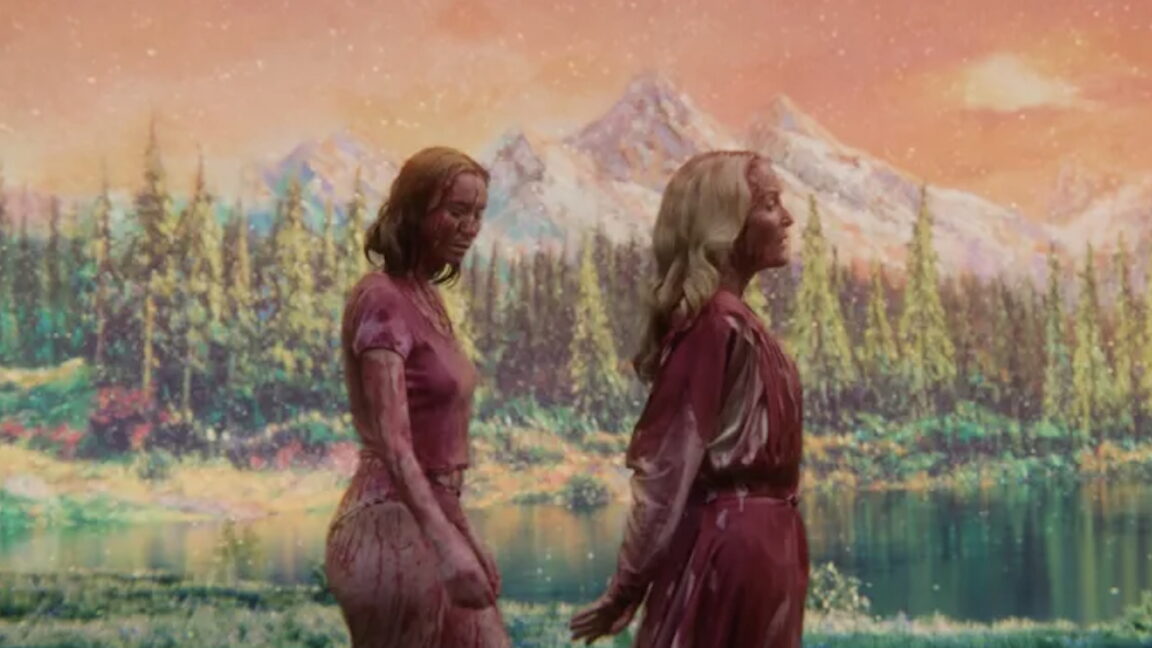
Matte paintings enhance the fantasy feel of Camp Miasma
Production designers Brandon Toner Connolly and Matt Hyland explained in one of several recent interviews that Schoenbrunn wanted the film’s visuals to feel as emotional as its subject matter. From the beginning, the director encouraged the design team to look to classic filmmaking techniques to create a dreamlike and immersive version of the Camp Miasma landscape.
To achieve that effect, the designers revived an old pre-CGI technique known as matte painting. The process helped give the abandoned camp and its surrounding environments a heightened, almost unreal quality. The result is a film set that feels less like a conventional horror location and more like a living memory—one shaped by childhood fear, movie mythology, and the distorted logic of fandom.
Source: arstechnica.com