


Astronomers Confirm Youngest Planet Ever Found: Elias 2-24 b Is Less Than 1 Million Years Old
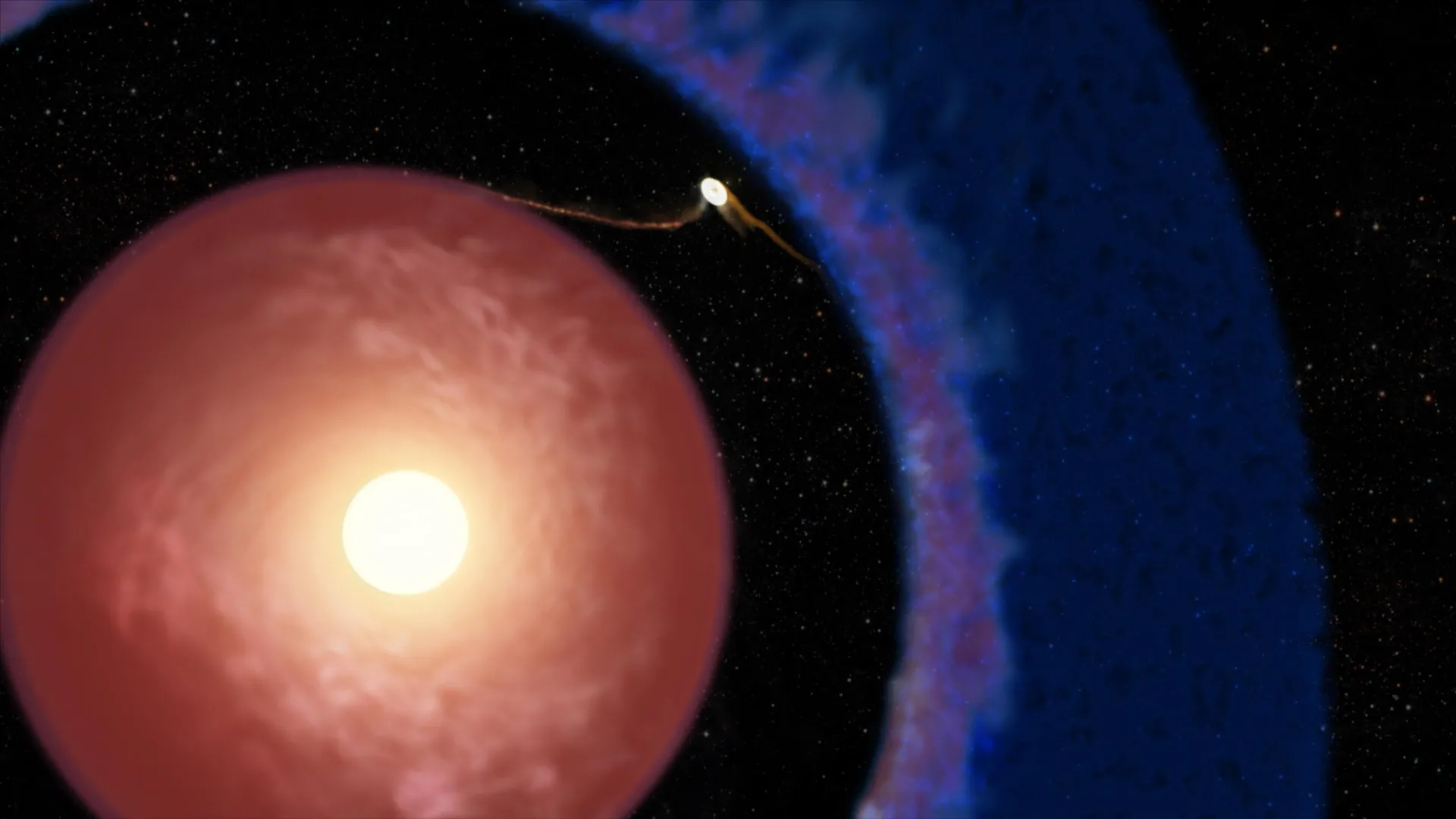
Astronomers have confirmed the youngest planet ever discovered. Elias 2-24 b is less than a million years old and remains surrounded by the gas and dust from which it formed, giving scientists a rare opportunity to observe planet formation in progress.
The planet, called Elias 2-24 b, was identified using observations preserved in a NASA-funded archive. It still orbits within the dusty disk surrounding its young star, allowing researchers to study a planetary system at an exceptionally early stage.
“Our planet formation model is a four-way tie between the previous record holders for the youngest known planets: two planets orbiting the star PDS 70 and two planets orbiting the star WISPIT 2, both more than 5 million years old,” said Lucas Cieza, a professor at Chile’s Astronomical Observatory and co-author of the paper detailing the results. “Elias 2-24 b shows that even our best planet formation models are still missing some important processes.”
The youngest known planet confirmed
In a study published on September 16 in Astrophysical Journal Letters, researchers led by Andrea Bernardi, a doctoral candidate at Universidad Diego Portales in Chile, examined archived observations of seven young stars.
The stars had been observed using a coronagraph at W. M. Keck Observatory in Hawaii, which cooperates with NASA through a cooperative agreement. Each star is surrounded by a debris disk containing dust, gas, ice and rock fragments. Gaps and other structures in these disks can indicate that a planet is forming.
Coronagraphs block much of a star’s bright light, making it easier to search for nearby, fainter objects. Using this technique, astronomers looked for planets hidden inside dusty disks. Planets orbiting stars beyond our solar system are known as exoplanets.
“The planet is carving a gap, so you should find it in the gap,” Bernardi said. “And that’s exactly where we found Elias 2-24 b.”
Elias 2-24 b has about the same mass as Jupiter and orbits a star approximately 450 light-years from Earth. Because the system is so young, studying it gives astronomers a glimpse of what our solar system may have looked like billions of years ago.
How planets form around young stars
Stars form inside vast clouds of gas and dust. Planets grow from material left around the newborn star, gradually gathering matter and clearing a path through the surrounding disk.
Observing planets at this early stage is extremely difficult because thick dust can hide them from view.
Most confirmed exoplanets are discovered using the transit method. A transit occurs when a planet passes in front of its star, temporarily causing a slight reduction in the star’s light as seen from Earth.
This method becomes much more difficult when a planet is buried in dust or follows a distant orbit. As a result, most of the approximately 6,000 known exoplanets are billions of years old and orbit relatively close to their stars.
Scientists are developing planet-formation models using theory, computer simulations and observations of young stars surrounded by disks. However, planets forming inside these disks are often difficult to detect directly. Discoveries such as Elias 2-24 b provide important real-world tests for those models.
“Galaxies are continually producing new stars and planets, so there are many stars and planets at every stage of evolution,” Cieza said. “This means we could theoretically see the entire process, but there are big gaps in what most telescopes can detect. Currently, we are largely blind about these baby planets.”
A decade-old mystery comes into focus
The confirmation of Elias 2-24 b also answers a question astronomers have debated for about a decade.
Previous observations made with ALMA in Chile—the Atacama Large Millimeter/submillimeter Array—revealed a gap in the dusty disk surrounding the young star Elias 2-24. Later, the European Southern Observatory’s Very Large Telescope in Chile detected a faint spot of light inside the gap.
Scientists suspected that the object could be a planet. However, existing planet-formation theories suggested that a large planet should not be able to form so quickly, especially at such a great distance from its star.
Current models suggest that it would take approximately 5 million years for a Jupiter-sized planet to form at a distance comparable to the distance from the Sun to Jupiter—just over five times the distance from Earth to the Sun. Larger, more distant planets should take even longer to form.
Yet the faint object in the Elias 2-24 system, located about 55 times farther from its star than Earth is from the Sun, was already showing signs of planet formation.
NASA-funded archival data confirms Elias 2-24 b
To investigate the object further, Bernardi and colleagues searched the Keck Observatory Archive, a NASA-funded collaboration between the Keck Observatory and the NASA Exoplanet Science Institute at Caltech/IPAC.
The research team found the same faint object in observations collected in 2018 and 2020. By combining the observations and tracking how the object moved over time, the researchers determined that it was moving more like a planet orbiting a star than an image artifact or a distant background star.
The analysis ultimately confirmed that the object was Elias 2-24 b.
“Usually we hear that telescopes work separately, but this confirmation was only possible by using multiple telescopes together,” Bernardi said. “Elias 2-24 b is at the limit of what current telescopes can detect, but new instruments like NASA’s Nancy Grace Roman Space Telescope should make such a detection even easier.”
Roman could reveal more baby planets
NASA’s Nancy Grace Roman Space Telescope, which launched on August 30, carries an advanced coronagraph designed to detect planets that are much harder to see with existing telescopes.
Using similar observational methods, Roman was able to identify planets in narrower orbits, including true Jupiter analogues currently hidden by the glare of their stars. By comparison, Elias 2-24 b orbits about 10 times farther from its star.
Roman’s increased sensitivity could help astronomers discover more planets during the earliest stages of formation, filling one of the biggest observational gaps in exoplanet science.
“This is just the beginning of a new era of discovery,” Cieza said. “Thanks to modern technology, it’s incredible that we can actually see planet formation in action. Roman will take planet exploration to the next level.”
Source: www.sciencedaily.com