


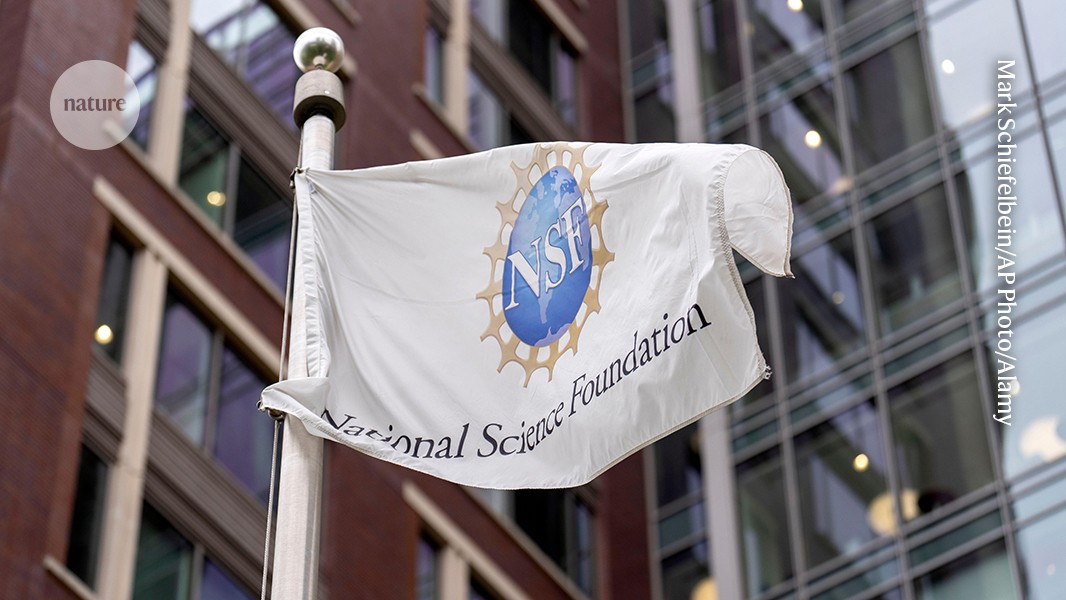
The National Science Foundation is the primary funder of basic science in the United States. Credit: Mark Schiefelbein/AP Photo/Alamy
The U.S. National Science Foundation (NSF) is expected to award approximately 30% fewer new research grants this fiscal year than it did last year, according to information obtained by Nature. The decline extends a funding slowdown that began after President Donald Trump took office. The projected number of new NSF grants in 2026 would be the lowest in more than four decades.
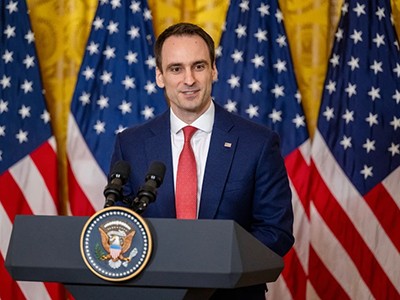
White House begins funding AI — ushering in a new era for American science
The NSF, one of the United States’ leading sources of basic-science funding, has faced major challenges in processing new awards. Staff reductions under the Trump administration and uncertainty over available funds have slowed the grant-making process. However, the most significant factor behind the projected decline in 2026 appears to be the withholding of approximately US$1 billion from the agency’s $8.8 billion budget.
The money is being held in a central account and is not currently available to the NSF’s core grant programs. Staff members who spoke with Nature on condition of anonymity said much of the funding was designated for White House initiatives known as “Grand Research Challenges,” which focus on areas including advanced materials and artificial intelligence.
Grant Witness, a nonprofit organization that monitors U.S. research funding, reported that the NSF had issued 5,684 new grants as of August 19. Internal NSF data indicate that roughly 400 additional grants were awaiting processing at the Office of Awards Management (OAM). Because officials were required to submit all new proposals to the OAM by August 3, the final number of new grants for the fiscal year ending September 30 is expected to be approximately 6,100 (see “Suppressed Grants”).
That total would represent a 46% decline from the average number of NSF grants awarded annually between 2021 and 2024, before Trump took office. A reduction of this size would return NSF grant-making levels to those last seen in the early 1980s.

Source: Grant Witness/NSF Data
Many grant proposals reviewed by researchers are now effectively stuck in what scientists describe as “pending purgatory.” These applications have not been rejected, but they have not received final approval or funding either.
Jarrett Wilcoxen, a chemist at the University of Wisconsin–Milwaukee, submitted a proposal in late 2024 to purchase equipment that would support his laboratory and 20 other labs in the region. He said the continued delay in distributing research funds was discouraging.
“It’s disappointing to see the funds not being allocated,” Wilcoxen says. The delays, he adds, could significantly affect student training and create long-term consequences for both academic research and industry.
An NSF spokesperson said in a statement that the agency is “aggressively investing in basic research across science and engineering” in line with the Trump administration’s priorities. The spokesperson also said that the NSF is emphasizing longer-term awards with larger funding amounts, partly to reduce researchers’ administrative workload. The agency did not directly respond to questions about the withheld funds.
The approximately $1 billion held in the central account could be used in the next fiscal year because the NSF has two years to spend funds appropriated by the U.S. Congress. However, Neil Lane, a physicist who served as NSF director from 1993 to 1998 under former President Bill Clinton, described the decision to withhold such a large amount as unprecedented.
“Under the previous administration, we would never have imagined something like this would happen,” Lane says.
NSF research funds withheld amid grant delays
NSF grant awards were delayed at the beginning of fiscal year 2026 because of a 43-day U.S. government shutdown. The disruption forced the agency to reschedule hundreds of meetings where panels of independent scientists evaluate research proposals.
The NSF did not release funding until mid-April, preventing program officials from making awards earlier in the fiscal year. The delays have added to uncertainty for researchers, universities and laboratories that depend on federal science grants.
Trump administration dismisses entire NSF Science Advisory Board
Researchers faced another setback in July, when the NSF withdrew approximately $300 million from two of its directorates without providing an explanation. The move forced program officials to withdraw more than 150 research proposals that had already been reviewed and recommended for funding.
The $300 million was later identified as part of a larger pool of money being held centrally for the White House’s Grand Research Challenges agenda. An internal ledger reviewed by Nature listed the total value of the pool as $1,016,862,632.
It remains unclear who ordered the funds to be withheld. Approximately $110 million of the pool came from the NSF’s Office of Education. That money had been designated for three diversity programs announced by the U.S. Department of Justice the previous week. The department said the initiatives were unconstitutional because they involved discrimination based on race or gender.
The programs were designed to broaden participation in the scientific workforce by strengthening science education for underrepresented minority groups and providing financial support to students.
Source: www.nature.com