


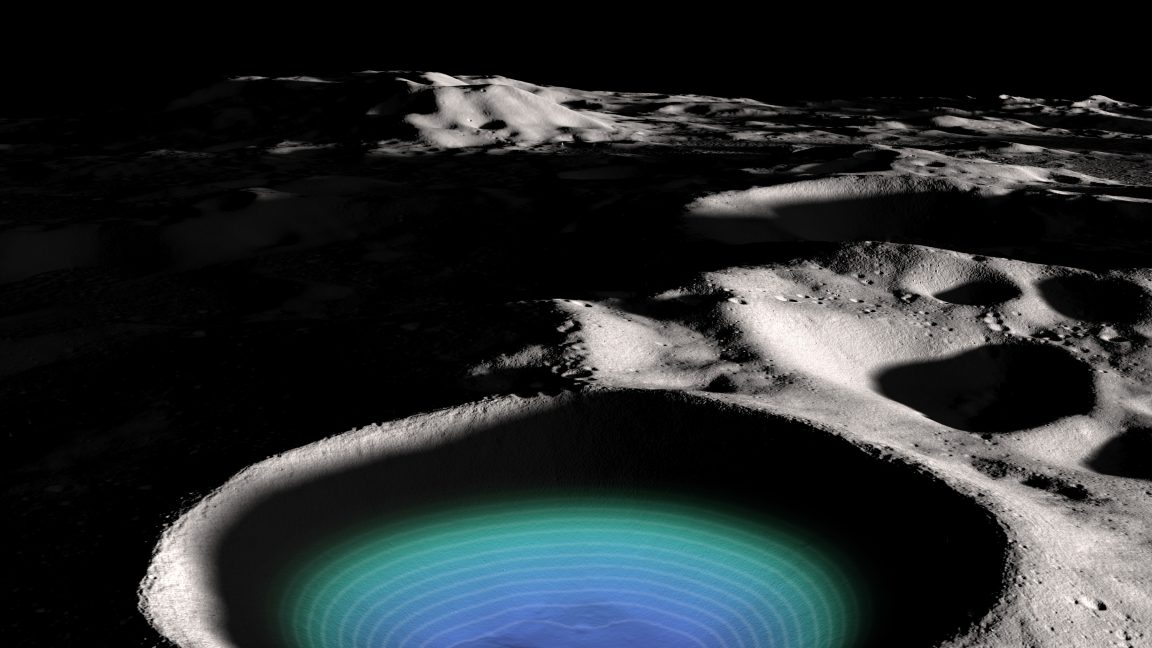
China has announced a delay to the highly anticipated Chang’e 7 lunar exploration mission. In a concise announcement released Sunday, Chinese space authorities said the mission would not launch during its planned window this year.
“Following the principle of proceeding with caution and certainty and ensuring absolute success, after a comprehensive evaluation, we have determined that the Chang’e 7 mission does not meet the launch conditions and therefore cannot be carried out during the launch period scheduled for this year,” the agency said.
The announcement did not identify the specific reason for postponing the launch from the Wenchang Spacecraft Launch Site on Hainan Island. Chang’e 7 includes a lunar orbiter, lander, rover, and a small flying probe designed to explore the Moon’s difficult-to-reach south polar region. The spacecraft was expected to launch aboard a Long March 5 rocket as early as Sunday.
Weather and launch window
One possible factor behind the Chang’e 7 launch delay is Typhoon Nara. The storm, which had sustained winds of approximately 45 mph—equivalent to a moderate tropical storm—was moving through the waters between mainland China and Hainan Island, where the Wenchang launch site is located.
The Joint Typhoon Warning Center forecast that the storm could affect the region for the next two to three days, with severe weather possible near the Wenchang launch range. Chinese launch officials may have determined that weather conditions would not improve sufficiently before the end of the current launch opportunity.
Although Chinese authorities have not confirmed a new launch date, some social media reports suggest that the next suitable opportunity may not occur until February or March of next year. The extended delay could be linked to several factors, including lighting and solar conditions at the lunar south pole. Chang’e 7’s mission profile also reportedly includes roughly 90 days of orbital reconnaissance before the spacecraft attempts to land.
Another possibility is that engineers identified a technical issue with the Chang’e 7 spacecraft or its Long March 5 launch vehicle. The Long March 5 uses the YF-100 engine family, which is also used by the Long March 7A rocket. However, an engine-related problem appears less likely because China had continued preparations for the Chang’e 7 launch in the days leading up to the postponement.
Source: arstechnica.com