


Elizabeth Holmes, Theranos and the Limits of Trust in Science
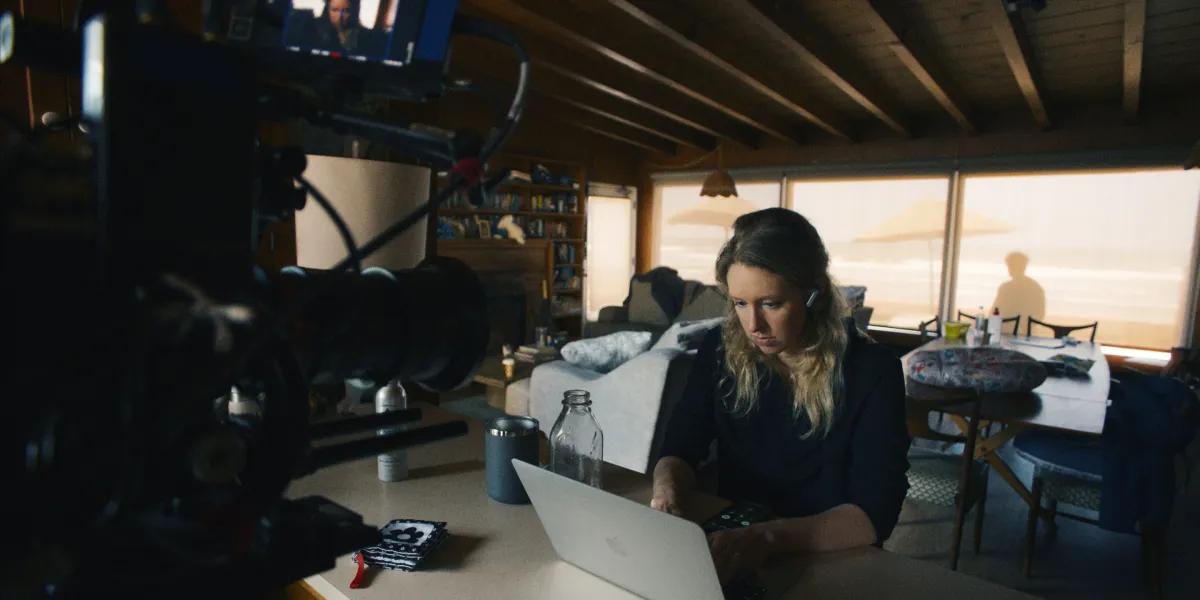
I couldn’t help but feel sympathy for Elizabeth Holmes. She is a mother preparing to serve a long prison sentence, leaving her two children behind. I have known that fact for a long time, but Holmes is also clearly an effective manipulator. We see her planting seeds of doubt in Fielder’s mind. At times, I felt as if she were trying to convince me from my movie theater seat.
Maybe she really didn’t lie. Do you?
How Elizabeth Holmes convinced people
Then I remembered how other journalists who were fooled by Holmes described the experience. “I blew it,” Roger Perloff reflected in 2015, a year after Fortune profiled Holmes and Theranos. “I’m sure she lied to me.”
Matthew Herper wrote that he interviewed Holmes in 2015. Even former employee and whistleblower Tyler Shultz, who knew that Theranos’s product did not work, said he was able to speak with Holmes for about five minutes and “walk away feeling like the work I was doing was changing the world.” He explained this in 2022.
I didn’t cover Theranos in the 2010s. If I had interviewed Holmes, would I have been drawn into the entire story?
The warning signs in the Theranos scandal
One of the early red flags in the Theranos case was the lack of publicly available, peer-reviewed data. Much of the company’s work was classified as “trade secrets.”
Scientists typically publish their research in academic journals. The process takes time and often involves anonymous experts in the field evaluating the research, providing feedback, questioning conclusions and asking for clarification. Peer review is intended to make scientific publishing more rigorous. Published papers are supposed to be reliable.
Except that they may not always be.
Why peer review cannot guarantee the truth
Scientists are not perfect. Some exaggerate their results or overstate their importance. Others manipulate data to support their hypotheses. In some cases, these violations are discovered during peer review—but not always.
There are many examples of scientific discoveries that could not be replicated in other laboratories and collapsed under the weight of additional evidence. Many papers eventually require revision or retraction. In 2023, 10,000 research papers were retracted.
Preprints, press releases and the problem of trust
At the same time, scientific research is increasingly being shared in other ways. Many scientists publish their findings on preprint servers such as arXiv, medRxiv and bioRxiv before submitting them to established journals. These outlets do not use traditional peer review.
The same is true of company press releases, social media posts and many conference presentations. I also hear plenty of scientific claims through conversations and interviews.
To be honest, I have seen scientific discoveries announced and thought: “Scientists just said they did it.”
How can we be sure that they really did?
Source: www.technologyreview.com