


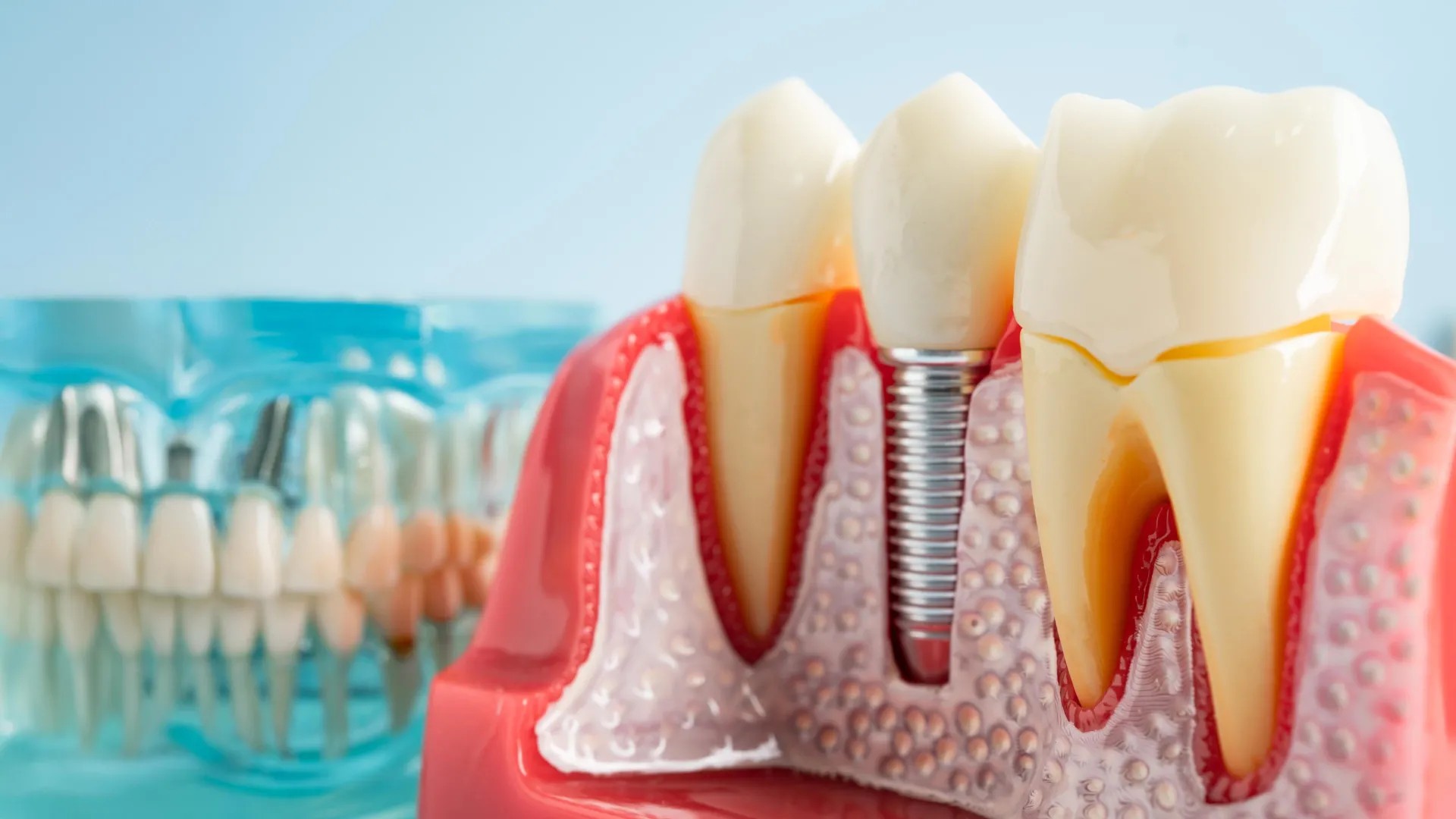
Why Dental Implant Infections Resist Antibiotics: Scientists Identify a Potential New Treatment Target
Dental implants have helped tens of millions of people replace missing teeth with fixed, functional teeth instead of removable dentures. However, an estimated 10% to 20% of implant patients eventually develop peri-implantitis—a serious infection that damages the jawbone surrounding the implant.
Antibiotics often fail to control peri-implantitis, and scientists have struggled to understand why. New research published in PNAS Nexus suggests that the problem may involve not only bacteria, but also the titanium implant itself.
A study by scientists at Rutgers School of Dental Medicine found that bacteria can gradually corrode dental implants, releasing microscopic titanium particles into nearby tissue. These particles interfere with immune cells that fight infection, trapping them in a state of excessive inflammation that gradually destroys the supporting jawbone.
The researchers examined human tissue samples, studied human immune cells in the laboratory, and conducted experiments using genetically engineered mice. Their findings identified a calcium channel called TRPC1 in macrophages—immune cells that engulf bacteria—as a key part of the inflammatory response. Disabling this channel prevented the disease from developing in mice.
The discovery could provide the first reliable drug target for a disease that affects an estimated one in five dental implant patients and costs healthcare systems worldwide more than $1 billion annually.
“For the first time, we show why all antibiotic treatments that work for teeth have no effect on implants,” said Georgios Kotsakis, the study’s senior author and associate dean for clinical research at Rutgers School of Dental Medicine. “Now that we know the cause, we can start developing treatments.”
Why dental implant infections resist antibiotics
One of the biggest mysteries about peri-implantitis is its similarity to periodontitis, a periodontal disease that develops around natural teeth. Both conditions begin with bacteria found in the mouth, but they respond very differently to treatment.
Infections around natural teeth can often be addressed with antibiotics and regular professional cleanings. Around dental implants, however, the same drug is successful in fewer than half of cases. Even when treatment is attempted, the underlying jawbone may continue to deteriorate.
For the past 20 years, scientists have focused primarily on the bacteria associated with these infections. Researchers in Kotsakis’ lab investigated another possible factor: the implant material itself.
Their research showed that bacteria accumulating on an implant’s surface produce an acidic biofilm that slowly damages the titanium. Over time, this corrosion can release billions of microscopic metal particles—many smaller than a red blood cell.
Titanium particles may also be released during routine dental cleanings. This is a particular concern when instruments designed for natural teeth are used on implants, because they can scrape and damage the metal surface.
How titanium particles hijack the immune system
When the tiny titanium particles enter the gums, they attract bacterial toxins called lipopolysaccharides, which coat their surfaces. This combination creates a deceptive target for the immune system, making the particles resemble abnormally large bacteria that cannot be broken down.
Macrophages are white blood cells that engulf and destroy harmful microorganisms. When they consume titanium particles, however, the cells cannot digest the metal. This causes excessive inflammation to persist.
As a result, macrophages produce large amounts of inflammatory signaling molecules, including interleukin-1 beta. This protein is also associated with inflammatory processes involved in rheumatoid arthritis and Alzheimer’s disease.
The prolonged immune response gradually destroys the bone supporting the dental implant. At the same time, the macrophages become less effective at fighting the bacteria that caused the infection.
Laboratory experiments revealed how severely the immune defenses were disrupted. Macrophages exposed to titanium particles engulfed fewer than half as many bacteria as immune cells that had not encountered the particles.
“These particles are tiny magnets that attract bacterial toxins, hijacking the immune system and preventing it from getting rid of the bacteria,” Kotsakis said. “We’ve got a perfect storm where antibiotics don’t work.”
Scientists identify a potential new treatment target
After determining how titanium particles interfere with immune defenses, the researchers investigated the molecular pathways responsible for the response.
They traced the process to TRPC1, a calcium channel—a specialized pore-forming protein structure in the cell membrane—found in macrophages. The channel plays a central role in the inflammatory response triggered by titanium particles and bacterial toxins.
To test its importance, the researchers used genetically engineered mice that lacked TRPC1. When the animals were exposed to the same combination of titanium particles and bacteria, their immune systems responded more effectively.
The mice developed dramatically smaller abscesses, produced fewer inflammatory signaling molecules, and regained the ability to clear bacteria. Disabling TRPC1 prevented the destructive disease process observed when the channel was present.
The results point to a possible new approach for treating peri-implantitis: targeting the immune response instead of relying solely on antibiotics.
With funding from the National Institutes of Health, Kotsakis and his colleagues are now evaluating drugs that may act on the same molecular pathway in human cells.
Why proper dental implant cleaning matters
The research may lead to future treatments, but it also reinforces the importance of prevention for people who already have dental implants.
Regular professional cleanings are considered the best prevention against peri-implantitis. However, the equipment and techniques used during those appointments can make a significant difference.
Until about a decade ago, many dentists routinely cleaned implants with the same metal scalers used to remove deposits from natural teeth. Research by the Rutgers team and other scientists has since shown that these tools can damage and corrode titanium surfaces, releasing additional particles that may accelerate the disease.
Non-abrasive cleaning methods are now standard practice. They help protect the implant surface while reducing the risk of complications.
By showing how corroded titanium interferes with immune defenses, the findings offer a new explanation for why some dental implant infections are so difficult to treat. They also identify a promising direction for developing more effective peri-implantitis therapies.
Source: www.sciencedaily.com