



Storage Issues Threaten Fluorescent and Glow-in-the-Dark Artwork
Fluorescent and phosphorescent artworks are designed to attract attention, but the chemicals that create their vivid colors and glow can deteriorate over time. New research is helping museums understand how light, moisture, and storage conditions affect these sensitive materials—and how conservators can protect them for future generations.
Indianapolis Museum of Art in Newfields, gift of Joan Sprouse, in memory of son Stephen Sprouse, 2020.42
DayGlo pink graffiti-patterned spandex designed by Stephen Sprouse.
Indianapolis Museum of Art in Newfields, gift of Joan Sprouse, in memory of son Stephen Sprouse, 2020.42

Purchased with funds provided by the Indianapolis Museum of Art, Newfields, Fashion Arts Association Acquisition Fund, Joan Sprouse Acquisition Fund, and Penny Rosenthal, 2021.18

Indianapolis Museum of Art, Newfields, Fashion Arts Association Acquisition Fund, 2013.310AD.2

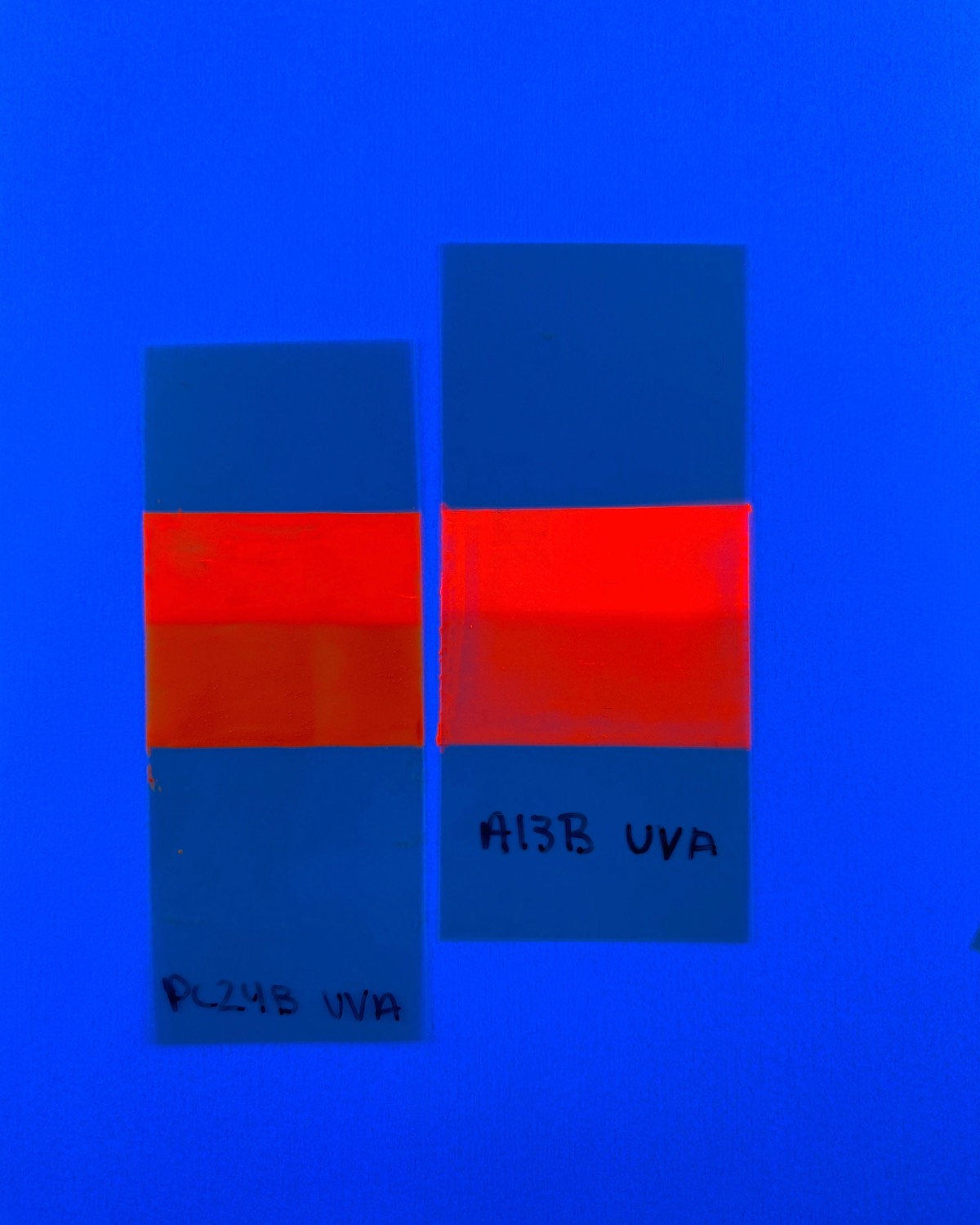
“For artists, the effect is more than just cosmetic, as these colors are used intentionally to create visual impact,” said Sarah Schmidtke Sobek, a photochemist at the University of Worcester who presented the research at an American Chemical Society conference.
Sobek and Gregory Smith, a conservation scientist at the Indianapolis Museum of Art, have studied fluorescent and luminescent materials for more than a decade. Their collaboration began after they met at a heritage science conference and has produced research on the composition and spectral characteristics and the light stability of daylight fluorescent artist pigments.
Their earlier studies found that optical brighteners—the compounds responsible for much of the intense brightness in fluorescent pigments—can break down faster than the underlying pigment dyes. As a result, artwork may look noticeably darker even when the pigment itself has not completely deteriorated.
This creates a complex challenge for art conservation. Conservators must preserve and reproduce colors as they appear under both visible and ultraviolet light, while also accounting for the gradual chemical changes caused by aging. Understanding the photochemistry of fluorescent materials is therefore essential for accurate restoration and long-term preservation.
The latest research examines the Indianapolis Museum of Art’s Stephen Sprouse Collection and expands the investigation to phosphorescent pigments—the materials used in artwork that glows after exposure to light. Unlike many fluorescent colorants, which commonly rely on organic dyes, phosphorescent materials may contain mineral-based pigments and other inorganic compounds.
Moisture also appears to play a major role in the deterioration of luminescent pigments. In some cases, humidity may be as damaging as—or more damaging than—extended light exposure. These findings could encourage museums to improve environmental controls, storage systems, and display practices for glow-in-the-dark artwork.
The next phase of the project will examine white pigment powder, including lithopone. Researchers will study how long materials containing these pigments continue to glow after being charged by light, providing additional information for the conservation of fluorescent and phosphorescent art.
Source: arstechnica.com