


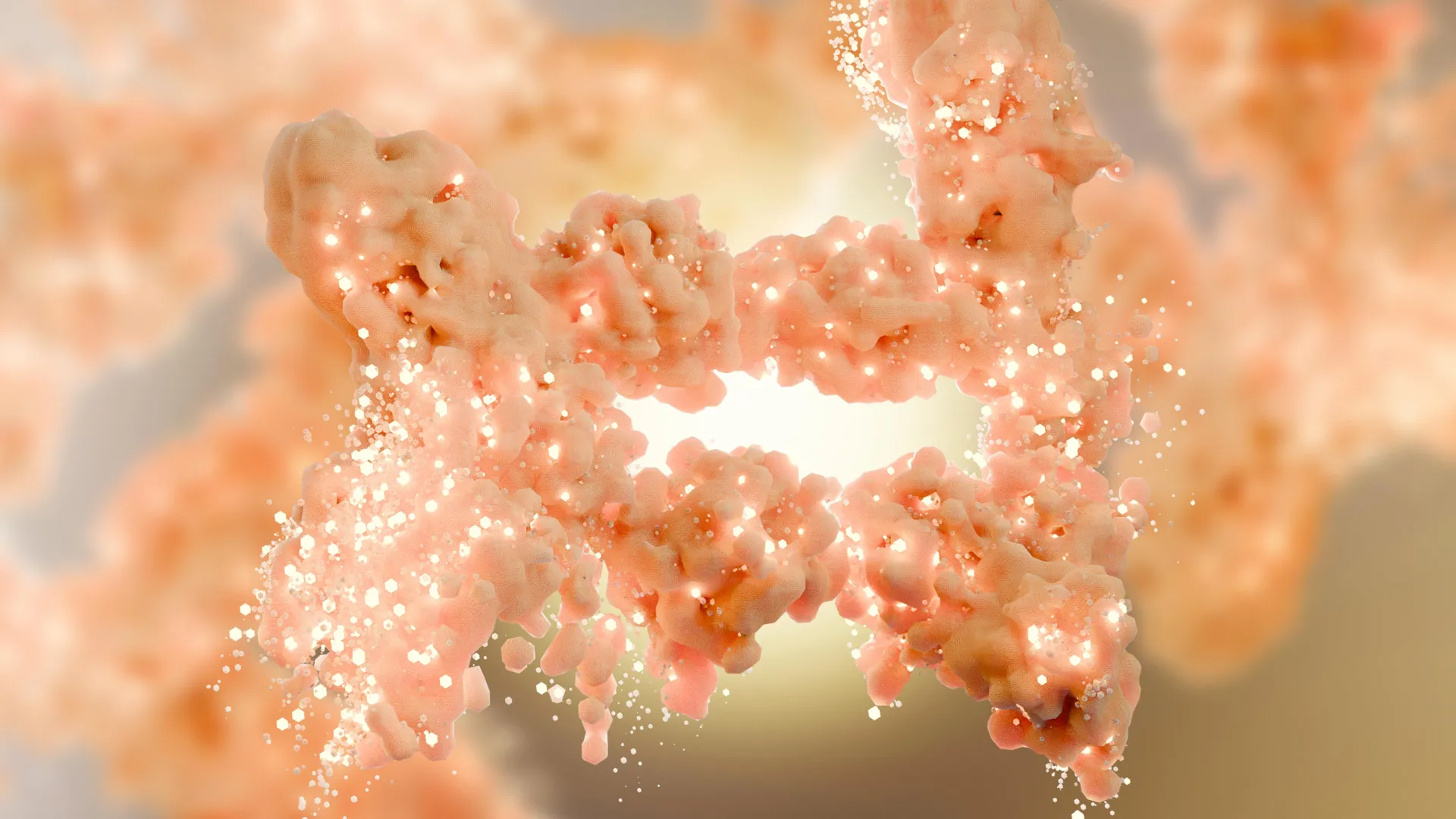
Scientists at the Weizmann Institute of Science have identified MTCH2, a protein nicknamed “Mitch,” as a regulator of how cells use and store energy. Disabling the protein increased the use of fats and other nutrients in human cells and disrupted the formation of new fat cells in mouse-derived cells. Follow-up research published in 2025 found that MTCH2 also controls the entry of fatty acids into mitochondria and that removing it from mouse fat tissue increased energy expenditure and limited weight gain on a high-fat diet. The findings point to a possible future obesity-treatment strategy, although its safety and effectiveness in humans remain unknown.
A search for obesity treatments beyond appetite control
Over the past decade, medicines such as semaglutide and tirzepatide have transformed obesity treatment. These drugs can help many patients achieve substantial weight loss, largely by influencing appetite and the body’s responses to food.
Weight loss does not necessarily consist entirely of body fat, however. It can also include lean body mass, which encompasses muscle and other tissues. Preserving muscle is important for strength, mobility and metabolic health.
A 2026 analysis of 20 clinical trials involving 15,782 participants found that lean mass accounted for approximately 25% to 39% of the weight lost with several widely used weight-loss medications. Similar proportional losses occurred with lifestyle interventions, while adding resistance training helped preserve more lean tissue.
These concerns have encouraged researchers to investigate approaches that reduce body fat while protecting muscle. Professor Atan Gross and colleagues at the Weizmann Institute of Science began pursuing one such possibility after identifying an unexpected role for MTCH2.
Disabling MTCH2 protected mice from diet-related obesity
In earlier experiments, Gross’s team reduced MTCH2 activity in the muscles of mice. The genetically modified animals showed increased metabolic activity and resisted obesity caused by their diet.
Their muscles also developed more fibers with a high capacity for using oxygen, which improved physical endurance. The mice performed better in exercise and stress tests and showed improvements in heart function, as well as favorable changes in overall body composition.
The results suggested that Mitch affected more than one metabolic reaction. The protein appeared to influence energy use, fat storage and the ability to sustain physical activity.
To investigate how, the researchers examined mitochondria, the structures that supply much of the energy cells need.
The mitochondrial connection
Mitochondria are often called the powerhouses of cells because they convert energy from food into adenosine triphosphate, or ATP. ATP serves as a cellular energy currency: muscles use it to contract, cells need it to grow and repair themselves, and many other biological processes depend on it.
Mitochondria are dynamic structures. They can fuse into larger interconnected networks or divide into smaller units, and those changes can affect how efficiently cells produce and consume energy.
Gross’s team had previously established that Mitch plays a major role in mitochondrial fusion, the process through which separate mitochondria merge. Without the protein, the mitochondrial network becomes fragmented. The cells can still produce energy, but their energy efficiency and demand change in ways that may cause them to consume more fuel.
This offered a possible explanation for the unusual metabolism seen in the modified mice: their cells appeared to operate in a more energy-intensive state rather than conserving energy efficiently.
Human cells used more fat without Mitch
Researchers led by doctoral student Sabita Chourasia used genetic engineering to remove MTCH2 from human cells grown in the laboratory. The change disrupted the normal structure of the mitochondrial networks, separating individual mitochondria and shifting the balance between energy production and demand.
The cells experienced a persistent shortage of readily available energy relative to their needs, even as their mitochondria increased their oxygen consumption. To compensate, they began consuming more nutrients.
“After deleting Mitch, we examined, every few hours, the effect that had on more than 100 substances taking part in metabolism in human cells,” Chourasia explains. “We saw an increase in cellular respiration, the process in which the cell produces energy from nutrients, such as carbohydrates and fats, using oxygen. This explains the increase in muscular endurance in previous experiments using mice.”
The cells lacking Mitch consumed more fats, carbohydrates and amino acids, the building blocks of proteins. Their use of fatty acids increased particularly strongly, indicating that MTCH2 affects not only the amount of energy cells consume but also the nutrients they select as fuel.
“We discovered that deleting Mitch led to a major drop in fats in membranes,” Gross explains. “At the same time, we saw an increase in fatty substances used to produce energy, and we realized that the fat was being broken down from the membrane to be used as fuel. In other words, we showed that Mitch determines the fate of fat in human cells.”
Cell membranes are flexible barriers made largely from fatty molecules called lipids. They protect cells and organize many essential functions. The experiments suggested that cells without Mitch redistributed and used these lipids differently, drawing on some of their fatty resources to meet increased energy demands.
Further analysis also found changes in stored lipids, showing that the effect was more complex than simply reducing the amount of fat inside a cell. Overall, the results indicated that MTCH2 helps regulate how cells allocate nutrients between energy production and other biological needs.
MTCH2 also affected the formation of fat cells
The researchers next examined whether Mitch influences the development of fat cells, or adipocytes. The question was notable because previous studies had found elevated MTCH2 levels in fat tissue from women with obesity.
Adipocytes develop from immature precursor cells through a process called adipogenesis, or fat-cell differentiation. As the cells mature, they must build new cellular structures, produce fats and activate genes that enable them to specialize in energy storage. These activities require substantial energy and raw materials.
Gross’s team suspected that removing Mitch might disrupt the process by creating an environment in which cells consumed fuel rather than using it to build the structures required for fat storage.
Experiments with mouse precursor fat cells supported this idea. When researchers deleted MTCH2, far fewer cells matured into fat cells. Approximately 80% to 90% of normal precursor cells differentiated within six days, compared with only 5% to 10% of cells lacking MTCH2. The altered cells also accumulated substantially fewer lipid droplets, the structures that store fat.
“When we deleted Mitch from the progenitor cells, we discovered that the environment created in these cells was not conducive to the synthesis of new fats,” Gross explains. “Reducing the ability to synthesize membranes prevents the cells from growing, developing and reaching the point where differentiation is possible. The process of fat accumulation requires a large amount of available energy, but in cells without Mitch, there is a shortage of energy. In addition, the expression of genes necessary for differentiation is suppressed, and there is a shortage of the substances vital for this process to occur. As a result, differentiation of new fat cells is reduced, along with fat accumulation.”
These results suggest that disabling Mitch may affect fat metabolism in two ways: by increasing the consumption of energy-rich nutrients and by interfering with the cellular machinery needed to create new fat-storing cells.
However, the experiments used different types of cells. The fat-cell differentiation work used a mouse-derived cell line, while the detailed nutrient-consumption analysis was conducted in human cells. Together, the findings suggest a broader role for MTCH2, but they do not establish that blocking the protein would prevent new fat cells from forming in people.
Follow-up research identified another fat-burning mechanism
The importance of MTCH2 was further examined in research published on October 3, 2025, in Nature Communications. An international team that included Gross and Chourasia analyzed human and mouse fat samples, studied cultured fat cells and conducted experiments in genetically modified mice.
The researchers found that MTCH2 helps regulate the movement of fatty acids into mitochondria, where the molecules can be broken down to produce energy.
The process involves carnitine palmitoyltransferase 1, or CPT1, an enzyme that acts as an important checkpoint for fatty-acid entry into mitochondria. CPT1 is normally regulated by malonyl-CoA, a molecule that signals when cells should limit fatty-acid consumption.
The team discovered that MTCH2 physically interacts with CPT1 and influences how strongly malonyl-CoA affects the enzyme. Removing MTCH2 altered this control system, allowing mitochondria to increase fatty-acid use and energy expenditure.
This provided a more detailed molecular explanation for why disabling the protein could encourage cells to burn additional fat.
Mice burned more energy without eating less
In the follow-up study, researchers removed MTCH2 specifically from the fat cells of mice. The animals burned more energy without increasing their physical activity or changing how much food they consumed.
On a regular diet, the modified mice gained weight at a rate similar to that of normal mice. On a high-fat diet, however, they gained less weight and accumulated less body fat despite eating similar amounts of food. Their lean body mass remained comparable to that of control animals.
The mice also showed improved glucose tolerance, meaning they handled blood sugar more effectively after receiving glucose. Their cholesterol levels were lower as well.
These findings strengthened the evidence that MTCH2 influences whole-body metabolism rather than only the behavior of isolated cells. The researchers also found that the effects could occur independently of UCP1, a protein commonly associated with heat production in brown fat.
Brown fat generates heat by burning energy, while white fat primarily stores excess energy. An additional UCP1-independent pathway for increasing energy expenditure could provide another potential target for treatments aimed at obesity and related metabolic disorders.
Major questions remain about human treatments
Together, the studies identify MTCH2 as a possible molecular link between fat storage, energy consumption and fat-cell development. The original experiments showed that removing the protein increased nutrient consumption in human cells and interfered with fat-cell formation in mouse-derived cells. The later study found that selectively removing MTCH2 from mouse fat tissue increased energy expenditure and limited weight gain on a high-fat diet.
This raises the possibility of treatments that change how the body handles energy, potentially complementing medicines that primarily reduce appetite. But researchers have not demonstrated that inhibiting MTCH2 can produce safe, sustained weight loss in humans.
MTCH2 is also involved in mitochondrial regulation and pathways related to cell survival. Blocking it throughout the body could therefore have unwanted effects. Preventing fat-cell formation may not always be beneficial either: healthy fat tissue helps store excess energy, maintain blood-sugar balance and produce hormones. Disrupting its function could redirect fat to organs where it may cause harm.
Future studies will need to establish whether MTCH2 can be targeted safely, which tissues would benefit most and whether reducing its activity could promote fat loss without harming muscle or other organs.
For now, established strategies such as resistance exercise and adequate protein intake remain important for protecting muscle during weight reduction. A 2026 review of clinical trials found that combining lifestyle changes with resistance training produced a more favorable pattern of lean-mass preservation than weight-loss interventions without such exercise.
The research suggests that future obesity treatments may focus not only on how much food the body takes in, but also on how cells decide whether to burn energy or store it. MTCH2 appears to be deeply involved in that decision, but translating the findings into a safe human therapy will require considerably more research.
Research and publication details
The original study, “MTCH2 controls energy demand and expenditure to fuel anabolism during adipogenesis,” was published in The EMBO Journal on January 3, 2025. It was led by Sabita Chourasia and Professor Atan Gross at the Weizmann Institute of Science.
Additional contributors included Dr. Christopher Petucci, Clarissa Shoffler and Dina Abbasian from the University of Pennsylvania in Philadelphia; Hu Wang and Professor Xianlin Han from the University of Texas at San Antonio; Dr. Ehud Sivan, Dr. Alexander Brandis, Tevie Mehlman, Dr. Sergey Malitsky, Dr. Maxim Itkin, Dr. Ayala Sharp, Dr. Ron Rotkopf and Dr. Bareket Dassa from Weizmann’s Life Sciences Core Facilities Department; and Dr. Limor Regev and Dr. Yehudit Zaltsman from Weizmann’s Immunology and Regenerative Biology Department.
The follow-up study, “MTCH2 modulates CPT1 activity to regulate lipid metabolism of adipocytes,” was published in Nature Communications on October 3, 2025. It involved an international collaboration that included researchers affiliated with ETH Zurich, the Weizmann Institute of Science and other institutions.
Source: www.sciencedaily.com