


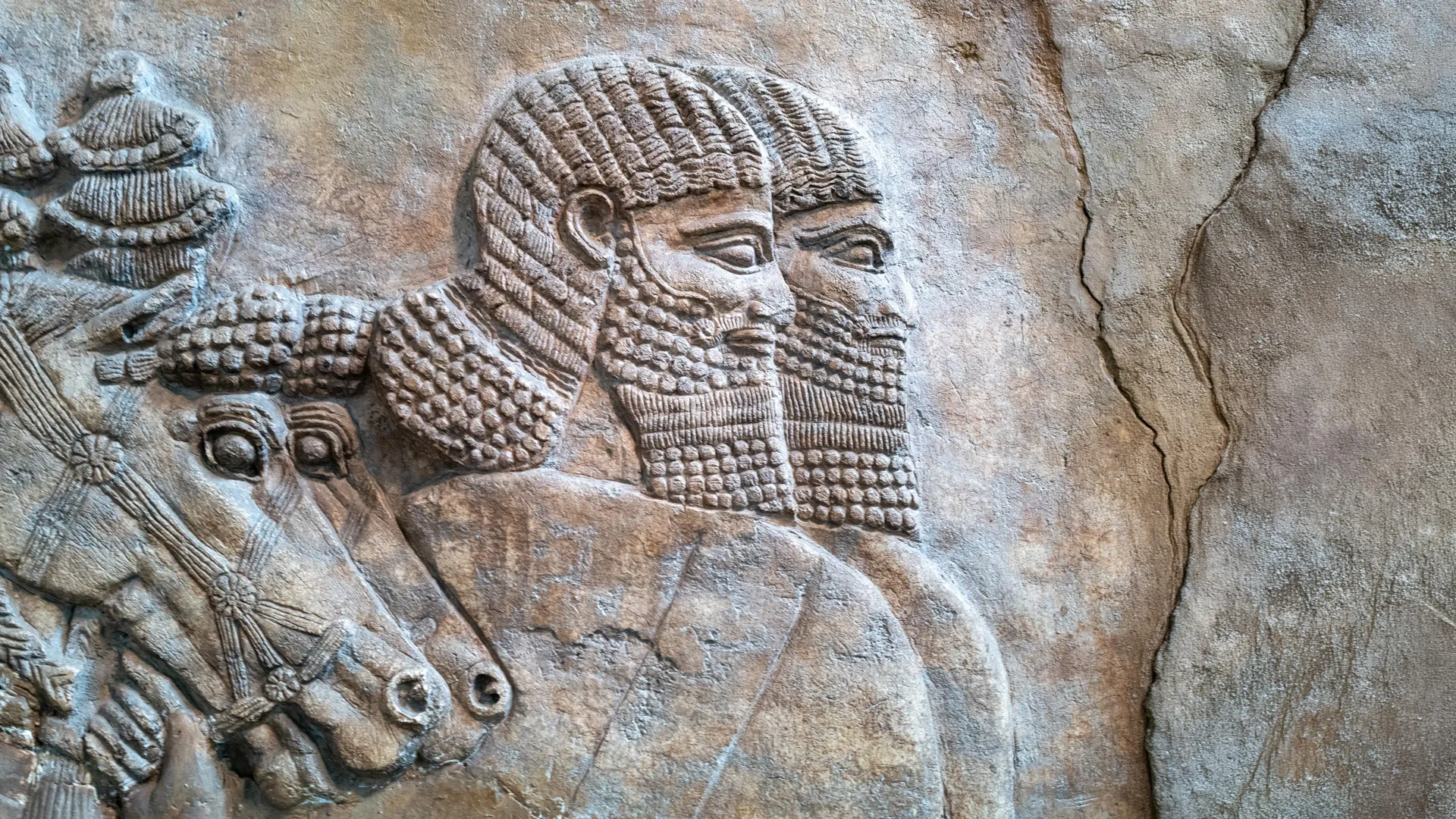
For nearly a century, scholars have relied on the Assyrian King List (AKL) as the standard record of Assyria’s rulers and the order of their reigns, particularly during the later history of the Assyrian Empire.
New research published in the Cuneiform Research Journal challenges the assumption that the Assyrian King List is complete and politically neutral. In a paper titled “Three New Kings of Assyria,” Alexander Johannes Edmonds and Eckhart Frahm identify three previously unlisted rulers whose reigns can be reconstructed using surviving cuneiform texts, inscriptions, and archaeological evidence.
Their findings suggest that early Neo-Assyrian political history was far more confusing, but also more interesting, than hitherto recognized.
Rival Assyrian king emerges after a solar eclipse
The first overlooked ruler identified by Edmonds and Frahm used the name Tiglath-pileser, apparently adopting the name of an earlier Assyrian king.
This previously unrecognized Tiglath-pileser appears to have ruled at the same time as his nephew, Ashurdan III, the king officially recorded in the Assyrian King List. He may have attempted to remove Ashurdan III from power following a solar eclipse—an event that would have carried enormous political and religious significance in the ancient world.
Evidence of this rival ruler’s government survives on clay tablets now held by the British Museum. One tablet records royal grants and indicates that Tiglath-pileser likely ruled from approximately 763 to 762 BC before eventually being expelled from power.
A second missing king of Assyria
Evidence for another forgotten Assyrian ruler comes from a royal stele discovered at Tel Avta, Iraq, in 1894.
Researchers have long debated why the name of the king originally associated with the monument was erased and replaced with the name Tiglath-pileser. Edmonds and Frahm argue that the mystery can be explained by recognizing an additional ruler in the Assyrian royal succession.
According to their reconstruction, a king named Shalmaneser ruled shortly before Tiglath-pileser III seized power in 745 BC. His omission from the Assyrian King List may reflect the political circumstances surrounding the transition of power.
The forgotten king Aššur-uballiṭ
The third case involves a ruler named Aššur-uballiṭ.
A cuneiform text attributed to King Tukulti-Ninurta II refers to a wine vessel originally created by Tukulti-Ninurta I and later restored by Aššur-uballiṭ. However, the Assyrian King List does not include any ruler by that name between the reigns of Tukulti-Ninurta I and Tukulti-Ninurta II.
Edmonds and Frahm suggest that this previously unrecognized king ruled from approximately 913 to 912 BC. His inclusion helps explain the references in the surviving tablets and may also clarify the identity of a royal figure represented in statues discovered at Ashur. The statue was badly damaged, with its head removed and its arms and royal insignia worn away.
Reconsidering the Assyrian King List
The possible existence of these three missing Assyrian kings raises broader questions about the purpose of the Assyrian King List and the way it recorded political authority.
Rather than serving as an impartial chronicle work,
the list may have functioned as a canon of legitimate kings that was updated regularly to exclude short-lived or parallel Neo-Assyrian rulers.
This interpretation provides historians with a new way to examine the AKL and the political motives behind its creation and revision. Edmonds and Frahm ask: Who and what determined the king’s ‘canonical history’? How did this intersect with Assyrian cultural memory and notions of kingship? Was the AKL’s function primarily utilitarian, or merely ceremonial?
By uncovering evidence for three rulers omitted from the official record, the researchers have made the Assyrian King List itself a subject of renewed investigation. Their findings suggest that the early political history of the Assyrian Empire was more complex than previously believed—and may now be better understood.
Identifying gaps in the official record of Assyrian kings offers a new perspective on how political legitimacy, royal succession, and historical memory shaped the history of one of the ancient world’s most powerful empires.
Source: www.sciencedaily.com