


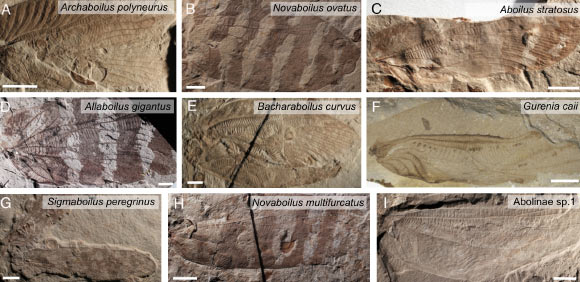
Researchers have used lasers, computer simulations and artificial intelligence to reconstruct the sounds of 165-million-year-old relatives of modern crickets and katydids. Their analysis of fossilized wings from China suggests that one Jurassic insect produced calls at ultrasonic frequencies beyond the typical range of human hearing—challenging the long-standing idea that bats drove insects to evolve ultrasonic communication.
“Little is known about the acoustic landscapes of environments that disappeared long ago, such as Jurassic forests,” Dr. Jun-Jie Gu of Sichuan Agricultural University and colleagues wrote in their study.
“We do not know with certainty what sounds dinosaurs and other prehistoric vertebrates produced because their vocal organs are rarely preserved in fossils.”
“Unlike the vocal cords of vertebrates, the sound-producing structures found in the hardened exoskeletons of some arthropods can fossilize.”
For example, scientists can observe and measure the specialized sound-producing structures—known as stridulatory files or rasps—in the fossilized forewings of male crickets and their relatives.
These structures preserve physical evidence of the acoustic signals the insects generated, offering a rare window into the soundscapes of the distant past.
For the study, the researchers examined 20 fossil ensiferan insects representing seven species. The specimens included members of the Prophalangopsidae and Cucidae groups. The fossils were excavated from China’s Jiulongshan Formation in Inner Mongolia.
Dating to the Middle Jurassic Period, approximately 165 million years ago, the fossils preserve delicate wing structures that these insects used to produce sound by rubbing one wing against the other. This behavior is known as stridulation.
To reconstruct these ancient insect calls, the scientists combined several methods. Their analysis included a phylogenetic comparison with approximately 100 modern insect species, laser measurements of wing vibrations in living insects, computer simulations of fossil wing movements and machine-learning models trained to predict sound patterns from wing shape.
The results revealed a remarkably diverse Jurassic insect soundscape. Most of the nine analyzed species appear to have produced low, pure-tone calls at around 5 kHz, similar to the sounds made by some modern crickets.
However, one species, Sigmaboilus peregrinus, appears to have called at frequencies above 20 kHz—within the ultrasonic range, which is generally beyond human hearing.
This discovery is important because it predates the appearance of bats by roughly 55 million years. Bats are often thought to have driven the evolution of ultrasonic communication and hearing in insects as insects adapted to evade echolocating predators.
The new evidence indicates that ultrasonic signaling in insects was already established long before bats evolved.
As a result, bats were likely not the only force responsible for the evolution of high-frequency insect calls.
The researchers suggest that early mammals and other predators may have placed selective pressure on insects to produce pure-tone signals that were quieter and more difficult to locate.
Competition for acoustic space among numerous singing species in crowded Jurassic environments may also have encouraged the diversification of insect calls.
Fossilized wings from nine Jurassic ensiferan species analyzed by Gu et al. to reconstruct ancient insect calls. Image credit: Gu et al., doi: 10.1073/pnas.2615107123.
“So far, all we can confirm is that Jurassic ensiferans communicated across a broad range of frequencies, from low tones to moderately ultrasonic waves,” the authors wrote.
“We showed that ultrasonic communication was likely adopted by the ancestors of katydids during the Middle Jurassic Period, approximately 165 million years ago. This is the oldest known record of ultrasonic communication in animals.”
The researchers also found that these ancient ensiferans had already begun diversifying their acoustic signaling strategies through changes in body size and the morphology of their stridulatory files. These adaptations enabled the production of both pure-tone and high-pitched calls.
Although the variety of acoustic signals and the widespread use of pure-tone ultrasound in modern katydids are often linked to predator eavesdropping, the study rejects the idea that bats were the sole force driving the evolution of ultrasound in katydids.
Instead, early mammalian and non-mammalian predators may have been able to hear ensiferan songs, encouraging the early diversification of insect communication.
The evolution of ultrasound may also have been influenced by acoustic niche partitioning, in which different species use distinct frequencies to reduce interference and competition.
Combined with evidence of ultrasonic communication in Cretaceous moths, the findings suggest that bats emerged nearly 100 million years after ensiferan insects had already introduced ultrasound into a Jurassic soundscape filled with high-frequency signals.
The study was published today in Proceedings of the National Academy of Sciences. Read the paper.
_____
Gu Junjie et al. 2026. Reconstruction of extinct soundscape reveals ultrasonic communication in the Jurassic period. PNAS 123 (36): e2615107123; doi: 10.1073/pnas.2615107123
Source: www.sci.news