


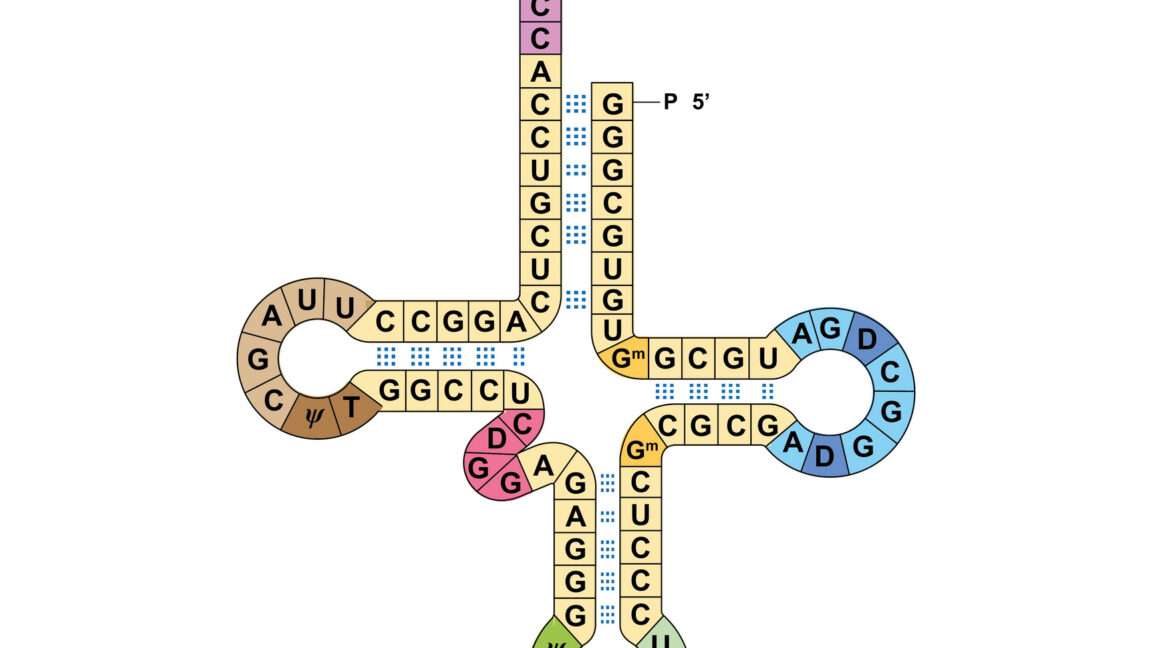
Researchers created engineered transfer RNAs (tRNAs) with altered base pairs and confirmed that standard ribosomes ignored them. However, when the tRNAs were paired with ribosomes carrying matching changes, the modified ribosomes successfully used them to build proteins. This allowed the team to create two separate populations of tRNAs, each compatible with its own engineered ribosome population.
The scientists then designed an alternative genetic code and used the modified tRNAs to implement it. They also created a messenger RNA (mRNA) that could be read by both genetic systems but would produce different proteins depending on which genetic code was active. By combining both tRNA populations, both ribosome populations, and the chemical components required for protein synthesis, the researchers tested whether two genetic codes could operate in parallel.
The experiment produced two different proteins. Although both ribosome populations attached to the same mRNA, each used its corresponding tRNAs to interpret the genetic instructions. Because the two ribosome systems relied on different genetic codes, they translated the same messenger RNA into distinct proteins.
The result is a striking demonstration of parallel genetic-code translation.
This approach could eventually have important applications in synthetic biology and biotechnology. Every protein produced by a cell depends on the genetic code, making that code extremely difficult to modify without disrupting essential cellular functions. If an alternative genetic code could operate alongside the natural one, researchers might be able to engineer cells while leaving their original protein-production system intact.
There is still a major challenge: the researchers have tested the system only in a cell-free mixture containing isolated proteins and chemicals. It has not yet been demonstrated in a living cell. In an organism, the engineered ribosomes could still attempt to translate mRNAs using the alternative genetic code. That process could generate truncated or malformed proteins, potentially interfering with normal cellular activity and causing the cells to die.
Overcoming this problem will require further research. The current findings show that two genetic codes can function in parallel under controlled laboratory conditions, but scientists must find a way to prevent harmful interactions before the technology can be used in living cells.
Nature, 2026. DOI: 10.1038/s41586-026-10949-y (About DOI).
Source: arstechnica.com