


Plant-Based Paper Cups May Release More Nanoplastics Than Traditional Plastic-Lined Cups
Paper cups lined with plant-based plastic are often marketed as an eco-friendly alternative in coffee shops and cafeterias. However, new research from the University of Queensland suggests that polylactic acid (PLA)-lined cups may release significantly more microplastic and nanoplastic particles into hot drinks than conventional polyethylene-lined cups.
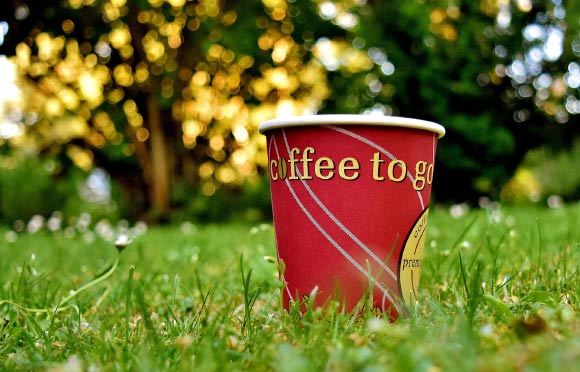
Researchers found that plant-based plastic linings can release nanoplastics during everyday use. Image credit: Alexas Fotos.
Biodegradable plastics are increasingly promoted as sustainable alternatives to conventional petroleum-based plastics. However, the release of microplastics and nanoplastics from these materials during everyday use remains poorly understood.
“Disposable paper cups are used daily by millions of people around the world for coffee, tea, and other hot beverages,” said study co-lead author Dr. Elvis Okofo.
“Just because a cup is mostly made of paper does not mean it is plastic-free. Many paper cups contain a thin plastic lining that provides water resistance and helps maintain the cup’s structural integrity.”
“Our results show that plastic-lined paper cups release significant amounts of micro- and nanoscale plastic particles when exposed to hot water.”
For the study, researchers compared disposable paper cups lined with polylactic acid (PLA)—a plant-based plastic made from materials such as corn or sugarcane—with conventional cups lined with polyethylene (PE).
The researchers found that PLA-lined cups released approximately 12 times more plastic particle mass into hot water than polyethylene-lined cups.
PLA-lined cups released approximately 4.3 million nanoparticles per milliliter, compared with 2.7 million particles per milliliter from polyethylene-lined cups.
Using advanced analytical techniques, including mass spectrometry, light-scattering analysis, and electron microscopy, the researchers confirmed that the PLA lining released actual nanoplastic particles. The particles fell into two size ranges, roughly comparable to large viruses and small bacteria.
“This study contributes to the growing body of evidence that plastic products used to store and prepare food can be an important, but often overlooked, source of human exposure through ingestion,” Dr. Okofo said.
“This does not necessarily mean that people should stop using paper cups or that PLA cups are inherently unsafe.”
“However, the effects of plastic particles on human health remain unknown, and the chemicals used in plastics are not intended to be consumed.”
“Materials used in food-contact products must be evaluated not only for environmental sustainability but also for their particle-release behavior during everyday use.”
The researchers said the findings address an important knowledge gap concerning the contribution of plastic-lined disposable paper cups to daily exposure to microplastics and nanoplastics.
They also called for clearer consumer information about the materials used to line paper cups, as well as updated safety guidelines and product labeling from regulators.
“Policymakers and regulators could consider whether testing for microplastic and nanoplastic emissions should be included in the safety assessment of food-contact materials, particularly products designed for hot beverages,” the researchers said.
Manufacturers could also explore alternative cup linings designed to release fewer plastic particles when exposed to hot liquids.
“Through better product design, improved labeling, and greater public awareness, we can help limit the amount of plastic that enters both our bodies and the environment,” the researchers concluded.
The study’s findings appear in the journal ACS Food Science & Technology.
_____
Shi, S. et al. Nanoplastics and Microplastics Are Released from Disposable Paper Cups Lined with Polyethylene and Polylactic Acid. ACS Food Science & Technology, published online August 25, 2026. doi: 10.1021/acsfoodscitech.6c00541
Source: www.sci.news