


Cohere Parse 5 Brings Enterprise-Scale PDF Parsing to AI Workflows
Businesses building AI pipelines around PDFs, presentations, scanned documents, and images continue to face two major challenges: preserving complex document structure and controlling processing costs at scale. Tables, charts, layouts, and reading order are often lost during traditional OCR and document-processing workflows.
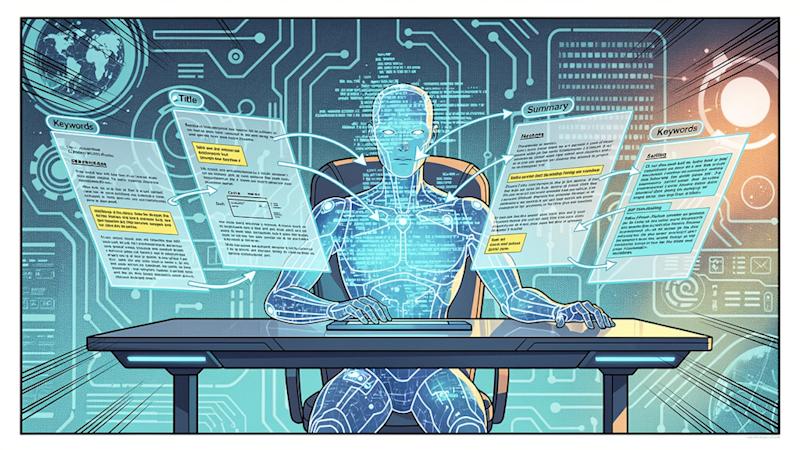
Cohere released Parse 5 on Thursday, a document-parsing model designed to balance accuracy, performance, and cost for enterprise AI applications. Parse 5 is a 2.3-billion-parameter vision-language model that converts PDFs, PowerPoint files, and images into structured Markdown.
In Cohere’s published benchmark comparisons, Parse 5 scores below several larger general-purpose frontier models but is positioned as a lower-cost alternative with competitive performance. The company says the model delivers strong results while remaining economical for high-volume document processing.
Cohere prices Parse 5 at $1.50 per 1,000 pages through its API. The model is also available through Model Vault, Cohere’s secure, single-tenant platform for managed inference and large-scale enterprise deployments.
“Document parsing is not solved because the challenge is not in reading the text, but in preserving the structure and meaning,” Nils Reimers, vice president of AI search at Cohere, told VentureBeat. “Enterprise documents contain a mix of tables, figures, charts, and formatting that can change the interpretation of data. Most tools still drop structure, hallucinate content, and even break frontier models on layout-heavy pages.”
How Cohere Parse 5’s Single-Pass Architecture Works
Parse 5 processes each document page as an image, sends it through a single vision-language model pass, and returns structured Markdown. This approach combines optical character recognition and document understanding into one step instead of relying on separate OCR and language-model stages.
Architecture. Parse 5 is a 2.3-billion-parameter vision-language model based on Cohere Labs’ North-Micro-Vision-Instruct architecture. It has an 8,192-token context window and a footprint of approximately 4.6 gigabytes.
The model accepts a PDF, PowerPoint slide, or JPEG page as a Base64-encoded image. Its output can include tables rendered as HTML, descriptions of images, and Markdown with bounding-box coordinates for tables and images in reading order.
Language support. Parse 5 offers stable accuracy for Arabic, English, French, German, Italian, Japanese, Korean, Portuguese, and Spanish. Other languages are supported through less accurate zero-shot processing.
Output modes. The default mode returns a Markdown string for each page. Block mode returns typed document elements, including individual HTML tables, bounding boxes, and descriptions. Cohere says this structure can provide citation-level traceability for AI agents and retrieval-augmented generation systems.
Availability. Parse 5 is generally available through the Cohere API, Model Vault, Microsoft Foundry, and AWS SageMaker.
Parse 5 Benchmarks Highlight Cost and Accuracy Trade-Offs
ParseBench evaluates document-parsing systems against human-verified enterprise documents. Cohere reports that Parse 5 achieved an overall score of 79.2 across three dimensions: table extraction, content fidelity, and semantic formatting.
That score places Parse 5 behind GPT-5.5 at 84.4, Opus 4.8 at 84.3, and Gemini 3.5 Flash at 81.8. However, it ranks ahead of LlamaParse’s cost-efficiency tier at 78.3, Mistral OCR 4 at 74.5, Databricks AI Parse at 72.4, and Azure Document Intelligence at 69.3 in Cohere’s comparison.
Cohere’s comparison excludes two additional dimensions: layout understanding and chart extraction. The company says these omissions reflect Parse 5’s current product scope rather than performance gaps.
Parse 5 returns Markdown in reading order instead of providing bounding boxes for every text element. It also describes charts rather than extracting their underlying data. Cohere says chart-data extraction is planned for a future version.
Reimers said the product decisions were based on the points where document-processing workflows are most likely to fail.
“For example, for charts, we provide a general description of the chart and how Agentic AI can visually inspect the chart, along with indicators,” Reimers explained. “Other solutions try to extract data from graphs, but they miss important information, such as line colors and patterns, leading to hallucinations in chat and Agentic AI applications.”
Cohere Focuses on Lower-Cost Enterprise Document Processing
Cost is the central selling point for Parse 5. Reimers pointed to a workflow modeled on a large financial-services organization that processes hundreds of millions of documents annually.
“We crunched the numbers for a large financial services workflow that processes 750 million documents per year and found that choosing Parse 5 over a large, general-purpose model like GPT-5.5 reduced costs by more than 98%,” Reimers said.
That figure is Cohere’s estimate for a modeled workflow and does not represent an audited production deployment.
Where Parse 5 Fits in the Document-Parsing Market
Organizations evaluating document intelligence and AI data-extraction tools have a growing number of options.
General-purpose frontier models such as GPT-5.5, Opus 4.8, and Gemini 3.5 Flash lead Cohere’s accuracy comparison. However, processing every page with a large model can increase both cost and latency.
Specialized document parsers, including Mistral OCR 4 and LlamaParse, offer alternatives focused on OCR and structured extraction. Open-weight options such as Chandra OCR 2 and RedNote’s dots.mocr are also competing for enterprise and developer workloads.
Cloud document-intelligence services from AWS Textract, Google Document AI, Azure Document Intelligence, and Databricks AI Parse compete primarily through platform integration and ecosystem convenience. In Cohere’s comparison, these services received lower parsing scores than the leading general-purpose models.
Kevin Petrie, vice president of research at BARC US, said document analysis has become a central use case for enterprise AI deployments.
“We have now completed research showing that document analysis is the number one use case for AI, with an adoption rate of 62% among the organizations we surveyed,” Petrie told VentureBeat. “Documents and other unstructured objects, including images, contain the unique context that organizations need to differentiate their agentic AI initiatives.”
Petrie said it remains to be seen how Cohere’s cost and performance will compare with frontier models in production. However, he added that the company’s focus on efficient document processing is strategically important.
Stephanie Walter, practice leader for the AI stack at HyperFRAME Research, said Cohere Parse 5 could appeal to organizations that currently rely on legacy OCR systems or use expensive frontier models on every page.
“The potential benefit is that it allows for structure, spatial origin, and civilian deployment at a price point suitable for mass uptake,” Walter told VentureBeat. “We don’t need to win every benchmark; we need to make reliable, enterprise-scale analysis economical.”
The Real Test for Parse 5 Is Downstream AI Performance
Document parsing is an important quality gate in the enterprise AI stack. When tables, headings, images, or reading order are lost during ingestion, better embeddings and larger language models cannot fully recover the missing structure.
Benchmark scores are only one factor for businesses evaluating an AI document-parsing solution. Organizations should test Parse 5 and competing tools against their most difficult documents, then measure the accuracy of downstream search, retrieval, summarization, and agent tasks.
“Companies need to test their parsers against their most difficult documents and measure the accuracy of downstream searches and tasks, not how clean the extracted text looks,” Walter said. “The right question is not, ‘Did you read the PDF?’ but, ‘Can agents use the information correctly?’”
Source: venturebeat.com