


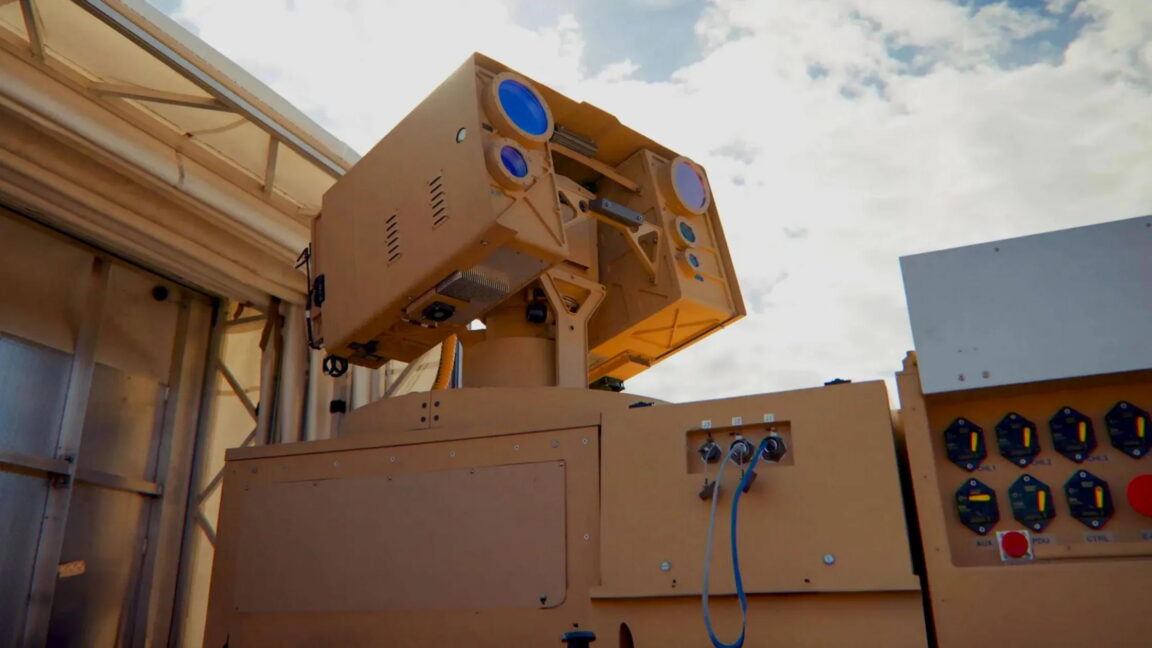
This week, the U.S. military used a high-energy, multi-purpose laser system to shoot down three drones near the U.S.-Mexico border. According to an agency report, the drones were considered a physical threat to U.S. military personnel and U.S. Customs and Border Protection (CBP) partners.
The operation took place near Texas’s Rio Grande Valley from the night of August 25 through the early morning of August 26. It was led by Joint Task Force Southern Border (JTF-SB), which operates under U.S. Northern Command. Officials said personnel used technology derived from the Army’s High Energy Multipurpose Laser (AMP-HEL) program. The operation reflects ongoing military planning for high-energy laser weapons and emerging counter-drone defense capabilities.
Development of the laser system reportedly began in September 2025, when AeroVironment, a defense technology company, delivered the first two functional prototypes to the U.S. military. The program expanded in December of the same year with the delivery of two upgraded systems. Known as the Locust Laser Weapon System, the platform is designed to be mounted on military vehicles, including the Army vehicle-based configuration.
The 20-kilowatt Locust laser uses a highly concentrated beam of light to detect, track, illuminate, damage, or destroy targets at significant distances. Like other high-energy laser (HEL) systems, Locust combines sensors, cameras, radar, and other detection technologies to identify aerial threats. Once a target is located, the system precisely focuses the laser beam on the object, even when it is moving.
The laser’s energy heats the target, potentially causing a drone to malfunction or become disabled. The result depends on several factors, including the distance to the target, the amount of time the beam remains focused, and the drone’s design and materials. The deployment highlights the growing role of directed-energy weapons in counter-drone operations along the U.S. border.
Source: arstechnica.com