


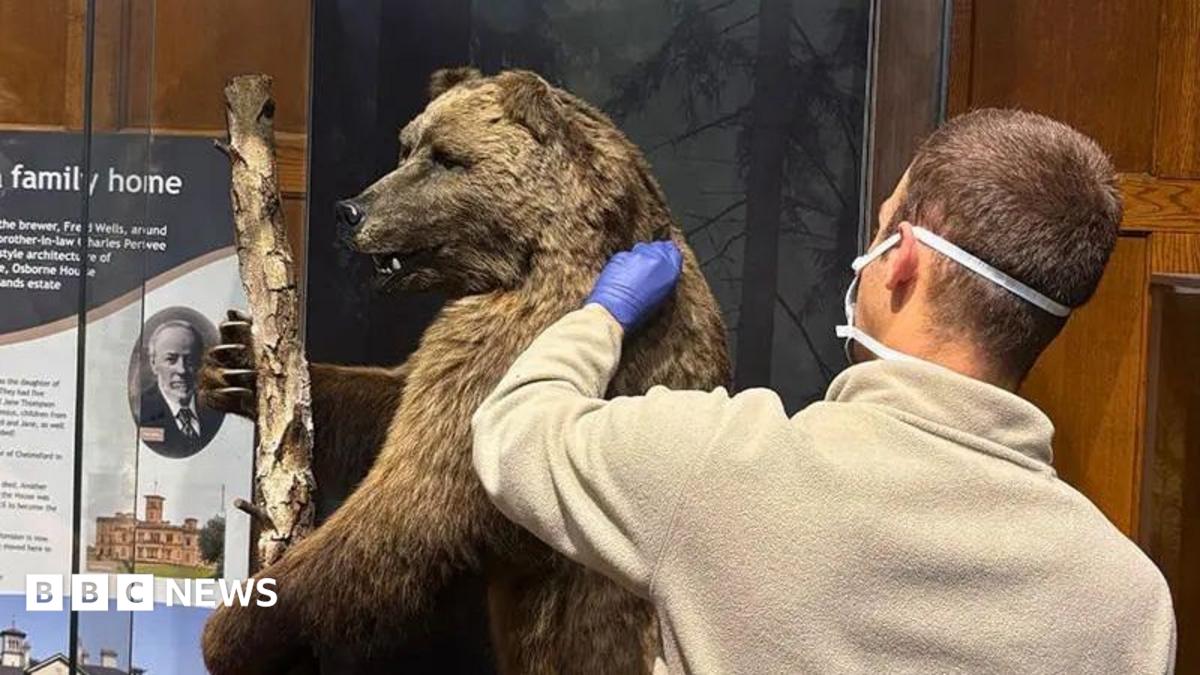
A forensic science student is studying hair from a 120-year-old museum bear to develop new methods for investigating wildlife crime and preventing illegal poaching.
The taxidermied brown bear, known as Boris, is a popular centerpiece at Chelmsford Museum and serves as the institution’s unofficial mascot.
Hayden Lee, a forensic science graduate from Staffordshire University, is examining samples from Boris’s fur to help protect modern brown bears from poaching and other wildlife crimes.
As part of his PhD research, Mr Lee is analyzing the bear’s hair and comparing its characteristics to determine how forensic scientists can more accurately identify animal fur during wildlife investigations.
Boris arrived at Chelmsford Museum in 1932 as part of a large taxidermy collection left by a local hunter.
Mr Lee said brown bears are found mainly in Russia, as well as in countries including Romania and Bulgaria, where forensic techniques could support efforts to combat illegal hunting.
Using a microscope, he is studying the different layers of the bear’s epidermis and fur, along with its DNA, to identify features that could help distinguish brown bear hair from other animal fur.
Before beginning the project, Mr Lee contacted about 30 zoos and museums for assistance. Chelmsford Museum was the first institution to support his research.
“There have been hundreds of studies on dog hair, cat hair and livestock, but we wanted this research to have a wider impact on wildlife crime investigations,” he said.
Source: www.bbc.co.uk