


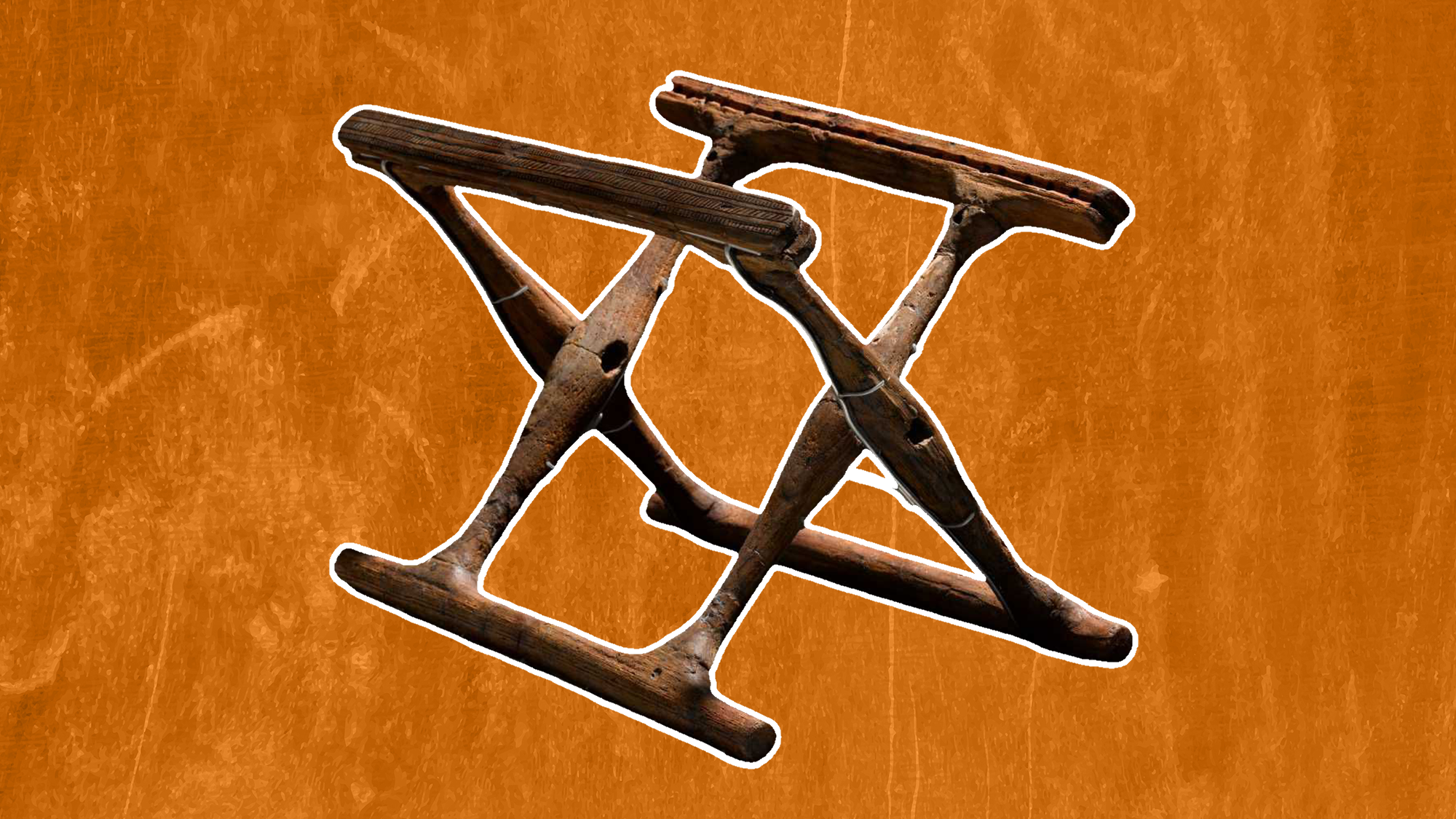
Guldhøj Folding Chair: A 3,400-Year-Old Bronze Age Status Symbol
The remains of a Bronze Age folding chair were discovered in the tomb of a Danish chieftain.
Quick facts
Name: Guldhøj folding chair
What it is: A wooden folding chair with an otter-skin seat
Discovery site: Guldhøj, southern Jutland, Denmark
Date: Approximately 1400 BC
When archaeologists excavated the Guldhøj burial mound in southern Jutland in 1891, they uncovered an exceptionally well-preserved Bronze Age folding chair. The chair resembles folding seats known from ancient Egypt and Greece, yet it was made in Denmark approximately 3,400 years ago. According to the National Museum of Denmark, it is the only fully preserved wooden folding chair known from Bronze Age Europe.
The ancient chair was placed in the tomb of a high-status male, probably a local chieftain or warrior. His burial also contained a woolen cloak, bronze brooch, woolen hats, mittens, leather shoes, a bronze ax, a bronze dagger, two decorated wooden bowls and a wooden box. The folding chair was an unusual and prestigious grave offering, suggesting that it represented power and social status.
The Guldhøj folding chair consists of an ash-wood frame and an otter-skin seat, although only part of the animal hide survived. Geometric patterns carved into the upper section of the frame were filled with a dark, tar-like material, creating decorative bands across the wood. Its craftsmanship shows that Bronze Age Scandinavian artisans could produce both practical furniture and elaborate objects for ceremonial use.
Latest videos fromLive Science
A 1999 study led by archaeologist Kirsten Prangsgaard examined the chair’s unusual construction. Researchers determined that it was assembled from two wooden frames, each approximately 13 inches (33 centimeters) high. When joined at a 45-degree angle, the frames created a low seat about 9.5 inches (24 centimeters) above the ground. The chair may originally have been held together with bronze nails, which could have been removed before the object was placed in the tomb.
Although the design appears simple, ancient folding chairs were important symbols of rank. They were portable, practical and associated with ceremonies, leadership and authority. The Guldhøj chair may therefore have been used by its owner during rituals or other public events before it was buried with him.
Examples of ancient folding chairs have also been found in Bronze Age Egypt and Greece, where dry conditions helped preserve organic materials such as wood. Fragments of similar chairs have appeared in the graves of other Bronze Age leaders in Denmark and northern Germany. A metal folding chair was even discovered in an early medieval woman’s grave in Germany. However, the Guldhøj find remains the only completely preserved wooden folding chair from Bronze Age Europe.
The similarities between the Danish chair and folding seats from the Mediterranean suggest that Bronze Age communities exchanged ideas through trade, travel and gift-giving. The discovery offers evidence of cultural connections between Nordic and Mediterranean societies. Other objects, including the famous four-spoked Trundholm Sun Chariot, also show possible artistic influences from the Aegean world.
Get the world’s most fascinating discoveries delivered straight to your inbox.
The folding chair and decorated wooden bowls buried at Guldhøj were valuable objects that reflected the chieftain’s elevated position. More than everyday possessions, they were carefully selected symbols of wealth, authority and reputation, according to the National Museum of Denmark.
For more remarkable archaeological discoveries, explore our ancient artifacts archive.
Could you identify this ancient artifact? Read about last week’s amazing artifact.
Topics
Source: www.livescience.com