


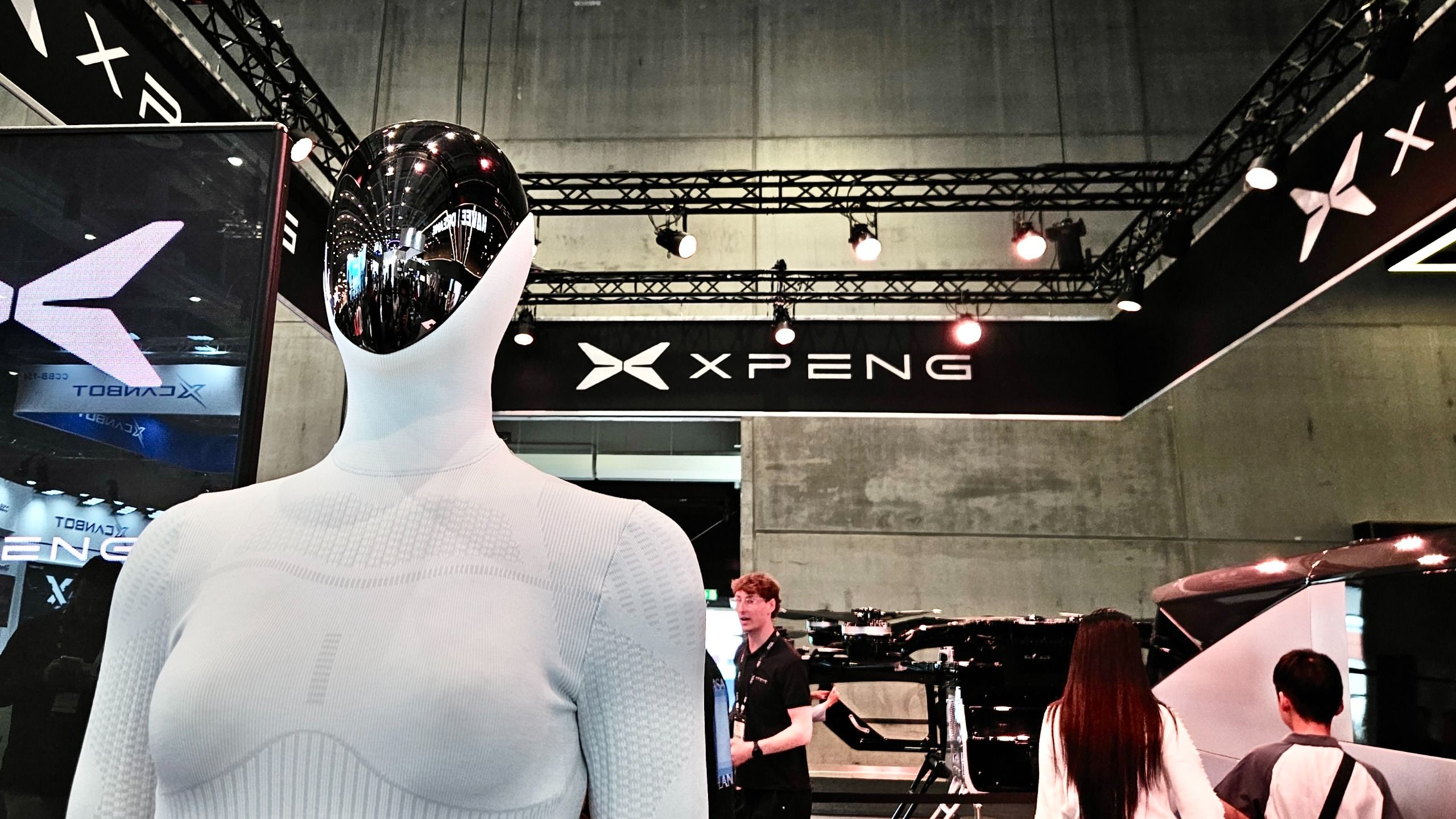
Xpeng’s IRON Humanoid Robot Enters Mass Production
BERLIN — Chinese technology company Xpeng says its lifelike IRON humanoid robot has entered mass production. The company claims the machine is the first humanoid robot to be automatically removed from a production line, marking a potential milestone for large-scale robotics manufacturing.
Xpeng unveiled IRON during a presentation last year, where its realistic appearance sparked widespread interest. Company representatives later demonstrated that the robot was not operated by a person inside its body. Xpeng plans to manufacture IRON using its existing production facilities, although it has not disclosed the number of factories involved.
IRON humanoid robot specifications
The cloth-covered IRON humanoid robot is available in different body shapes and genders. Xpeng says the machines are approximately 5 feet 7 inches (173 centimeters) tall and weigh around 143 pounds (65 kilograms).
The prototype features 82 degrees of freedom across its body, including 22 degrees of freedom in each hand. It can reportedly move at speeds of up to 6.5 feet per second, or roughly 2 meters per second—about the pace of a fast walk.
Latest videos from
Live Science
What can Xpeng’s humanoid robot do?
In an interview with Live Science, Xpeng representatives said IRON is ultimately intended to assist with household tasks, including cleaning and folding laundry. The company compared the potential growth of humanoid robots with the rapid expansion of smartphones during the mid-2000s.
Xpeng describes IRON as a “high-level general-purpose” humanoid robot. According to the company, it can receive instructions, develop strategies, navigate changing environments and avoid obstacles without relying solely on trial and error.
The robot also includes a self-charging feature. When its battery is running low, IRON can locate a designated charging station and connect itself automatically.
Humanoid robots move toward mass production
If Xpeng’s claims are accurate, IRON would be among the first AI-powered humanoid robots manufactured at scale. The U.S. robotics company Figure AI has also demonstrated production of its Figure 03 robot, while Chinese robotics company AgiBot has reported reaching 15,000 units.
Tesla has not yet mass-produced its Optimus humanoid robot. The machine remains in development and factory assembly, with its commercial release reportedly delayed several times since 2022.
Xpeng representatives highlighted the company’s progress during a briefing with Live Science, although they did not discuss every competing humanoid robot manufacturer.
AI technology behind the IRON robot
Xpeng says IRON uses the same type of “world model” technology that powers its AI-enabled electric vehicles. The company claims this system helps the robot understand its surroundings, interpret instructions and perform physical tasks in real-world environments.
Xpeng’s IRON humanoid robot prototype is approximately 173 centimeters tall and weighs about 65 kilograms.
Image credit: Keumars Afifi-Sabet/Live Science
Robots face a major challenge when operating outside controlled factory settings: the physical world is unpredictable. Objects can move, surfaces can vary and instructions may be ambiguous. Xpeng says IRON combines a world model with visual-language-action technology to plan and carry out tasks more effectively.
The company has not released detailed information about IRON’s proprietary AI architecture. However, representatives say the robot uses three complementary systems that work together to support autonomous operation.
One of these systems is a vision-language-action model, or VLA, which combines visual recognition, natural-language understanding and movement control. A vision-language model helps process images and text, while Xpeng’s vision-language-task or thinking model is designed to help IRON reason through multi-step instructions.
Each IRON robot is equipped with three Turing AI chips, delivering a combined 2,250 trillion operations per second (TOPS) of processing power, according to Xpeng. The company says this could allow AI models such as Meta’s Llama 3.2 to run locally without an internet connection. For comparison, many laptops designed for basic on-device AI tasks provide around 50 TOPS.
When will Xpeng’s IRON robot be available?
“We aim to build a new type of robot with full versatility capabilities that can truly become a part of everyday life, create a better life for people, and ultimately become a life partner,” Xpeng chairman and CEO He Xiaopeng said in a statement shared with Live Science.
Xpeng plans to deploy IRON robots in its showrooms and technology campus first while the company continues testing potential applications. In 2027, Xpeng expects to begin shipping the humanoid robots to commercial customers in China, including businesses in customer service and guided tours. The company says international expansion could follow later.
Source: www.livescience.com